Why ASE and I-CAR Certifications Matter

Your car was just involved in an accident requiring auto body and engine repairs. Being unfamiliar with repair shops in your area, you searched online for options. The search results reveal that there are only a few shops that feature both “I-CAR” and “ASE” Certifications on their websites. Does that really matter? When it comes to your safety, a low-quality repair job using inferior parts could put you, and others, in a potentially life-threatening situation. Here’s why choosing an I-CAR and ASE-certified shop can make a world of difference.

Earning an I-CAR Certification

Started in 1979, the Inter-Industry Conference on Auto Collision Repairs, or “I-CAR”, is a global nonprofit training and certification entity dedicated to improving the quality, safety and efficiency of auto body and glass repairs. With today’s highly sophisticated vehicles, repair technicians need to stay constantly updated on every aspect of the repair job, including new technologies, equipment and methods. I-CAR not only provides that essential training for technicians, but also for insurance providers, shop estimators, shop managers, and even their front office staff.

Once a shop’s certified through I-CAR, it’s an ongoing process. To continue displaying the I-CAR shield of excellence, employees there must pass annual training courses on numerous topics related to the newest repair techniques. Because I-CAR is mostly funded through student tuition, their courses and services on an industry-wide scale remain unbiased. They also manage an open collision repair communication forum for anyone who’s interested. The training programs I-CAR offers to those in the collision repair industry fall within these categories:  

  • Hands-On Skills Development
  • Industry Training Alliance
  • Introduction to Collision Repair Services
  • Professional Development Program (PDP)
  • Repairability Technical Support
  • Vehicle and Technology Specific Training
  • Welding Training and Certification

As you can see, when you take your vehicle to a repair shop that proudly displays the I-CAR logo in its waiting area and on its website, you can rest assured that they have the expertise to keep your ride looking and performing optimally for many years to come!  

How Technicians Become ASE-Certified

Up until the early 1970s, drivers were oftentimes caught up in a nail-biting guessing game when it came time to find a reliable technician to work on their vehicle’s mechanical parts. In 1972 the independent, non-profit National Institute for Automotive Service Excellence (ASE) was formed to eliminate much of that frustrating, and sometimes costly, guesswork. ASE exists to promote excellence for vehicle repair, service and parts distribution that ultimately protects consumers, shop owners and technicians.

To become ASE-certified, a technician must first have two years of on-the-job training, or one year of on-the-job training plus a two-year degree in automotive repair. Then, and only then, can they apply to take an ASE Certification test. But passing those tests is not easy, as one-third of the participants fail on their first attempt. Those challenging exams are written during annual workshops attended by seasoned automotive industry professionals and executives with relevant expertise as:

  • Actively-employed technicians
  • Automobile manufacturers
  • Aftermarket manufacturers
  • Educators

None of the test developers work directly for ASE, which helps ensure that the exam material is non-biased while also reflecting changes in auto repair technology, methods and needs. ASE’s more than 40 exams are categorized based on these repair sub-specialties:

  • Collision-related repairs
  • Automobiles
  • Medium/heavy trucks
  • Truck equipment
  • School buses  

At present, there are roughly 300,000 professionals employed in the auto repair industry that are ASE-certified. For shop owners, knowing that a technician has earned their ASE Certification allows them to better gauge their expertise and knowledge before hiring them. For drivers, it gives them peace-of-mind knowing that the care of their vehicle is being entrusted to a pro who proudly wears the blue ASE patch on their sleeve!

Promptly Find Certified Auto Body and Glass Repairs Here

As has been pointed out, ASE and I-CAR Certifications really do make a difference when searching for an auto body or glass repair shop to restore your vehicle. At Carwise, we’ve simplified that search process by quickly linking consumers with over 19,000 I-CAR and ASE-certified collision and auto glass repair shops nationwide. By conveniently visiting our website, or downloading the Carwise app, you’ll be quickly connected to dependable shops in your area.

Search your zip code now for a customer-reviewed auto body or glass repair shop nearby: www.carwise.com.

Read More

How Can I Find an Honest Auto Body Shop?

We’ve all heard stories from other drivers about collision repairs that didn’t quite meet their expectations, making them a little leery about using that shop again. And when you’re involved in an accident, finding an honest and reliable auto body repair shop for your car will help alleviate your concerns well after the work is through. To help you find a shop that’s more likely to meet your expectations, use these tips from the pros.

Do They Provide Written Estimates?  

It’s always wise to get written repair estimates from several shops, and to find out if they will honor their original estimate, and for how long. All other factors being equal, shops that don’t provide written estimates may be ones to avoid. When getting a written estimate, ask about any potential costs that may not show up on the original invoice, as repair needs can change once the technicians start “breaking down” your car’s exterior. If you have any doubts about the estimate, don’t be afraid to ask the shop manager how they arrived at their figures.

Are They Certified?

Better body shops and their technicians are usually certified by professional collision repair organizations like the National Institute for Automotive Service Excellence (ASE) and I-Car. That just means they have met I-Car and ASE quality and testing standards, which are re-evaluated every few years. So as a consumer, look for shops that proudly carry the ASE and I-Car certification labels.

Will They Patiently Answer Questions?

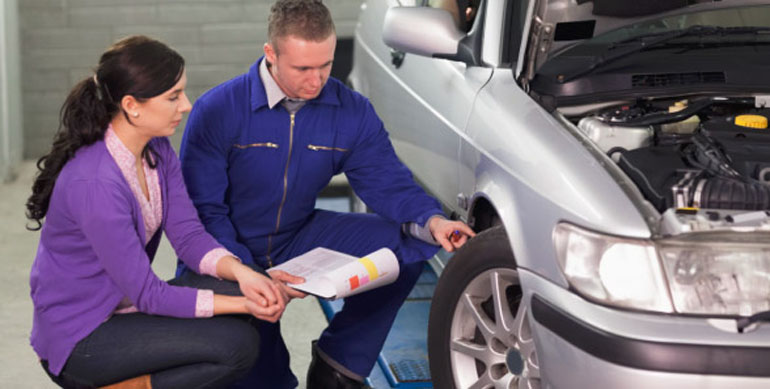
Collision repair shop “lingo” can be confusing, so find a business with technicians that will take the time to patiently respond to any questions you might have. Some shop managers or owners will physically bring you into the repair bay and point out what they’ve found, along with repairs that need to be done to correct the problem. When a shop doesn’t take the time to address your concerns, or let you see your vehicle once the repairs are underway, that tends to leave doubts in your mind.

Do They Admit Their Limitations?

Many shops don’t have the repair equipment or facilities to perform certain jobs, like fixing

aluminum body panels or frame straightening. Look for a shop that’s not afraid to refer you to another one down-the-street if they feel it’s outside their expertise. Other shops specialize in auto glass repairs, for example, and maintain reciprocal relationships with their competitors to ensure the highest-quality outcomes for all. That’s just smart business, and when it comes to your vehicle, find a shop that’s not afraid to admit their limitations.

What Do Their Past Customers Say?  

One of the best ways to determine the quality of a shop’s work is to read their customer reviews and customer satisfaction (or not!) feedback. That information is readily available through online sites like the Better Business Bureau (BBB), American Automobile Association (AAA), Angie’s List, Yelp!, or Google Reviews. Word-of-mouth is another reliable way to gauge a collision repair shop’s reputation, good or bad. In the end, don’t rely on just one or two reviews, but instead consult multiple sources.

Does the Shop Warranty Their Work?

Another aspect to consider is if the body shop warranties their work, in writing, and for how long. Better shops usually back their repair outcomes with a written warranty for a specified amount of time or miles after the work is completed. And, as a driver, nothing says peace-of-mind quite like having a warranty when you drive away with your newly-restored car!  

Promptly Find an Honest Body Shop by Using Carwise   

Finding an honest collision repair shop when your vehicle’s future weighs in the balance can be frustrating. At Carwise, we’ve simplified the process with our online auto body and glass repair business locator features. By conveniently using our website or downloadable Smartphone app, finding an honest and reliable body shop is easier than ever before. All the shops in the nationwide Carwise referral network are I-Car and ASE-certified, and most warranty their work to put your mind at ease.

Search your zip code now for a customer-reviewed auto body or glass repair shop nearby: www.carwise.com.
Read More
How to choos a good auto body shop

Does Your Car’s Body Suffer From “Polymer Degradation”?

Every year across America millions of car bodies suffer from a noticeable condition called “polymer degradation” (PD). For many vehicles, the symptoms are as subtle as a slightly faded bumper. Others experience more serious signs like cracked trim or molding around their windows or wheel wells. And, if you operate a vehicle in an area that’s prone to excessive heat, sunlight, or air pollution, and it’s more than 5 years old, its exterior is probably already showing signs of PD. What exactly is polymer degradation, and is it preventable?

Auto Body Polymers and How They’re Used

As they relate to the auto industry, polymers are large manmade molecules that are chemically bonded together to create materials used for vehicle body components. Polymer materials include rubber, vinyl, and various plastics, and end up in exterior car parts like:

  • Bumpers
  • Black trim around windows, fenders, and windshields
  • Spoilers, air dams, and other aerodynamic body features

Design engineers use polymers to improve a vehicle exteriors:

  • Appearance (aesthetics)
  • Design flexibility
  • Functionality (corrosion resistance, strength, reduced weight, etc.)

You’ve probably noticed that some vehicles have more polymers incorporated into their designs than others, and oftentimes those parts are left unpainted for added curb appeal. Unfortunately, all polymers- painted or not- are vulnerable to environmental forces that can cause polymer degradation.

What Causes Polymers to Degrade?

Because of their composition, polymers tend to break down faster than the surrounding metal body panels when exposed to certain elements like sunlight, air pollution, road tar, oxygen, grime, and oil. And if your car sits outside in the heat and direct sunlight for lengthy periods of time, polymer degradation is accelerated due to a process known as “photodegradation”. Photodegradation is caused primarily by the sun’s UV rays and can speed up the degradation process caused by other forces including the ones mentioned above.

Why is Polymer Degradation Bad?

When a car’s body part, like a bumper, is made from a polymer and starts to degrade, it causes premature aging to that part which further leads to:

  • Fading, discoloration, and loss of its glossy appearance
  • Reduced strength  
  • Decreased flexibility
  • Less scratch resistance
  • Cracking

Black polymer trim materials experiencing PD will start showing a faded gray look. PD is oftentimes confused with detailing polish, wax, or sealants that have been mistakenly allowed to dry on the polymer’s surface, leaving a chalky residue. And, that’s a whole different topic. In addition to just plain looking bad and compromising the intended function of the affected part(s), PD can also reduce the afflicted vehicle’s resale value.  

Is PD Preventable?

The good news is that polymer degradation is oftentimes preventable if you’re willing to invest the necessary time, elbow grease, and money. The important thing is to consistently and continually maintain the plastic, rubber, and vinyl surfaces of your car. That means keeping those areas clean of dirt, tar, dust, and other road debris, along with applying the right detailing product, based upon the material, to leave a layer of protection. And finally, keeping your car out of direct sunlight as much as possible is important.  

Certain detergents used for car washing are too strong for polymers, and can actually speed up the degradation process. Cheaper detailing products sold at big box stores may not be the best either, so read the labels carefully before applying those to your vehicle. For unpainted plastic parts, some of the best surface restorers and protectants are:

  • Armor All
  • TriNova
  • Meguiar’s G15812
  • Gtechniq C4
  • 303 (30326)
  • Forever Black

With-the-exception-of Armor All, which will need to be used more frequently, the other products should deliver reliable protection for up to 12 months after application. If any of your painted plastic parts, notable bumpers, have already started to noticeably fade, you may want to have them repainted by a pro.

Auto Body Shops Nearby Have the PD Cure

Unfortunately, many vehicles end up experiencing polymer degradation. If it’s happened to your car or truck, take it to a nearby auto body shop in the nationwide Carwise referral network. Technicians there have the professional detailing products, experience, and know-how to restore your vehicle’s polymer features like-new again promptly, reliably, and affordable. If you have areas that need to be repainted, they can expertly tackle that too!

Search your zip code now for a customer-reviewed auto body or glass repair shop nearby: www.carwise.com.

Read More
Top Auto Body Repair Tips for Consumers

A Beginner’s Guide to Auto Repair “Shop Talk”

When speaking with your car’s mechanic, does it seem sometimes like they’re using a foreign language? Have you ever been at the collision repair shop and wondered what in the world the technicians were saying about your vehicle? In addition to being frustrating, you may miss out on some important information that could cost you later. Cutting through all the repair shop “lingo” isn’t difficult once you understand the jargon the technicians use. To help you along, here are some common “shop talk” terms you might overhear at a repair shop.   

Terms Mechanics Use

Mechanics go to school to learn the following terms, so as a driver getting “schooled” in them will help you communicate more effectively the next time your vehicle’s in the shop:

  • Engine knock. This describes the metallic pinging noise made by your engine when there’s leftover fuel and air in the combustion chamber while the spark plug is firing. If you’re hearing this sound it could reduce your engine’s life, so take it promptly to a mechanic.
  • Fast idle. This higher revving of your engine typically happens when its cold first thing in the morning, or after your car sits all day. The idle speed will automatically increase to maximize engine performance until it warms up.
  • Fuel injectors. Decades ago, cars had carburetors to control the fuel and air mixture. Today’s vehicles use fuel “injectors” to deliver that mixture more efficiently into the intake manifold of your engine.
  • Hesitation. This is the temporary loss of power you feel when you initially accelerate. If there’s too much hesitation it could mean a problem with the fuel and air mixture as it’s being delivered into the manifold.
  • N/A. In “auto speak” terms, N/A refers to a “non-aspirated” engine, or, in other words, one that isn’t turbo or supercharged.
  • Play. Used to describe the amount of slack you feel in the steering wheel before your wheels start to turn. Play is usually mentioned when referencing your car’s suspension or steering, notably when their components are getting worn.
  • Pull. When applying the brakes or just driving down the road, if your vehicle tracks to one side or the other it is called “pulling”, and usually means that your car needs an alignment.
  • Torque steer. Many cars today are front-wheel drive (FWD). During fast acceleration, if your steering wheel begins to turn in one direction this is called “torque steer”. Accelerating too quickly in a FWD vehicle can cause you to lose control when torque steering goes awry.

Body Shop Jargon

When you’re looking over your car’s collision repair estimate, or speaking to an insurance adjuster or shop manager, it would be wise to know these body shop terms:

Aftermarket parts. These are parts made and sold by companies other than the original equipment manufacturer (OEM) of your vehicle. Most aftermarket parts meet the same quality standards that OEM parts do if the supplier is reliable. Be advised that the use of non-approved parts could jeopardize your vehicle’s factory warranty, so ask the shop manager or your insurance adjuster for details.  

Beltline. Also known as the “waistline”, the beltline describes the body area that separates the top of your car from the bottom, and is formed where the lower edges of your vehicle’s windows end.   

Betterment. This term is used by insurance adjusters to describe the fact replacement parts on your car are new, and therefore improve its overall condition. In rare instances, the insurance company may ask you to pay a portion of the repair costs because your vehicle’s market value increased.

OEM. As was mentioned earlier, the term “original equipment manufacturer”, or simply “OEM”, means that the repair parts for your car were made by the company that built it in the first place. If your Toyota Camry got a new OEM grill, the shop ordered it directly from Toyota, or from an authorized Toyota OEM parts supplier.

Collision Repair Shops That Speak Your Language      

If your car’s in the body shop for some accident repairs, the terms used there can be confusing. Simplify your life by taking your vehicle to one of the certified auto body and glass repair shops found in the Carwise nationwide network. The knowledgeable technicians there will clearly explain the work that’s required, and patiently answer your questions to put your mind at-ease. They’ll honestly “speak your language” while restoring your vehicle like-new again promptly and reliably.

Search your zip code now for a customer-reviewed auto body or glass repair shop nearby: www.carwise.com.

Read More
Can Minor Fender Benders Conceal Serious Problems?

Can an Accident Void My Vehicle’s Warranty?

If you drive a newer vehicle it’s probably covered by a manufacturer’s warranty that’s designed to give you peace-of-mind if a mechanical problem arises. Warranties typically contain provisions with bumper-to-bumper and powertrain coverage, most are transferable, and all have mileage or time limits based on the manufacturer’s terms. The average factory powertrain warranty is usually good for 60,000 to 100,000 miles, or 4 to 6 years, while most bumper-to-bumper plans protect you for 30,000 to 50,000 miles, or 3 to 5 years. But does being involved in a car accident, notably a serious one, void the manufacturer’s warranty? The answer to that important question may lie in the collision repairs themselves.

Factors That Can Void a Warranty

Within the fine print of your warranty you’ll find several reasons why the manufacturer can void it when your vehicle sustains damage due to these factors:

Title Salvage Distinction

When your car or truck is involved in a serious accident and is subsequently given a “salvage” distinction by your insurer, which means it was a total loss, your entire warranty is voided.

Vehicle Abuse

This can be interpreted in many ways, and most often refers to using your vehicle for racing or subjecting it to other forms of excessive wear-and-tear, including off-roading. Potentially, any use outside of what’s considered “normal” can be interpreted as abuse by the manufacturer.

Natural Disasters

If damaged by an environmental disaster, sometimes referred to as “an act of God”, such as a fire, flood, tornado, hurricane or earthquake, your vehicle’s warranty is null-and-void.

Odometer Tampering

Also called “rolling back” your odometer, for obvious reasons your warranty will be voided if you engage in such practices.

Dirty or Improper Fluids

If you accidentally put diesel fuel in your gasoline engine, that’s not the manufacturer’s fault. Or, if you use the wrong type of antifreeze or oil that’s outside of what’s specified in the owner’s manual, it could invalidate the warranty.

Non-Approved Repair Parts

The use of aftermarket parts is a very gray area when it comes to warranties, and most often comes up after an accident when your vehicle is at the body shop for repairs. To ensure that your warranty stays in-force, ask the shop manager to only use OEM parts, or aftermarket ones that are manufacturer-approved.

It must be noted that under the Magnuson-Moss Warranty Act of 1975, warranty coverage cannot be denied unless the manufacturer can definitively prove that an aftermarket part in question caused specified damage to the vehicle.  

What About Accidents?     

In most cases when your vehicle is repairable, an accident has no bearing on the warranty. According to industry experts, the only way the accident itself can void a warranty is if the vehicle’s been given a title salvage designation after being declared a total loss by the insurer because the damages sustained would cost more in collision repairs than its assessed market value. According to Kelly Blue Book (kbb.com), factors that influence your vehicle’s assessed market value include:

  • Age
  • Color
  • Condition
  • Fleet or rental use
  • Make and model
  • Mileage, especially when it’s been excessively driven
  • Non-standard and aftermarket features
  • Transmission type (manual vs. automatic)
  • Vehicle history, including past collision repairs and maintenance

Find a Warranty-Compliant Shop on Carwise  

Simply being involved in an accident won’t void your vehicle’s warranty. However, taking it to an unfamiliar auto body shop for collision repairs, one that might install non-approved aftermarket parts, could cause warranty problems later. Keep your warranty in-force by taking it to one of the body shops in the nationwide Carwise referral network. All collision and glass repair shops in the Carwise network are ASE-certified, and technicians there have the training, experience, and know-how to install manufacturer-approved parts that’ll keep your vehicle looking and performing like new again.

Search your zip code now for a customer-reviewed auto body or glass repair shop nearby: www.carwise.com.

Read More
Can Minor Fender Benders Conceal Serious Problems?

Why Should I Get Minor Bumper Damage Repaired?

Your car bumpers take a lot of abuse, from unexpected hazards like runaway parking lot grocery carts, flying chunks of road debris, and minor fender benders.  As a result, many drivers tend to ignore superficial damage to their vehicle’s bumper, and put off repairs to save some money and time. But is that a smart move when it comes to your safety in the long run?   For starters, having a bumper with cracks, scratches or dents just doesn’t look good after you get your car washed. In addition, there are several other reasons why you should promptly get your bumper fixed, even when it’s only sustained minor damage.  What follows are some of the more important ones.

Resale Value

Cars with damaged bumpers send up red flags to potential buyers, as it could mean you’re trying to hide more serious damage or even vehicle neglect.  Noticeable bumper damage can drop your vehicle’s overall resale condition from one category to another, for example, “good” to “fair”, resulting in $100s in lost value.  Even when trading it in at a dealership bumper blemishes are going to reduce what you’re offered, notably when your car or truck is newer. And, when you’re attempting to sell it outright most shoppers will probably pass once they see that damage.     

Safety

Auto bumpers are made to absorb the force of an impact sustained during either a front or rear-end collision while protecting the engine compartment, trunk, and most importantly, the occupants.  Even superficial damage can weaken the structural integrity of your bumper, notably its internal accident protection components like:


  • Bumper absorbers.  These are usually made of Styrofoam or durable plastic and are located between the bumper cover and metal bumper itself.  Upon impact, the absorbers take the force and direct it outwards in all directions.
  • Bumper bar.  Also called a “bumper reinforcement”, a bumper bar strengthens the bumper’s entire structure.  They are typically made of durable metal and painted to match the bumper cover’s color.


If either of these parts are weakened by a minor fender bender, when a subsequent collision occurs, especially a high-impact one, they could fail to protect the vehicle, driver, and passengers as designed.  Not only does this pose a serious injury risk to the occupants, but it could mean more extensive, and costly, damage to your vehicle.

Insurance Claims    

Let’s say that you decided not to have that minor front bumper damage repaired to save a

few bucks, and the absorbers and/or bumper bar were weakened without your knowledge.  Later, you’re involved in another front-end accident, resulting in serious damage to the engine compartment.  An insurance adjuster could potentially inspect the vehicle and notice the old bumper damage. They may then determine that the previous damage structurally compromised the bumper’s integrity, allowing the force of the most recent crash to cause more-extensive and “unnecessary” repairs.  In a worst-case scenario, your insurer has the right to decline your claim altogether, and then you’ll be forced to pay out-of-pocket for all the repairs.

Find Expert Bumper Repairs Nearby

As you can see, it’s smart to get even minor bumper damage repaired promptly after an accident to protect you, your vehicle, and your wallet.  Finding an auto body shop nearby that can expertly restore your bumper like new again is simple when you use the Carwise referral network. When you locate collision repair businesses in your area through Carwise, those shops employ technicians with the training, equipment, and experience to inspect your bumper- including any structural damage- expertly repair it, and have you back on the road again promptly and safely.  Most work directly with insurance companies so you don’t have to, and warranty their work to restore your peace-of-mind. To search your zip code now for a customer-reviewed auto body shop in your area, visit: www.carwise.com now!  

Read More

Does the Color of My Car Really Matter?

One of the deciding factors, when you’re looking to replace your old vehicle with another, is color.  Certain exterior colors are more popular than others, which makes them harder to find. Minivans, for example, don’t look good in bright reds and yellows, but high-performance sports cars do.  And, is it true that bright red cars get pulled over more often for speeding? In the end, does the color of your vehicle really matter when it comes to avoiding accidents, insurance rates, resale value, or just simply keeping it clean?  According to auto industry experts, it does. Now let’s explore in more detail the role a car’s color plays, and why.  

Which Colors are Most Popular?

Studies have found that color is a major factor when consumers are shopping for products.  In fact, the social research firm Yankelovich Partners discovered several years ago that 39% of consumers would rather switch brands entirely if they couldn’t find a given product in their favorite color.  According to retail auto sales figures, the most popular colors across all categories for new and used vehicles sold annually in the U.S. are:

  • Silver 23%
  • White 15%
  • Black 12%

For trucks, SUVs, and minivans, white reigns supreme, and for all other passenger vehicle types silver ranks first.  So, what does this all mean for you? For starters, color plays a powerful role in determining a vehicle’s resale value, with all other factors being equal.  The more popular the vehicle’s color, the harder it is to find and higher its market value. And let’s be honest… if your car is orange or bright green, it may be difficult to get rid of later!  

Accidents

Black is a popular vehicle color, but by far it’s also the most dangerous in terms of accidents, including fatal ones.  In fact, based upon DMV accident statistics, black vehicles are 47% more likely to be involved in mishaps, day or night, than any other color, and 12% more likely than white ones during peak daylight hours.  That’s because black projects a low-visibility signature to other drivers, especially around dusk or dawn. Other less-safe colors with similar “camouflage” characteristics include gray, silver, blue and dark green.   

Insurance Rates

Fortunately for drivers who own black vehicles, insurance companies are color blind when it comes to setting rates.  Instead, insurers charge premiums based on a car’s make, model, year, body type, and engine size, along with one’s personal driving record.  However, if you decide to paint your car a different color, notify your friendly agent immediately or your policy could be invalid. Oh, and bright red vehicles don’t get ticketed by cops for speeding more often than other colors.  That’s simply untrue.

Showing Dirt and Damage

Ask any experienced auto detailer, and they’ll relate that darker colors like black, blue, charcoal gray or green highlight paint finish imperfections, including dirt, dents, scratches, swirl marks and dings, worse than lighter hues.  On the other hand, more neutral color tones, notably ones with metallic finishes, hide blemishes better, including:

  • Champagne
  • Beige
  • Pewter
  • Lighter grays
  • Light gold
  • Silver

White and black vehicles show dirt, dust and bug splatter the most, and for these reasons:  

  • White.  White reflects light more completely than any other color.  As a result, you get the maximum contrast, at all eye angles and in any lighting, between dirt and paint.  
  • Black.  Black paint absorbs light better than any other color, which means most of the light detected by your eyes is coming from dirt splotches or dust present on the car body’s surface.  

Does paint color matter when your vehicle’s being painted at a body shop?  No, because all paint finishes require the same mixing, matching and application methods by technicians.  

Find Auto Body Paint Restoration Experts Here  

When your vehicle’s been involved in an accident or just needs a new paint job, take it to a better collision repair shop nearby.  Highly-skilled body shop technicians there have the training, experience and equipment to repair your vehicle, including its finish, like-new again promptly and reliably.  Most body shops also work directly with insurance companies so you don’t have to, and will communicate openly and honestly throughout to restore your peace-of-mind. And, if you just need your car or truck’s finish professionally detailed, most collision shops provide affordable detailing services too!  To search your zip code here for a customer-reviewed collision repair shop in your area, visit www.carwise.com now.

Read More

What Should I Do About My Cracked Windshield?

You’re casually driving down the road one day behind a gravel truck, and… thwack!  A good-sized rock smacks your windshield, instantly causing an ugly crack. Outside of car accidents, flying rocks and metal debris are the main culprits when it comes to windshield cracks.  What should you do? If you choose to ignore the windshield crack, oftentimes seasonal temperature changes will make it worse. Moisture and dirt invading the cracked glass can also cause it to spread.  Windshield cracks become dangerous once they’re large enough to interfere with your field-of-vision, and in many states, you can be ticketed if a cop deems your cracked windshield to be unsafe. Additionally, there are several hidden reasons why driving around with a cracked windshield simply isn’t wise.  


Cracked Windshield Dangers

In addition to impeding your ability to see the road, a cracked windshield carries these unseen dangers; some of which are potentially life-threatening:  


  • Greater likelihood of rollover accident injury.  Cracked glass becomes weakened structurally, and during a rollover accident, your vehicle’s roof is more likely to collapse if the windshield doesn’t hold up to the weight as it was intended to.  


  • Higher front-end collision danger risk.  Intact windshields are designed to transfer the force of a frontal collision down into the chassis, which lessens the impact you and your passengers feel.  Cracked glass can also shatter more easily during a front-end accident, fly around the passenger compartment, and cause injuries.


  • Increased risk of a frontal ejection.  When you aren’t wearing a seat belt, the impact from a front-end accident can forcibly throw you into the windshield.  Uncracked windshield glass is designed to not shatter upon impact, but glass that’s already cracked can give way, allowing an occupant to be thrown through.    


  • Botched airbag deployment.   When a collision triggers an airbag, the windshield serves as the backdrop that directs the inflated bag towards the vehicle occupant(s).  A cracked windshield is less-likely to hold up to the force, possibly resulting in an ineffective airbag deployment leading to more serious injuries, or even death.  


Temporary Windshield Fixes

Windshields with cracks of any size need to be repaired or replaced as soon as possible.  Many auto insurance policies cover glass repairs because insurers understand their safety benefits.  And when you’re ready, most glass repair shops offer on-site services for your convenience. But do-it-yourself (DIY) windshield replacements are never wise for several reasons.  When you’re in the process of scheduling a professional repair or replacement, there are some temporary measures you can take to help keep the crack from spreading, such as:


  • Super glue or nail polish.  After wiping the area with a clean, dry cloth, apply some super glue or nail polish over the crack to keep out dirt and moisture.  


  • Protect the glass.  Park in the shade when it’s hot, like in a covered area such as a garage or carport whenever possible to protect your windshield from water and direct sunlight.  


  • Try a windshield repair kit.  If you’re handy and the crack is very small, or it’s only a chip, auto parts stores sell resin-containing glass repair kits you can try.  In many cases, DIY repairs don’t hold up like those done by a pro, and the crack later spreads anyway.

Should I repair or Replace  the windshield

Chips and cracks in a windshield or vehicle windows are some of the more common repairs that send customers into repair shops.  Without proper repair, small scratches, nicks and cracks can easily develop into larger, and ultimately more expensive repairs.  Not to mention the safety concerns that arise when a driver’s vision is impaired by a large crack.  So, if you notice a crack or chip in the glass of your vehicle, we recommend getting the repair done sooner rather than later to avoid more issues down the road.


In the past, having a chipped or cracked windshield meant that you would certainly need to have it replaced. However, modern-day auto glass repair makes windshields more repairable depending on the size, location and the severity of the damage. When deciding whether to repair or replace your damaged auto glass, it is helpful to understand the differences between repair and replacement. However, it is best to ask your local auto body and glass repair shop for a professional recommendation. 

Read More
Understanding Your Auto Insurance Coverage

Understanding Your Auto Insurance Coverage     

Most of us value our vehicles, and we purchase auto insurance to protect them against damage or loss.  States also mandate the minimum amounts of insurance coverage drivers must carry to use their roads.  But let’s face it, the wording found in the average policy can be confusing.  Knowing what your auto insurance policy covers is important, and most notably when you’ve been involved in an accident and your car is at the body shop.  Understanding your policy can help you ask the right questions as the collision repairs move forward, too.  To assist your efforts, here’s some coverage terminology you might find in your policy, along with what it means.

Collision


Collision insurance covers any accident-related structural or mechanical damage that your vehicle sustains while you’re driving it.  That damage could be from other vehicles, or objects like a fence, telephone pole or tree.  Collision insurance does not cover damage from hitting animals or when another person is driving your car.  Your policy carries a collision deductible, typically from $250 to $1,000, which will be your out-of-pocket cost to have it repaired when the accident was your fault.

Comprehensive

This type of insurance protects your vehicle when you aren’t driving it, like when it’s parked, or another driver is using it.  For example, hail damage would fall under comprehensive coverage.  This insurance also covers glass repairs, and damage from hitting an animal.  Fire, theft and vandalism are other examples where a comprehensive claim would be filed, and your policy has a deductible that you’ll have to pay first when the repairs are completed.

Liability

Liability insurance covers claims for people and property when your negligence inflicted the damage.  Those damages could be to another person’s car, fence, house, or to them or their passengers.  Most states set minimums for liability coverage, and your policy has a maximum amount your insurer will pay out if you were at-fault.  It’s very important to carry enough liability insurance in case you cause an accident involving several vehicles and occupants.  If not, you could be sued by the victim(s) for any damages exceeding your policy’s payout limits.


Medical Payments

Also known as “PIP” in several states, this insurance pays for injuries and medical payments for you or your passengers resulting from an accident involving your vehicle.  In some states this coverage will pay medical expenses regardless of who was at-fault, so ask your agent for details.  If someone in another vehicle is injured during an accident you caused, their injuries would be covered under your liability insurance.


Underinsured and Uninsured Motorists  

If your policy contains an underinsured rider, this coverage applies to claims where a driver who’s at-fault hits your vehicle, but they don’t carry enough liability insurance to cover all your repairs and medical bills.  There is also uninsured motorist insurance that pays your bills when an at-fault driver without any insurance damages your vehicle, or when a hit-and-run occurs.  Many states require you to carry uninsured motorist coverage, so check with your insurer for details.


Other Types of Auto Insurance

There are a few kinds of specialty auto insurance that your policy may already contain, or that you may wish to consider.  Those include:


  • Gap insurance. This coverage is wise when you’re leasing, or when you owe more on your vehicle’s loan than it’s worth.  In the event it’s totaled out by the insurance company, Gap insurance will pay the difference between the loan balance and its actual cash value (ACV).


  • Umbrella coverage. If you have a lot of financial assets, this type of insurance can protect those once your liability limit has been exhausted.  For example, if you have $500,000 maximum in liability coverage but cause injuries totaling $1 million, your umbrella policy would pay the difference.


  • Commercial insurance. This coverage protects your vehicle when it’s used to earn a living, for example as an Uber driver or sales rep.  This coverage usually features higher payout limits due to the increased driving risks associated with your job.


We Work Directly with Insurance Providers

Being a responsible driver means carrying adequate auto insurance on your vehicle.  And, understanding what’s in your policy can be frustrating.  When you’re involved in an accident, bring your car or truck to a dependable collision repair shop nearby, and they’ll get it expertly restored like-new again.  The professionals there have the training, equipment and experience to fix it promptly and reliably, while restoring your peace-of-mind.   Don’t feel like dealing with your insurance adjuster?  Most body shops work directly with your insurance company so that you don’t have to.  To search your zip code now for a better collision or glass repair shop in your area, visit: www.carwise.com.


Read More
4 Hidden Problems Caused by Rear-End Collisions - Carwise Blog

4 Hidden Problems Caused by Rear-End Collisions

Have you ever had your car rear-ended while stopped at an intersection, or know someone who has?  Is so, take heart in the fact you’re not alone.  According to the National Transportation Safety Board (NTSB), of the over 6 million traffic accidents each year in the U.S., 40% involve rear-end collisions.  Most are not serious, and the resulting damage to the rear-ended vehicle is usually superficial, like a broken tail light or cracked bumper.  But unfortunately, even minor rear-end fender benders can cause more serious, underlying problems to your car that may not show up for a while- ones that could place your safety, and that of your passengers, in jeopardy.  With that said, here are 4 common hidden complications caused by rear-end collisions.


Trunk Malfunctions

There are several trunk-related glitches that can arise after a rear-end accident, even when your car looks fine, such as:

Lid pops open unexpectedly

You could be driving briskly down the highway one day and the trunk lid flies open, obstructing your rearview mirror’s field-of-vision.


Doesn’t stay locked

This isn’t good when your car’s left unattended for several hours in a strange area where there might be potential thieves around.


Water Seepage

Rear-end collisions can compromise the trunk lid’s seal, allowing potentially-harmful moisture to enter the compartment.


Opening difficulties

It’s no fun if you’re standing in the pouring rain and can’t get the trunk to open with your key fob or the trunk release inside the vehicle.


Unrepaired trunk malfunctions can also reduce your car’s resale value, so after an accident promptly take it to a reliable body shop to have the problem diagnosed and fixed.

Misaligned Wheels

When your wheels are out-of-alignment, you’ll notice these driving abnormalities:


Car tracks unevenly down the road

This makes driving down winding roads trickier.


Steering wheel seems wobbly

Could interfere with your ability to swerve, if needed.


Unusual vibrations

This causes reduced ride comfort for you and your passengers.


In addition to not being safe, a vehicle that’s misaligned causes premature, uneven tire wear

requiring costly replacements.

Electrical Problems

Even a low-impact collision can loosen wires that comprise the various electrical systems that keep your car operating.  Over time, loose wire connections can affect your vehicle’s:

Sound system speakers

No driver likes to be without their tunes.


Brake and tail lights

Drivers behind your car won’t see your tail lights when you’re coming to a stop or traveling in front of them during poor visibility conditions.


An unexpectedly-dead battery

This could leave you stranded alongside the road.

All these potential unseen electrical problems are good reasons to have the wiring checked out at a collision repair shop whenever your car gets rear-ended.

Frame Bending

Your car’s bumpers are plastic that’s been painted to match the rest of your vehicle.  When the bumper gets dented or cracked during an accident, that means the impact’s force may have reached the frame beneath.  Even minor accidents can slightly bend your frame.  Unaddressed frame damage can lead to future safety problems like:


Warning system sensor misalignment

Bent frames can cause cameras and sensors that make up your onboard driver warning and safety systems to be out of alignment, including your air bags.


Reduced frame strength

In the event of a subsequent, high-impact collision, a previously-weakened frame could give way and not protect you as it was designed to.


Whenever your car has sustained any type of damage from a rear-end impact, get the frame inspected promptly at an auto body shop in your area.

Don’t Take Chances After a Rear-End Collision

When your car has been involved in any type of rear-end collision, even when the damage seems superficial, don’t take chances with hidden problems that can jeopardize your safety later.  Instead, bring it to a dependable auto body shop to have the damage inspected, inside and out.  Body shop technicians have the training, experience and equipment to locate and repair underlying issues and get you back on the road promptly and safely again.  Most collision repair shops work directly with insurance companies so you don’t have to, and warranty their work to ensure your peace-of-mind for countless miles after the repairs are done.  To search your zip code now for a better auto body shop in your area, visit: www.carwise.com.  


Read More