
5 Strange Sounds that Could Mean Car Trouble

5 Strange Sounds that Could Mean Car Trouble

You’re cruising across town one warm, sunny day with your window down, and as you approach a red light you bring your car to a stop.  Suddenly, your ears hear some unusual rattling noises coming from somewhere underneath the vehicle.  You immediately turn off the radio, but the strange racket is still there.  A pit forms in your stomach as you imagine what could possibly be wrong with your car.  Is it my engine?  My brakes?  Exhaust?  Knowing the warning sounds of a potentially costly, or even dangerous, vehicle problem is important, and could help save you much trouble later.  To assist your efforts, here are 5 strange noises that could indicate something’s wrong with your car.

Knocking or Pinging

As your engine runs, fuel is ignited inside each cylinder.  A metallic knocking or pinging sound is probably due to an ignition malfunction caused by one or more of the following:

  • Clogged or defective fuel injector
  • Clogged or bad fuel filter
  • Misfiring spark plugs
  • Worn spark plug wires
  • Cracked distributor cap

When you hear a knocking or pinging noise originating from under your hood, it’s best to take it in promptly to a mechanic for a check-up.

“Popping”

There are several engine components that can start making a “popping” sound when something’s gone bad, including:

  • Dirty air filter
  • Spark plugs that are worn or corroded
  • Defective spark plug wires
  • Clogged fuel filter
  • Internal ignition wiring or related ignition issue

A popping sound when your car’s running is simply not good.  Take it to an auto repair shop and have them give it a “once-over”.

Ticking or Clicking

Ticking noises are best left to clocks, and a clicking sound is great when you’re fastening your seatbelt.  But when your car’s making these sounds while running, something’s usually wrong.

Ticking or clicking sounds can mean:

  • Low engine oil
  • Worn fuel injectors
  • Worn out struts
  • Bad pushrods

In this situation try a DIY fix of adding some oil to your engine first.  If the clicking or ticking persists, take it into a shop and let a pro inspect your ride.

Grinding or Rubbing

More-often-than-not, when you hear grinding and rubbing, especially when you’re stopping your vehicle, it’s related to your brakes.  Those sounds usually indicate your brakes pads are completely worn down, and that the metal calipers and rotors are rubbing together every time you apply the brakes.  Besides the obnoxious metallic rubbing sound, other signs of excessive brake wear include:

  • Takes progressively longer to stop your car
  • Brake pedal goes almost down to the floor when braking
  • When you brake the pedal and/or steering wheel vibrate or pulsate

Brakes that are making grinding or rubbing noises are nothing to ignore.  Take your vehicle immediately to an automotive technician and have them inspected.

Rattling Beneath Your Car

This is usually a symptom of a worn exhaust system, as they tend to rust out over time.  Does your car’s engine also sound louder or “throaty” when you accelerate?  If your exhaust system has sprung a leak, the exhaust fumes can filter up into the passenger compartment, and that’s not safe.  Parts found within your exhaust system that may need to be replaced include:

  • Catalytic converter
  • A section of crossover or tailpipe
  • Muffler
  • Brackets and/or gaskets
  • Manifold

Once your exhaust starts to rattle and gets progressively louder, you run the risk of part of it falling off while driving.  So, if you suspect that your exhaust system needs some repairs, take it promptly to a shop that specializes in those repairs.

We’ll Handle Any Accident-Related Noises

When your vehicle starts making the strange sounds listed above, take it to a mechanic and have it inspected.  If you’re involved in an accident, bring it instead to a reliable auto body shop to have those damages repaired by technicians who specialize in accident-related noises.  Pros at a collision repair shop nearby have the training, experience and equipment to restore your vehicle and peace-of-mind, and then get you back on the road promptly and safely.  Most shops warranty their repairs, so if you hear an unusual noise after the work is done, simply bring it back in and they’ll get it resolved.  Most body shops also work directly with insurance companies so you don’t have to.  To search your zip code now for a better auto body shop in your area, visit: www.carwise.com.

Read More
5 Simple Ways to Make Your Car Last Longer

5 Simple Ways to Make Your Car Last Longer

Most of us want our cars to look and run great for as long as possible.  And, keeping your vehicle in tip-top condition, inside and out, also increases its value when it’s time to sell or trade in.  Many drivers understand the importance of routine vehicle maintenance and upkeep like oil changes, tire rotations, replacing worn brake pads, belts and hoses.  But in addition to those, most owners are not aware that there are several other easy ways to help ensure that your car ages well as the miles add up.  Here are 5 of the more simpler ones now.

  1. Lighten Your Load

All vehicles have a maximum carrying capacity that can be found in the owner’s manual.  Exceeding that specified weight limit, notably on long trips, can cause serious damage to your car.  That’s because the more a vehicle weighs, the harder the engine, transmission and brakes have to work.  For example, if you’re towing a heavy trailer cross-country with a subcompact that’s full of passengers, you’re just asking for trouble.

  1. Transmissions Need Love Too

Your car’s transmission consists of hundreds of moving parts that get your vehicle moving, and that takes a lot of force and friction.  Transmission fluid cools and lubricates all those various components.  Changing your transmission fluid and filter at the manufacturer-recommended intervals located in the owner’s manual will keep your vehicle performing smoothly.  A failure to do so can lead to problems like sluggish acceleration, poor shifting, and even a total transmission failure.

  1. Let it Warm Up

Oil serves as the lifeblood of your car’s engine, and when your vehicle’s been sitting for several hours you need to let it circulate first before heading out on the road.  After starting your car, let it idle for at least 30 seconds to allow for the oil pump to do its job, the fluid to warm up, and the motor’s moving parts to lubricate.  Not doing so creates added friction within the engine components, which leads to faster wear times.  Also, get an oil and filter change every 3500 to 4000 miles.  Taking these simple steps will prolong your engine’s lifespan.

  1. “Punch it” Occasionally

Remember when you first learned to drive, and your parents would warn you about having a “lead foot” whenever you accelerated too fast?  Over time today’s engines get carbon buildup which can diminish performance.  Every few hundred miles you need to accelerate your vehicle quickly until the engine revolutions, measured in RPMs, “redline” (usually 6,000 RPMs) on your dash’s tachometer.  This is best done while merging onto an expressway, but never do so unless the engine is fully warmed up.  “Punching” the accelerator occasionally will help prevent carbon gunk from building up in your engine and prolong its life.

  1. Don’t Forget the Details

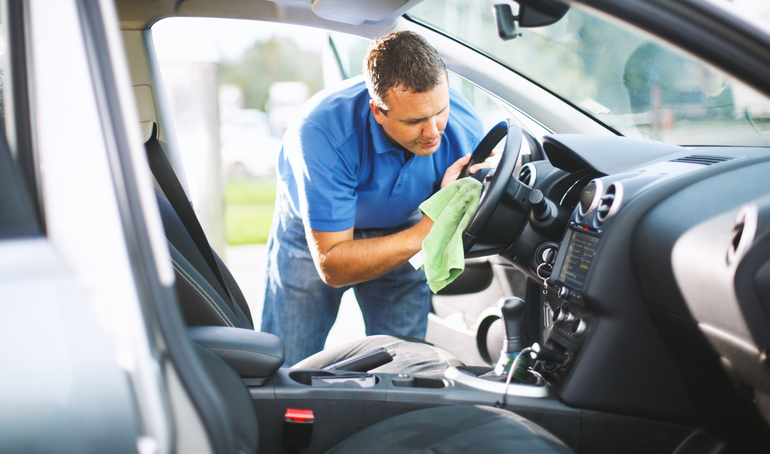
Your car’s exterior takes a beating year-around from paint-damaging forces like road salt, the sun, bird droppings, bug guts and more.  The interior also gets its share of abuse from dirt, pets, spilled beverages, heat and cold.  As a result, it’s wise to detail your car inside and out several times a year to remove harmful substances and protect all the exposed surfaces.  If you don’t have the time or interest in doing it yourself, there are professional detailers available that will keep your vehicle’s interior and exterior looking new and lasting longer.

Take it to a shop for repairs and upkeep

When your car’s been in even a minor fender bender, you need to have it inspected at a reliable body shop nearby to ensure that it lasts longer.  If there’s been even slight damage to the body, rust can form later.  Even low-impact accidents can compromise your car’s electrical and warning systems, along with your suspension and frame.  It’s also a good idea to have a collision repair shop inspect the engine and other mechanical parts to ensure your safety and restore your peace-of-mind.  Don’t take chances with your vehicle’s future when body shop technicians have the training, equipment and experience to ensure that your car will look and perform better for many years to come.  Most collision repair shops also provide affordable auto detailing services for your convenience.  To search your zip code now for a better auto body shop in your area, visit: www.carwise.com.
Read More