How Has the Pandemic Changed Driving & Traffic?

How Has the Pandemic Changed Driving & Traffic?

As more of the U.S. population becomes vaccinated against COVID-19 and public spaces begin to reopen, you may be wondering what to expect once you hit the road again, whether it’s a return to your daily commute or a long-awaited road trip to see loved ones. Like many parts of daily life, the coronavirus pandemic had an immediate, massive impact on when, how, and what people drive, which may lead to long-term changes in traffic, vehicles and driving experiences. Here are the major ways that driving has changed during the pandemic:

Less people on the road has led to fewer but more severe accidents.

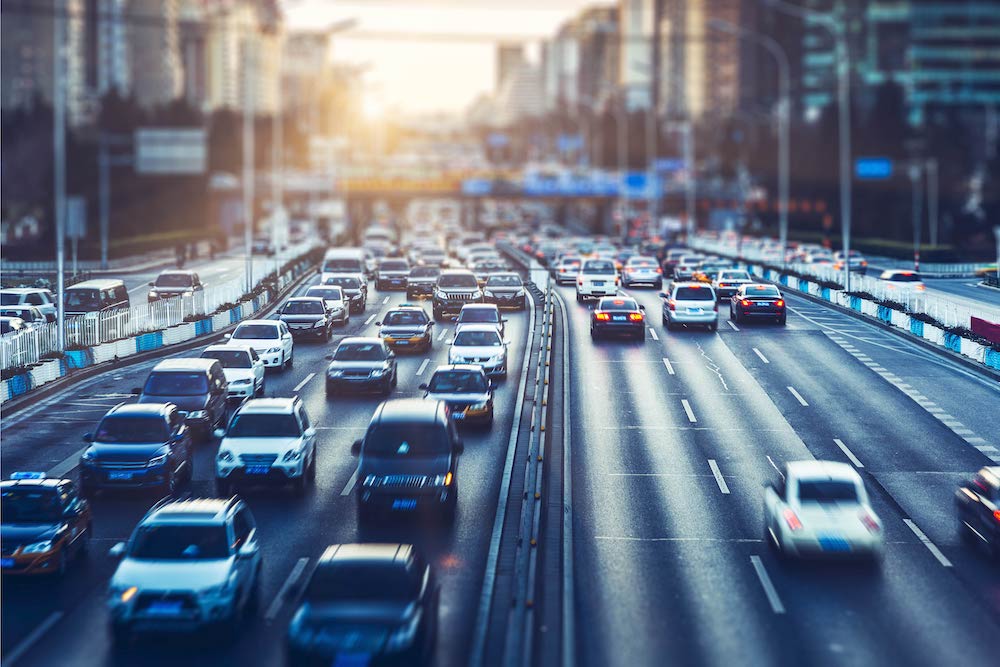
In the early months of the pandemic, when the stay-at-home orders and shift to remote work began, a large percentage of people stopped driving, leading to fewer car accidents. The number of miles driven nationally plummeted nearly 46% by early April 20201; by December, 50% of vehicle owners continued to drive less.2

Yet, while the number of car accidents dropped dramatically, those accidents that did occur were more severe. With significantly lower traffic congestion, people were driving at higher speeds. Another factor is the size of vehicles people are driving; in the first seven months of 2020 alone, SUVs accounted for 50% of all new vehicle registrations.3 With more large, heavy vehicles on the road moving at faster speeds, the trend of accidents getting worse isn’t all that surprising, but something drivers should be mindful of.

Not only are these conditions more dangerous for drivers; they are more expensive. Severe accidents lead to more extensive repairs and a higher likelihood that a vehicle will be declared a total loss. (A vehicle is a total loss when one of the following is true: the car cannot safely be repaired, the car’s damage meets your state’s criteria for total loss, or the repair costs would exceed the car’s estimated value.) When you’re out on the road, try to stay aware of your speed even if traffic is sparse, and be prepared to encounter other drivers who are speeding.

People who used to take public transit are choosing to drive during the pandemic.

While the percent of people commuting by car has always been significantly higher than those taking public transit in the U.S., the pandemic has deepened that gap even further. In a study by Continental on public mobility, 81% of U.S. respondents reported having changed their daily mobility habits during the pandemic, with 22% report traveling more often by car than before the pandemic.4 This trend will likely continue for the next several months amid lingering health concerns from coronavirus. So even though the pandemic has changed the way many people work and more companies are allowing employees to work from home, if those who do commute to the office continue to choose personal transportation rather than mass transit, it will not only increase traffic volume but likely continue to impact rising gas prices.

Be prepared to pay more at the pump.

With more people choosing to commute by car instead of public transit, and more people planning travel for their first vacations post-pandemic, gas prices are soaring back to pre-pandemic levels as demand for oil rises. A recent report from the Energy Information Administration (EIA) predicted that gas prices will climb to a three-year high this summer, to an average of $2.78 per gallon in the next six months. Although that price is similar to what we paid in the years before COVID-19, it’s still a 34% jump from gas prices in 2020 and may catch many drivers off-guard if they haven’t filled their gas tank in a while.5

Drivers are becoming more interested in usage-based insurance.

With more people driving less often and working remote for the foreseeable future, many have started seeking new ways to save on their auto insurance and understand how it is priced. A growing percentage of customers are comfortable with their auto insurers using their driving data to inform pricing,6 or what is known as “usage-based insurance” (UBI) or “pay as you drive” insurance.

Here’s how UBI works: depending the age and type of vehicle you have, your car may be able to record things like the mileage, speed, and distance of your driving on an average day. Some insurers can collect that data from your vehicle with your consent and use that to personalize your auto insurance pricing – and the better driver you are, based on the applicable carrier’s criteria, the better the price. If you find yourself working from home more often than you did before the pandemic, UBI may be a cost-effective option. 

Drivers are using digital tools to file insurance claims and seek repairs after an accident.

The necessity for social distancing had a major impact on how people interact with their auto insurer or local collision repair shop after an accident. Insurers used to send an adjuster to inspect a vehicle in-person after an accident and write an estimate for repair costs. These days, that entire process can be done from your smartphone, making it a COVID-safe experience for you and the adjuster: many insurers offer self-guided experiences through their mobile app that will allow you to snap photos of your damaged vehicle from the scene of the accident and upload any additional documentation securely. From there, the insurer uses a combination of computer and human analysis to review your photos and draft an estimate, which they can send to you via their app or an email.

Some collision repair shops offer similar digital experiences: you can start by searching for a collision repair shop near you via an online tool like Carwise, which lists profiles on over 22,000 collision repair shops nationwide. On Carwise you can review dozens of details on local shops, from their operating hours and location to real customer reviews, industry certifications, and photos of their work. Once you find a collision repair shop near you that meets your criteria, you may be able to schedule an appointment online or request a virtual estimate based on your photos of the damaged vehicle. Many shops are offering contactless drop-off and pick-ups as well and will update you about your repair status via text or email.

Daily life may not return to “normal” for a while, but as we rediscover familiar experiences like commuting to work for visiting family, we encourage you to be safe on the roads. If your car is in need of repairs, use Carwise’s shop finder tool to search your zip code for a customer-reviewed auto body or glass repair shop near you: http://carwise.com/auto-body-shops.

Article sources:

1 – Bob Pishue, Transportation Analyst, INRIX.  “COVID-19 Effect on Collisions on Interstates and Highways in the U.S.” Page 5, December 2020. https://www.fhwa.dot.gov/policyinformation/travel_monitoring/tvt.cfm

2 – ENGINE CARAVAN.  “Driving Change in Auto Insurance.”  December 1, 2020.  https://engine-insights.com/blog/driving-change-in-auto-insurance/

3 – Top Libby, IHS Markit. “New Vehicle Registrations Show Record Levels for SUVs.”  www.aftermarketnews.com, October 8, 2020.

4 – Continental Press Release, 2020-12-09. “Increasing Importance of Private Transportation During the Pan- demic: Continental Mobility Study 2020.”

5 – Energy Information Administration, Short Term Energy Outlook: https://www.eia.gov/outlooks/steo/

6 – TransUnion. “COVID-19’s Impact on the Insurance Industry Will Continue Well into 2021.” December 17, 2020. http://www.transunion.com/business.

Read More
5 Tips for Staying Safe and Social Distancing After an Auto Accident This Winter

5 Tips for Staying Safe and Social Distancing After an Auto Accident This Winter

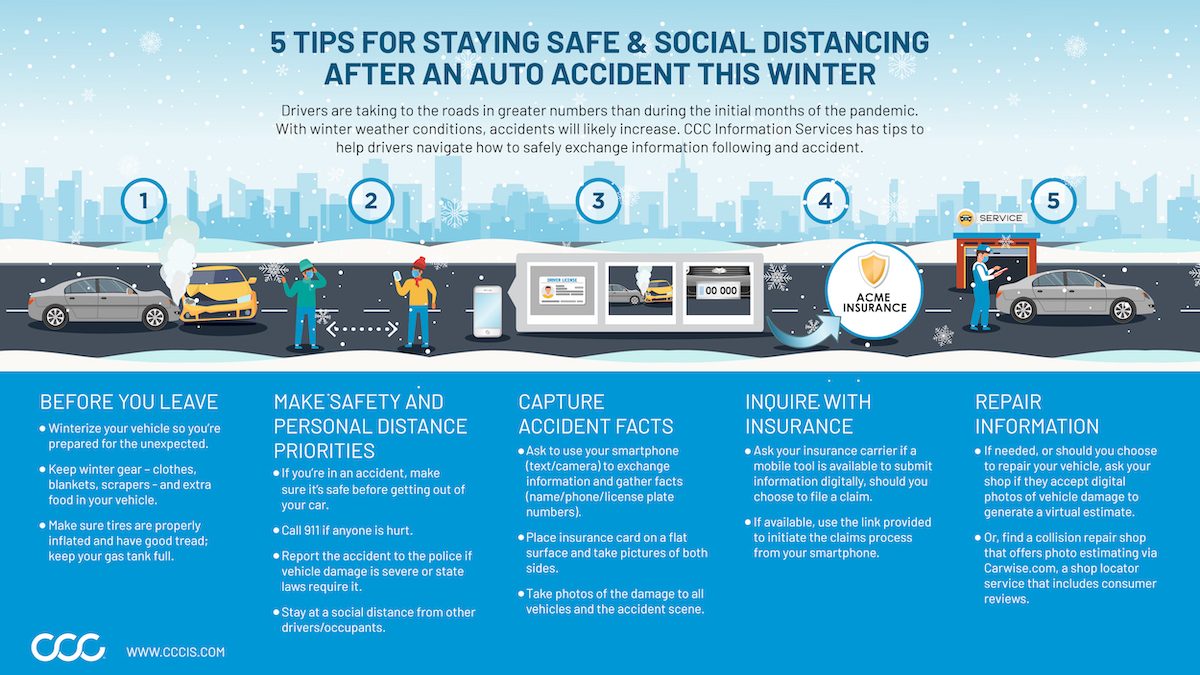
Drivers are taking to the roads in greater numbers than during the initial months of the pandemic. With winter weather conditions, accidents will likely increase. With elevated COVID-19 cases across the United States, this may increase the risk for drivers to contract the virus after an accident occurs. Here are some tips to help drivers navigate how to safely exchange information following an accident, as well as get a vehicle appraised and repaired.

Before You Leave

  • Winterize your vehicle so that you’re prepared for the unexpected.
  • Keep winter gear – clothes, blankets, ice scrapers – and extra food in your vehicle.
  • Make sure your vehicle’s tires are properly inflated and have good tread, and keep your gas tank full.

Make Safety And Personal Distance Priorities

  • Make sure the roadway is safe before getting out of your car.
  • Call 911 if anyone is hurt.
  • Report the accident to the police if vehicle damage is severe or state law requires it.
  • Maintain a social distance of six feet from other drivers, occupants, and any first responders.

Capture Accident Facts

  • Ask the other driver(s) to exchange information via text (names, phone numbers, license plate numbers, as well as vehicle descriptions, including make, color, and model).
  • Place insurance card and driver’s license on a flat surface and take pictures of both sides, and share with the other driver(s).
  • Take photos of the damage to all vehicles involved and the accident scene.

Inquire with Insurance

When you contact your insurance carrier to inform them of the accident, ask if they have a mobile tool available to submit information digitally, should you choose to file a claim. If available, use the link provided to initiate the claims process from your smartphone.

Repair Information

If your vehicle requires, or should you choose to repair your vehicle, ask your shop if they accept digital photos of vehicle damage to generate a virtual estimate. You can also search for a collision repair shop that offers photo estimating via Carwise.com.

When your vehicle has been involved in an accident, you can locate auto body or glass repair shops by searching on Carwise.com. Use Carwise’s shop finder tool to search your zip code for a customer-reviewed auto body or glass repair shop nearby: carwise.com/auto-body-shops/.

Read More
How Are Auto Body and Glass Repair Shops Keeping Customers Safe During the COVID-19 Outbreak?

How Are Auto Body and Glass Repair Shops Keeping Customers Safe During the COVID-19 Outbreak?

The COVID-19 outbreak has caused most Americans to rethink how they work, shop and play. Since March, non-essential businesses have been forced to temporarily close due to social distancing and stay-at-home orders set forth by public health officials. Yet many auto body and glass repair owners have seen an uptick in business as drivers focus their attention on long-awaited repairs while they’re working from home, or because automobile accidents and high-speed crashes have been on the rise since the start of the pandemic, according to analysis by CCC Information Services Inc. To protect their employees and customers most shops have initiated new COVID-19 safety protocols.


COVID-19 Challenges for Repair Shops

Auto body and glass repair shops are considered “essential” businesses, which means they can remain open even while other businesses can’t. Unfortunately, serving customers now presents those shops with day-to-day operational challenges caused by the COVID-19 virus:

  • It can be transmitted by simply coughing, sneezing, shaking hands or talking.
  • It can live on surfaces for varying lengths of time, depending on the surface.
  • COVID-19 is more dangerous for people over 55 and those with medical conditions like heart disease, lung disease, cancer, asthma or diabetes.

Although the safety recommendations from the US Centers for Disease Control and Prevention (CDC) are effective, they also make it more difficult for auto body and glass repair shops to work with their suppliers and customers. That’s forced most shops to rethink their practices.

Glass Repair Shops Are Taking these Precautions  

Because COVID-19 can survive on surfaces, auto glass shops have to minimize risk from contaminated surfaces. According to a recent article shared with Auto Body News, these are some of the new safety precautions now being used by most auto glass businesses when performing repairs and replacements:

  • Following all federal, state and local health department COVID-19 safety guidelines.
  • Asking customers to wash their vehicles and then let them sit for 24 to 48 hours prior to the appointment.
  • Wiping down all surfaces with sanitizing wipes before and after they’re touched by a technician.
  • Requiring technicians to wear disposable nitrile gloves instead of safety gloves during the actual repair or replacement.
  • Practicing social distancing while interacting with customers, including no handshakes.
  • Encouraging customers to use mobile services such as CCC’s photo estimate app (only for mobile devices) that can be hosted by a shop on Carwise and accessed from a shop’s profile on Carwise, instead of coming into the shop. Many shops will pick up your vehicle and relay contactless updates on your vehicle’s repair, plus return it contact-free.
  • Mandating that all employees wash their hands and use hand sanitizer throughout the day, including anytime they’re assisting a customer. 
  • Asking all customers to leave the keys in their car rather than handing them to the technician.

What About Collision Repair Shops?

Collision repair shops face additional challenges because they oftentimes receive damaged vehicles that are towed in, along with the fact that all vehicles must be touched during the initial inspection and estimate. In addition to the glass repair COVID-19 practices listed above, here are some others that you might see at your local auto body shop:

  • Upon arrival, asking customers to remove all personal belongings from the vehicle, like sunglasses, garage door openers, CDs and phone chargers.
  • Disinfecting a customer’s car when it’s dropped off and then again before it’s picked up, with special attention given to high-touch surfaces like knobs, buttons and touchscreens.
  • Covering upholstery surfaces like the steering wheel, dashboard and seats with plastic while the vehicle is in the shop.
  • Emailing all repair-related paperwork to customers instead of printing it off.
  • Thoroughly cleaning and disinfecting all shop areas at least twice a day.

In the end, the health and safety of customers and employees remains a top priority of auto body and glass repair shops during this unprecedented time in our nation’s history.

Promptly Search for Collision Repair Shops Here

Our thoughts go out to everyone during the COVID-19 pandemic, especially those brave first responders and healthcare workers serving on the front lines. When your vehicle has been involved in an accident, you can locate auto body or glass repair shops by searching on Carwise.com. By using CCC’s photo estimate app (only available on mobile devices), you’ll gain contact-free, remote access to over 19,000 collision repair shops with I-CAR and ASE-certified professionals.  Use Carwise’s shop finder tool to search your zip code for a customer-reviewed auto body or glass repair shop nearby: https://www.carwise.com/auto-body-shops/.


Read More