What To Do If Someone Hits Your Parked Car

What To Do If Someone Hits Your Parked Car

When you park your car while out and about, you probably assume your car will be there safe and sound when you return. But sometimes, accidents happen – even while you’re away from your vehicle. If someone hits your parked car and you return to find the damage, it can be confusing as to what to do next. The person responsible for the accident may not have stuck around or left a note to apologize and swap insurance information. What do you do if no one is around to take responsibility? 

What To Do If Someone Hits Your Parked Car

Here are some tips to help you navigate the process if your parked car has been hit:

  1. Document the damage. Documenting the damage with your smartphone will help speed up the process of filing a claim with your auto insurance and seeking any needed repairs from an auto body shop near you. If there is broken glass, be cautious as you approach the vehicle. Here are a few things you should be sure to document with photos and video:
    • Take photos of the vehicle and also any relevant details, like debris or tire marks.
    • Be sure to document the weather conditions, location and any nearby landmarks to help identify any factors that may have played a role in the accident.
    • If the driver left a note, make sure to take the note and take a picture of it as well, to ensure you have their information.
  2. File a police report. Whether the person who hit your car left a note or not, the first step should be to notify police so an accident report can be filed. In some cases, police may be able to track down security camera footage to help determine how the damage happened and who is responsible.
  3. Notify your insurance carrier. Depending on the type of insurance coverage you have, the accident may be covered by insurance. If the driver left a note, then the claims process will be similar to an in-person accident. If no note is left, then the accident may be considered a “hit and run” accident, which is a crime. If the damage is covered, ask if you can submit photos and video of the damage to kick off the process.
  4. Find an auto body or auto glass shop near you to repair the damage. If your car has been damaged, such as a damaged bumper, dent, or cracked window or windshield, you can contact an auto body or auto glass shop near you to discuss potential repairs. Ask if they accept digital photos of vehicle damage to generate a virtual estimate and kick off the repair process.

What To Do If You Hit a Parked Car

If the situation is reversed and you accidentally hit a parked car, don’t panic. Wait to see if the driver returns so you can provide them your information. If they don’t return, leave a note with your name, contact information and insurance information. You can also contact your own insurance company to start the claims process on your end. Whatever you do, don’t leave the scene without doing your due diligence to report the incident, otherwise it could be considered a crime by law enforcement.

How to Find a Collision Repair Shop Near You 

If you find yourself needing car repairs, Carwise.com is here to make the process easy from start to finish. Carwise.com makes it easy to find a repair shop near you, with details on nearly 22,000 shops – from real reviews by customers, to shop hours and locations, to shop certifications and before & after photos. Start your search today: https://www.carwise.com/auto-body-shops/

Read More
Five Signs of Hidden Damage After a Car Accident

Five Signs of Hidden Damage After a Car Accident

More than six million car accidents happen each year in the U.S., and more than 30 percent of those are rear-end collisions. Most “fender-benders” are minor and happen at slow speeds, leaving little cosmetic damage, if any. However, vehicles can sustain other kinds of damage that can be hard to spot if you don’t know what you’re looking for. This is what the automotive industry calls “hidden damage,” or collision damage to the frame, mechanics, or electrical systems within a vehicle that is not visible from the outside. Here are five signs that you might have hidden damage:

1. Steering Issues

Problems with your car’s steering can be a sign that your vehicle’s frame is out of alignment after a collision. The frame of a vehicle is like its skeleton; even a slight misalignment can put stress on other parts of the vehicle and cause additional damage. Here are some common symptoms of alignment damage to your vehicle:

  • The steering wheel seems to gravitate one direction when you’re driving
  • The steering wheel is shaky or wobbly
  • Noisy steering
  • The vehicle vibrates or shudders when in gear

2. A Bumpy Ride

If you’ve been in a collision recently and your ride has suddenly gotten a lot bumpier, it could be another sign that your vehicle’s frame is out of alignment and is damaging your car’s suspension system. Your car’s suspension system regulates friction between the tires and the road to limit the impact of road conditions and help you maintain control of the car. As suspension parts like struts and shocks wear down, they’re unable to absorb the impact of potholes and grooves in the pavement, making your ride rougher. It may be annoying at first, but if left unattended, suspension issues can cause your car to bottom out when you hit a speed bump or steep driveway, which can damage the undercarriage and create mechanical issues.

3. Malfunctioning ADAS Features

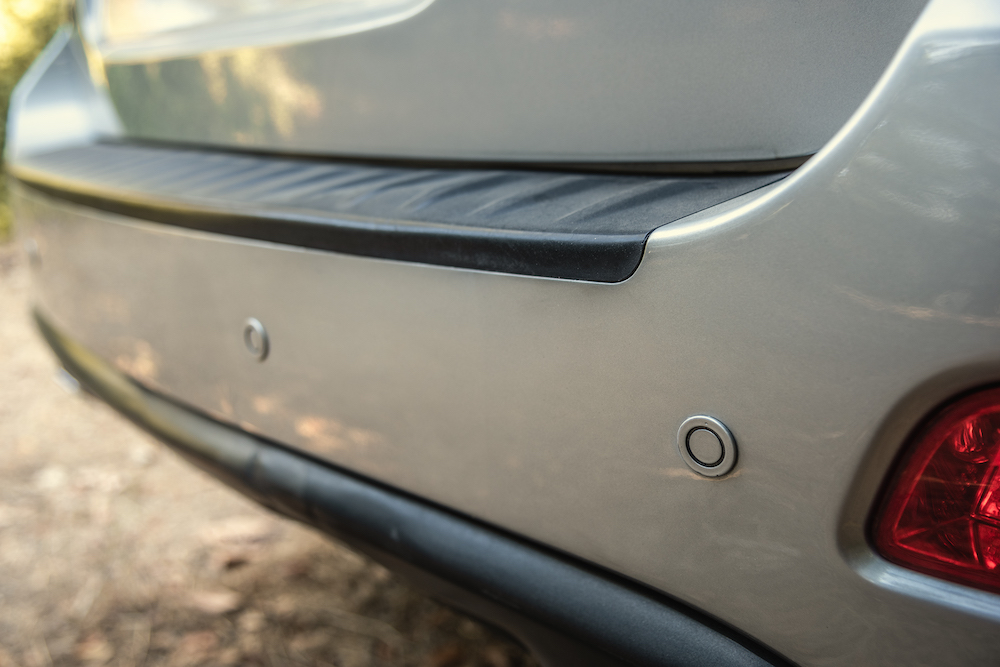
The newer your vehicle is, the more sensors it will likely have housed in the auto body. These sensors control Advanced Driver-Assistance Systems (ADAS) features like blind-spot monitoring, cruise control, and others. ADAS features are amazing innovations that can improve the driving experience, but the sensors are susceptible to damage in a collision because of where they’re located. For example, in a rear-end collision, the impact can damage sensors in the bumper, causing ADAS features to malfunction or fail. It is possible for a minor fender-bender to damage the sensors embedded in a car’s bumper without causing any visible cosmetic damage. If you’ve been in an accident recently and your blind-spot monitoring features malfunction or stop working, it may be a sign of hidden damage to the sensors in your bumper.

4. Leaking Fluid

If your car begins to leak fluid or have issues with acceleration or shifting gears after an accident, it could be a sign of transmission damage. Rear-wheel-drive (RWD) and all-wheel-drive (AWD) vehicles have transmission components near the rear of the car that can be susceptible damage in a rear-end collision.

5. Problems Opening and Closing Your Trunk, Hood, or Doors

After an accident, be sure to test all of the latches on your trunk, hood, and doors to make sure they can open and close properly. If they don’t, it could be another sign that your vehicle’s frame was damaged in the collision. A broken latch on a trunk, hood or door can cause them to pop open unexpectedly, even while driving. If a door gets stuck closed, this can be a risk to exiting your vehicle safely in the event of another collision.

After an Accident, Find a Certified Collision Repairer Near You

After you’ve been in an accident, a professional technician at a local collision repair shop will be able to repair hidden damage. Carwise.com makes it easy to find a reputable collision repair shop near you and request the inspection and estimate. From reviews by real customers to services and payment information, Carwise has details on nearly 22,000 repair shops. Use Carwise’s shop finder tool to search your zip code for a customer-reviewed auto body or glass repair shop nearby: https://www.carwise.com/auto-body-shops/.

Read More
Types of Hidden Damage Caused by Fender-Benders

Types of Hidden Damage Caused by Fender-Benders

Did you know that rear-end collisions are the most common type of car accident in the United States? According to the National Highway Traffic Safety Administration, rear-end collisions make up nearly 30 percent of collisions nationwide, or about 1.7 million accidents each year. Over 80 percent rear-end collisions happen when the lead vehicle is completely stopped or moving at a very slow speed, usually as the result of a driver following the car in front of them too closely. Unfortunately, even minor “fender-benders” can cause hidden damage in addition to cosmetic damage like dents or scratches.

What is Hidden Damage?

Hidden damage is damage to the frame, mechanics, or electrical systems within a vehicle that may not be visible or immediately apparent following an accident. Here are the most common types of hidden damage caused by rear-end collisions: 

Damage to the Vehicle Frame

Think of a vehicle frame as the skeleton of your car. A fender-bender can throw the vehicle frame out of alignment, just like it can to your own back or neck. If your car’s frame has been damaged, it can cause a litany of issues:

Alignment problems

One of the most common issues after your vehicle’s frame has been damaged is alignment problems. Here are some common symptoms of vehicle alignment problems:

  • The steering wheel seems to gravitate one direction
  • The steering wheel is shaky or wobbly
  • Noisy steering
  • Tires are showing uneven wear
  • The vehicle vibrates or shudders

Even slight misalignments can put unnecessary stress on other parts of the vehicle and exacerbate the damage.

Trunk, hood, and door damage

When your car’s frame has been damaged, it can impact latch mechanisms and seals on your trunk, hood, and doors. If a trunk, hood or door latch is broken it can cause them to pop open unexpectedly, even while driving. Damage to the seal around a door or trunk can allow moisture to get in, which can eventually cause rust around the car frame, or even mold and mildew in the interior.  After an accident, test all of the latches for the trunk, hood, and doors to make sure they latch properly.

Suspension issues

A damaged vehicle frame can cause extra wear and tear on the vehicle’s suspension. The suspension system regulates friction between a car’s tires and the road to limit the impact of road conditions and help drivers maintain control of the car. If you’ve been in a collision recently and your ride suddenly gets a lot bumpier, it could be a sign that your vehicle’s frame is out of alignment and is wearing down the struts, shocks, or other suspension parts. 

Damage to the Vehicle Electric System

Your car’s electrical system is a complex web of wires and sensors. Take your bumper, for example: the newer your vehicle is, the more sensors it will likely have housed in the bumper. These bumper sensors control Advanced Driver-Assistance Systems (ADAS) features like blind-spot monitoring, cruise control, and others. ADAS features can improve the driving experience, but they also make even minor accidents more complicated because of the sensors embedded in the body of your vehicle to make those systems run. In a rear-end collision, impact to the bumper can damage these sensors and cause the ADAS features to fail. A diagnostics test at a collision repair shop near you is one way to determine whether your car’s ADAS system has been damaged in a rear-end collision.

Fender-benders can also damage other electrical components, including airbag deployment, your car’s head, tail and brake lights, and battery connectivity. If you’ve recently been in a fender-bender and your car’s battery is suddenly dead, it’s likely that the battery’s wiring was knocked loose in the collision.

Damage to the Vehicle Mechanics

Rear-end collisions can not only cause damage to your car’s frame and electrical system; they can also cause mechanical damage. The most common type of mechanical damage after a fender-bender is transmission damage. Rear-wheel-drive (RWD) and all-wheel-drive (AWD) vehicles have transmission components near the rear of the car that can be susceptible damage in a rear-end collision. If your car begins to leak fluid or have issues with acceleration or shifting gears after an accident, transmission damage could be the culprit. 

It’s always a good idea to crouch down and inspect your vehicle’s undercarriage after a collision, but if you don’t know what you’re looking for, the damage may not be immediately obvious.

Steps to Take After a Fender-Bender

Here are the basics steps to take immediately following a car accident, whether it’s a serious rear-end collision or minor fender-bender:

  1. Pull your vehicle off to the side of the road. Once you’re safely out of the way of oncoming traffic:
  2. Document accident details. Using your smartphone, capture photos of all vehicles involved at the scene of the accident. Swap contact and auto insurance information with other drivers involved in the accident.
  3. Contact your auto insurance provider and share details from the accident. Ask how to submit photos from the scene of the accident. Some insurers may have a mobile app experience that makes documenting the accident easier, like uploading your photos.
  4. Even if your car seems drivable after the collision, be sure to check for hidden damage before driving away from the scene of the accident:
    • test your head, tail and brake lights
    • test your hood, trunk, and doors to make all of them open and close properly
    • crouch down to check for damage on the undercarriage, and watch for leaking fluid
    • watch for signs of vehicle misalignment mentioned above

Find a Collision Repairer Near You

A professional technician at a collision repair shop near you will be able to repair hidden damage after an accident, whether it’s a bent vehicle frame, stuck door, or something else.  

After you’ve been in a collision, Carwise.com makes it easy to find a reputable collision repair shop near you and request an inspection and estimate. From reviews by real customers to services and payment information, Carwise has details on over 22,000 repair shops. Use Carwise’s shop finder tool to search your zip code for a customer-reviewed auto body or glass repair shop nearby: https://www.carwise.com/auto-body-shops/.

Read More