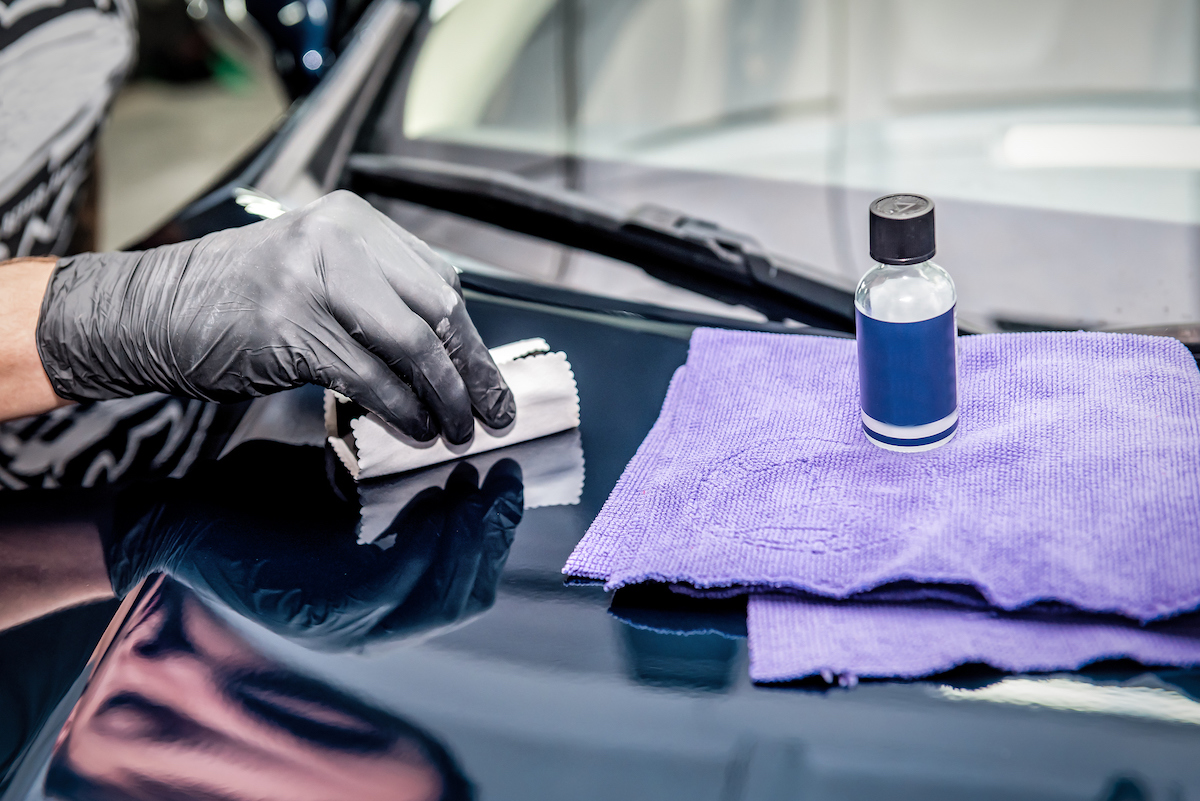
Repairing Scratches on Your Car – and When to Repaint

Even if you’re a very careful driver, scratches can happen. Sometimes it’s as simple as sliding a grocery bag off the top of your car or brushing against a bush as you pull into your driveway. Some minor scratches can be fixed at home, but keep in mind that repairing or repainting a scratch incorrectly can incur further damage. Here are a few tips on how to decide when it’s best to try a DIY repair or take it to a professional.

DIY Options for “Barely There” Scratches

If a scratch is minor or barely noticeable, there’s a chance you can fix it at home. If the scratch is shallow and the length or width is less than an inch, you may be able to buff it out yourself. A good test is to see if your fingernail catches in the scratch.

Scratch Repair Kits

A scratch repair kit is worth a try for those “barely there” scratches and can be purchased at most auto body shops, online, or in other retail stores. Most will come equipped with scratch repair polish and paste, touch up paint and buffers.

For all scratches, you’ll start by first cleaning the area with soap and water, using a microfiber cloth. This removes any debris that might cause further scratching. Next, apply the scratch removal paste to a microfiber cloth or the buffers the kit came with – not directly to the scratch – and gently buff the scratch to fill it in.

Then, use the scratch removal polish with another buffer or microfiber cloth to gently buff the scratch again. Take your time – this process can take a few minutes. Don’t repeat the buffing process more than three times, or it may erode the clear coating on the auto body.

Finally, remove any extra polish with a clean cloth, and touch up the paint as needed with the paint that came in your repair kit. Let the paint dry for 8 to 12 hours, then consider getting your car waxed to protect the paint once again.

Glazing Putty Kits

If a scratch is big enough to catch your fingernail, or that you can see bare metal, it’s a bigger job – and you should consider contacting a professional. However, if you want to attempt to fix it at home, you can try using glazing putty.

Glazing putty can be purchased at most auto shops and some retail stores. This putty can fill in bigger scratches, and it’s the best method if a scratch is deep enough to see the metal beneath the paint.

In this case, you’ll again clean the area, but this time use rubbing alcohol to remove any residual wax or dirt from the area. Next, apply the putty directly to the scratch on the car. Use a spreader tool to spread it evenly and fill in the scratch. Allow it to harden for several minutes before moving on.

Finally, you’ll remove any excess putty with a liquid paint leveler and a microfiber cloth until the scratch looks flat and the area around it seems transparent. Then, you’re ready to repaint.

The Challenge of Paint Matching

Keep in mind that the paint may not be an exact match to the color and finish of your vehicle. If the scratch is large enough, a mismatched paint job will be just as noticeable as the scratch itself, so you may want to seek paint repair from a professional auto body shop near you. Professional auto body technicians have the tools and resources to repair the scratch efficiently and match your vehicle’s color and finish.

Find a Professional Auto Body Shop Near You

Carwise.com can help you find a shop near you that can get your vehicle’s scratches fixed quickly and correctly the first time. Carwise has details on more than 21,000 shops, from hours and locations, to shop certifications, reviews by real customers, and before and after photos. Use Carwise’s shop finder tool to search your zip code for a customer-reviewed auto body shop nearby: https://www.carwise.com/auto-body-shops/.

Read More

Eight Tips to Extend the Life of Your Car

Cars can be expensive – and if you have one you already love, you likely want to make sure it stays in the best condition possible for as long as possible and avoid the maintenance pitfalls that can lead to an accident. There are some simple things you can do that may help extend the life of your car, keeping it on the road for many years to come. Below, find eight simple tips to follow to make sure you’re doing all you can.

1 – Read the manual.

One very simple way to keep your car in its best shape? Read the user manual when you purchase it. The manual will tell you what maintenance your car’s specific make and model needs and how often, and it will even tell you particular things to look for in your specific car.

2 – Change your oil regularly.

Oil protects your engine and keeps it running smoothly. Oil should be changed every 3,000-5,000 miles or so. When in doubt, refer to the owner’s manual to see how often oil should be checked or changed.

3 – Routinely check and change your fluids.

There are many fluids in your car aside from oil; there’s also transmission fluid, radiator fluid, brake fluid, power steering fluid, and others. These fluids should be checked at least once a month, and definitely checked with regular car maintenance. If they need to be topped off or changed, do this promptly.

4 – Check your tires often.

Tires are very important for not only your car, but also for your safety. Keep an eye on your tire pressure, which can fluctuate with outdoor temperatures. Tires that have too much pressure can pop while you’re driving, and too low pressure can damage your vehicle as well. Tire pressure can be checked at most gas stations, with air stations available if needed. Be sure to also keep tabs on the condition of your tires and have them rotated regularly, usually about every six months.

5 – Keep your car clean – inside and out.

Keeping your car clean isn’t just about appearances – vehicle cleanliness plays a role in protecting the auto body’s paint job, preventing rust and more. Go through a carwash regularly to keep the exterior protected, and get the undercarriage cleaned before and after winter, to protect it from salt build up from the roads. While you’re there, clean the inside of your car as well, to keep the interior materials in good condition.

6 – Avoid “cold starts” if possible.

Cold starts are when you turn your car on and immediately drive away, typically because you’re running behind schedule and want to get to your destination quickly. Ideally, you should turn your car on and wait about 30 seconds before you start driving, no matter the weather. In cold temperatures, engines collect condensation that can contaminate the oil and corrode the system. Giving your vehicle a few minutes to warm up before you hit the road can help condensation evaporate and avoid damage to the engine.

7 – Fix windshield & window chips.

Windshield and window chips may seem minor, but they can quickly turn into cracks. It’s best to fix a chip promptly so you can avoid having to replace all of the glass down the road – a much more expensive repair.

8 – Stay on top of repairs.

If an indicator light comes on in your dashboard or you know your car needs a repair, it’s best to not neglect it to keep your vehicle in top-notch condition and avoid accidents that incur more damage.

FIND A REPUTABLE COLLISION REPAIR SHOP NEAR YOU

If you need a paint job, window repair, or collision repair following an accident, Carwise can help. To find a reputable auto body shop near you, search Carwise.com and read reviews from real customers, find shop hours and locations, before and after photos, and certifications. With more than 21,000 shops to choose from, Carwise.com will help you find your perfect fit. Get started today: https://www.carwise.com/auto-body-shops/.

Read More

Eight Dashboard Light Indicators and What They Mean

You get in your car about to head to work and – ding! A dashboard light indicator turns on. When lights turn on, it can be confusing to know which ones to pay attention to immediately, and which ones can wait. As you’ll see below, some of the vehicle performance issues that prompt dashboard indicator lights can lead to you being stranded or getting into an accident, so it’s important to follow up with them promptly to protect your safety and the integrity of your vehicle.

Here are eight indicators that you should always pay attention to – what they might look like, what they might mean and what to do when you see them.

1 – Check engine light.

The check engine light appears as an engine icon and indicates that your engine may need maintenance. The check engine light can represent a whole host of issues and will likely require a scan tool to read the code indicating which part of the engine is in distress. You may be able to get a check engine scan at your local auto parts store or at your local mechanic shop.

2 – Engine temperature warning light.

This indicator often looks like a thermometer. When the engine temperature light this comes on, it indicates that your car’s engine is overheating. Pull over or turn off the vehicle as soon as possible and check the coolant level, fan, and radiator cap, and keep an eye out for leaks below the engine. Be careful touching anything with your bare hands; some engine parts could be very hot. You may want to keep protective gloves for this purpose in a vehicle safety kit along with other essentials in case you are ever stranded.

3 – Battery charge warning light.

The battery charge warning light looks like a battery and indicates that your battery is either short on power or not functioning properly. Check the battery and alternator to see what the issue is. Car battery testers and portable battery chargers are widely available at auto supply stores and online; it’s always a good idea to store one or both of these items in your vehicle in case of a battery emergency.

4 – Oil pressure warning light.

The oil pressure warning light looks like an oil cannister and indicates that your vehicle is losing oil pressure – which in turn means that lubrication on your vehicle may be low or lost completely. If it is not addressed immediately, it could severely damage your vehicle’s engine and lead to an accident.

5 – Brake warning light.

The brake warning light often appears as an exclamation with a circle around it. Put simply, it means something is wrong with your brakes. You should investigate this immediately, as faulty brakes could make your car unsafe to drive.

6 – Tire pressure warning light.

The tire pressure warning light also often has an exclamation point but is usually placed inside a tire icon. This can indicate that pressure in one or more of your tires is too low or too high, and this is a safety concern. Many gas stations have areas where you can adjust tire pressure and check levels.

7 – Traction control warnings.

This indicator looks like a car slipping on a road, and can indicate just that – your car may be losing traction with the pavement as you drive. Traction control is activated when a vehicle detects that one wheel is spinning faster than another. It automatically applies brakes to help the car regain traction. If you see this indicator, you should drive very carefully to avoid losing control of the vehicle.

8 – Anti-lock brake (ABS) warning light.

This indicator icon appears with the letters ‘ABS’ inside of a circle. Most cars today use anti-lock brakes, and if the ABS warning light comes on, it indicates that something may be wrong with the system. This light may light up when you first turn your car on, but it should go away. If it remains on, that indicates a problem that needs prompt attention.

Neglecting Dashboard Signals Can Increase Risk of Accidents & Vehicle Damage

Seeing a dashboard signal appear is never fun and rarely convenient, but those signs are there to help you avoid danger and prevent damage to your vehicle as soon as possible. Still, accidents happen, whether it’s a minor fender bender after losing tire traction or something more severe.

If you’re ever in an accident, be sure to follow these post-accident safety tips for gathering information from other drivers at the scene, contacting your auto insurer, and finding a local auto body shop near you.

Find a Reputable Collision Repair Shop Near You

If you are in a crash as the result of an engine problem or other mechanical issue, Carwise can help. To find a reputable auto body shop near you, search Carwise.com and read reviews from real customers, find shop hours and locations, before and after photos, and certifications. With more than 21,000+ shops to choose from, Carwise.com will help you find your perfect fit. Get started today: https://www.carwise.com/auto-body-shops/.

Read More
top ways to avoid an auto collision

Six Signs Your Car May Need New Brakes

When it comes to safety on the road, one of the most important aspects of vehicle maintenance is the brakes. While just two percent of all accidents in the U.S. are caused by brake failure, it is still extremely dangerous and, in most cases, preventable with routine maintenance. Brake failure is often gradual, and cars show plenty of warning signs when brake maintenance is needed before your car’s brakes stop working completely. Industry experts recommend replacing the brake pads every 10 – 20,000 miles to keep wear to a minimum. Like with many car maintenance tasks, neglecting routine brake maintenance can incur further damage to your car’s mechanics or auto body, or it could lead to a serious accident. But if you’ve forgotten to take your car in for regular brake maintenance, or you’ve purchased a used car recently and aren’t sure what shape the brake pads are in, here are some telltale signs to look, listen, and sniff for.

1 – Squealing or clicking noises.

If you hear a squealing noise while driving your car that seems to stop when you brake, that is most likely a sign that your car’s brake pads need replacing. Brake pads make a very annoying sound when they’re worn down due to the wear indicators rubbing against the brake pad rotor.

Alternatively, if you hear a clicking noise when you press the brakes, that’s a sign that the brake pads could be loose. They should be inspected in this case as well.

2 – Take longer to break or being extra sensitive to braking.

If you notice that your car is taking longer to brake, that’s another sign that your brakes need to get checked out. Alternatively, brakes that are very sensitive or “sudden” could indicate a brake fluid level or other issue. Additionally, if you feel vibrations in the brakes when you use them, that can be another sign of a problem.

3 – Your car pulls to one side.

Keep note of how your car moves when you brake. If a vehicle tends to drift to one side when braking, this could mean that the brake pads are wearing unevenly. In that case, leaving the problem could cause damage to other parts of your car, like the ball joints or steering column. Be sure to replace both brake pads promptly to avoid further issues.

4 – Visible signs of wear.

Sometimes, knowing if your brakes need to be repaired is as easy as taking a look at the brake pads. You may have to remove the wheels to do this, but brake pads should be at least a quarter inch thick. If it’s thinner than that, it’s definitely time to have them inspected.

5 – Fluid leaks.

This sign may be more difficult to decipher because cars can leak fluid for all sorts of reasons, from the air conditioning to the transmission to the engine. Brake fluid is yellow or light brown, similar to vegetable oil. If you’re not sure, head to a mechanic.

6 – A burning smell.

The smell of burnt rubber after you hit the brakes is a strong indication that your brake system has overheated. Continuing to drive your vehicle when the brake system is overheating can damage the brake line and cause brake failure, which can be dangerous.

Neglecting Brake Maintenance Can Increase Risk of Accidents & Vehicle Damage

The bottom line? When in doubt, get your brakes checked out. While accidents due to brake failure are rare, and it is very rare for brakes to fail without warning, accidents can still happen, from minor fender-benders to severe collisions. The risks increase in inclement weather, especially on wet or icy roads.

If your brakes do fail while you’re driving, here are a few safety tips:

  • Try to remain calm and remove your foot from the gas.
  • Turn on your hazard lights to warn other drivers.
  • Keep your wheel straight; do not try to crash into anything to stop the car from moving.
  • If your car has an anti-lock braking system (ABS), press the brake pedal down as far as it can go.
  • If your car does not have ABS, pump the brake as hard and fast as possible.
  • Shift the car into a lower gear; this will help the engine slow the car down.
  • Steer your car to a clear spot on the shoulder of the road.
  • Once your car has slowed down significantly, apply the emergency brake. Do this as gently as possible to prevent your wheels from locking up, which can be dangerous.
  • Once the car has stopped moving, turn the engine off and call for roadside assistance. Do not try to turn the car on or drive it until the brakes have been repaired by a mechanic.

If your brakes fail and cause you to get into an accident, be sure to follow these post-accident safety tips for gathering information from other drivers at the scene, contacting your auto insurer, and finding a local auto body shop near you.

Find a Collision Repair Shop Near You

If you are in a crash as the result of a brake failure, Carwise can help. To find a reputable body shop near you, search Carwise.com and read reviews from real customers, find shop hours and locations, before and after photos, and certifications. With more than 21,000+ shops to choose from, Carwise.com will help you find your perfect fit. Get started today: https://www.carwise.com/auto-body-shops/.
Read More

Three Maintenance Tasks to Do Before You Sell Your Car

You’ve decided the time is right to sell your car. But, do you know how to make sure you get the most from the deal? While you may not want or need to invest a ton of money in a vehicle you’re hoping to sell, keep in mind that potential buyers will be inspecting your car to see if it’s a good investment for them. The better condition your car is in when you’re ready to sell, the more likely you are to get the most bang for your buck. There are a few maintenance tasks you can take care of that may make it easier to sell your car.  

1 – Inspect & Repair.

Obviously, it helps to make sure there is nothing glaringly wrong with your car if you want to get the maximum value from selling it. If a windshield or window is cracked, consider replacing it – your insurance may cover this anyway. If there are scratches to the paint or rust spots, it might be worth it to have them touched up by a local auto body shop that can match the paint exactly.

If your car has suffered dents from a hailstorm or an accident, those could potentially be fixed through a process called paintless dent repair, which is generally more affordable than a dent repair requiring paint.

 And if there’s major damage – the bumpers, for example – consider getting those repaired, especially if your insurance will cover it. You might be surprised which delicate electrical systems can be damaged by even a minor fender bender. Here are a few signs of hidden damage to watch out for.

2 – Replace & Replenish.

Before you start showing your car off to potential buyers, replacing and replenishing certain items on your vehicle may make it easier to sell. One simple thing you can do is replace or replenish any fluids, such as the oil, radiator, brake fluid, transmission fluid and windshield wiper fluid. If you notice your windshield wipers are worn or a bulb on head or taillight has burnt out, now is the time to replace them as well. Aside from being a courtesy to the future owner, these tasks can demonstrate that your vehicle has been well cared for and boost confidence with the potential buyer, whether it’s an individual or a dealership.

3 – Deep Clean & Detail.

A clean car will be more likely to make the sale. Start by clearing out any trash and personal belongings – don’t forget check the glove box! – but you should also consider taking it a step beyond that.

Paying for your car to be professionally detailed could truly pay off in the end, especially if your car’s interior has any stains or odors. Depending on the age and state of the vehicle, your local auto body shop may be able to restore the interior of your vehicle to like-new condition.

But if you’re going to clean your car yourself, be sure to vacuum any seats and carpeting, get into every crevice to remove dirt and crumbs, and clean the glass on the inside of the car, as well as the center console. If you’re trying to freshen the odor inside your car, follow these tips. Finally, take your car through the car wash and perhaps even splurge on a wax; it’ll give your car that extra sparkle that’s so appealing when car shopping.

Find an Auto Body or Auto Glass Shop Near You

If you’re ready to sell your car but do need some damage repaired, use Carwise.com to find a local auto body or auto glass shop for professional restoration, whether it’s a bumper repair, window replacement, or professional car detailing. Carwise provides real reviews from recent customers as well as shop hours and location, before and after photos, and certifications. Click here to get started: https://www.carwise.com/auto-body-shops/.

Read More

Ten Things That Can Damage Car Paint

Whether your car is decades old or brand new, you want your car to remain looking as nice as possible for as long as possible, and keeping the paint job looking fresh goes a long way. But there are certain materials that can damage car paint. While many are repairable, some are not, so it’s important to be aware of them and take care of any messes promptly.

Below, read about 10 top items that can damage a car’s paint and learn what you can do to protect your own vehicle.

1 – Brake fluid.

As a car owner, you likely know how important it is to keep brake fluid at the proper levels – but even a little bit of non-silicone-based brake fluid can act like paint thinner and damage a paint job. If you spill brake fluid, wipe it up immediately by dabbing. Don’t spread it around. Then, wash the spot with soap and water.

2 – Animal and plant materials.

Bugs, bird droppings and tree sap can all be acidic and damage paint if they sit on a vehicle for too long, especially in the sun. Regular car washes by hand or at a commercial wash can help avoid lasting damage. If tree sap has hardened, it may need to be carefully scraped off – but be mindful not to scratch your car. And, be mindful that some types of commercial washes are better for your vehicle’s finish than others.

3 – Gasoline.

Gasoline can stain your car’s finish and be very difficult to remove if left for too long, so it’s important to be cautious when inserting and removing gas nozzles from the gas tank to avoid drippage. If you take care of spills and drips right away, it shouldn’t be an issue. Keeping your car waxed can also help protect the car’s surface from gas stains.

4 – Vandalism.

Whether a silly prank by a friend or a true act of vandalism, there’s no doubt it can damage your car. Items like silly string or shaving cream might seem benign, but if left in the sun, they can damage car paint. Other household items like certain cleaning fluids or acidic foods (tomatoes, vinegar, etc) can also leave damage. Be sure to clean up messes like these quickly with soap and water. If other vandalism occurs on your car – such as graffiti or scratches – contact your insurance agency, as the repair may be covered. In most cases, a local auto body shop will be able to color match your car’s paint and restore it to like-new condition.

5 – Shoe polish.

Believe it or not, shoe polish can be one of the most difficult stains to remove from a vehicle. Sometimes, it’s impossible. You might be wondering why someone would put shoe polish on a vehicle, but mistakes happen. If someone tries to test shoe polish on a worn part of their leather interior and rests the polish-soaked rag on the roof or hood of the vehicle even temporarily, it can cause damage. (It should also be noted that shoe polish is not recommended for cleaning or repairing leather car interior because it will not soak up the substance the way that shoe leather does.) If shoe polish gets on your car, go to your local body shop to purchase a specialized cleaner, or consult with a professional.

6 – Dust.

Dust or dirt on a car isn’t exactly attractive to begin with, but when dust mixes with rain, it can cause corrosion to the paint. Gentle car washes can help keep your car free of long-term dust and maintain the finish.

7 – Acid rain.

Acid rain is just that – acidic. Even after the rain evaporates, the acidic part remains on your car and can damage paint. Again, frequent car washes can help limit this exposure.

8 – Dirty towels & rags.

Washing your car can of course be great for the paint, but only if you’re using the right towels and rags. Be sure towels and rags are clean and ideally made of microfiber. Also, don’t set them down on pavement or gravel while working, as you could pick up dirt or debris that could damage your car’s paint.

9 – Coffee & soda.

Between the sugar and acidic nature of many coffee drinks and sodas, they can spell danger for your car paint. Simply wipe up these spills with a wet paper towel to avoid any lasting effects.

10 – Salt.

Salt helps keep vehicles safe on slippery winter road – but is one of the most corrosive things for car paint. If you live in a cold or coastal climate, it’s important to wash your car frequently to keep salt off your car long-term to reduce the risk of rust. Ideally, you should also treat your car with a wax sealant before the first snow as an extra precaution.

Find an Auto Body Shop Near You

If damage has already occurred to your car paint or you need a consultation with an expert, don’t worry. Carwise.com can help you find an auto body shop near you from more than 20,000 facilities nationwide. . Carwise’s shop search tool provides details on more than 20,000 auto body shops nationwide, including hours and location, certifications, real reviews from recent customers, and before and after photos. Get started today: https://www.carwise.com/auto-body-shops/.

Read More

Taking Your Car to College? Make Sure it’s Road-Ready with These Tips

Going to college is the first taste of true independence for most people – and bringing a car to college can provide even more freedom. But, before you hit the road, it’s important to prepare your car inside and out so that you don’t have to deal with car-related headaches throughout the semester, especially if your school is far away from home.

Use this checklist to make sure your car is ready to go before you set off.

1 – Get the Maintenance Done

Maintenance is key to keeping a car in shape for as long as possible. A few simple maintenance items include:

  • Get an oil change.
  • Get the brakes checked.
  • Check the head and taillights, as well as turn signals.
  • Check the tire pressure.
  • Check the car battery.
  • Windshield wiper replacements.
  • Replace or replenish the fluids, including transmission, break, coolant and windshield wiper fluid.

Although school semesters can get busy with classes, homework, jobs, and social events, remember to keep an eye on all of these things so that your vehicle stays road-ready. It takes less time and money for routine maintenance tasks than it would for a major repair because the oil wasn’t changed. 

2 – Complete Any Necessary Repairs

Some repairs are necessary for maintaining the safety of your vehicle. While accidents can happen, you may be able to avoid some dangerous situations by taking care of any needed repairs over the summer or winter break, before you head back to school. Repairs could include:

3 – Give Your Car a Good Cleaning

Who wants to worry about cleaning their car in the middle of a hectic semester? Cleaning may seem unnecessary, but in some cases can actually improve the safety of the vehicle, like cleaning the glass. Start each semester with a clean car and save yourself time by doing the following:

  • Clean the glass inside the car to reduce glares.
  • Clean out any trash and wipe down the steering wheel and center console.
  • Vacuum the seats and floors.
  • Have a bad odor in your car? Follow these tips for removing it.
  • Take your car through the car wash and get the undercarriage washed, particularly if you live in a cold climate with snow, to reduce the risk of rust.

4 – Take Preventative Measures

If something does happen while you’re away at school, it helps to be prepared. A few easy steps can help with this:

  • Get a AAA Membership or make sure you have tow services through your auto insurance provider. Make sure you have this information saved in a note on your phone, or that you have your provider’s mobile app downloaded. By doing this, you know that you’ll have roadside assistance wherever you are should something happen.
  • Update your insurance card if needed. Make sure it has the most up-to-date information and is stored in the glove compartment
  • Keep your car battery charged, and make sure the battery is holding a charge well.
  • Stock an emergency kit. This should include items like bottled water, shelf-stable food items, gloves and a warm blanket, flashlights, jumper cables, tire repair kit, basic tool kit, and even some cash. Think about the climate you’re in and what items you might need if you’re stranded for several hours.

Find an Auto Body or Auto Glass Shop Near You

Despite all of the above preparations, sometimes your car will still need work while you’re at school. You may not know the most reputable auto body or auto glass shop near your school, but Carwise.com can help you find a reputable auto body shop that fits your needs, even while you’re far from home. The Carwise shop search tool has details on more than 20,000 shops nationwide, from shop hours and location to real reviews from recent customers, before and after photos, shop certifications, and online appointment scheduling. Search more than 20,000 shops on Carwise.com to find your perfect fit: https://www.carwise.com/auto-body-shops/.

Read More

Can a Car Wash Damage Your Car’s Finish?

There’s something so satisfying about a freshly washed car that sparkles and shines. But did you know that a car wash can actually damage your car’s finish? Before you get too worried, it helps to know that most modern cars have a finish that’s extremely durable and can last under a variety of conditions for several years. And, not all car washes are created equal – some are more likely to damage a car’s finish than others. Here’s what you need to know to select the right washes for your vehicle.

The Pros and Cons of Different Carwashes

If you’re going to a commercial car wash, there are generally two types – the more “old school” kind with roller brushes, and newer ones with cloth scrubbers. Which one can do more damage? The answer might surprise you.

While car washes with roller brushes may look more abrasive, they are actually less likely to damage your car because they hold on to less debris. On the other hand, cloth scrubbers can hold onto dirt or even small bits of gravel, which can scratch a car’s finish. Either way, if you’re in line behind an extremely dirty car, it might be worth coming back another time, just in case that dirt ends up scratching your car.

With this in mind, you may think a third option – “touchless” car washes – are safer. These car washes use high-pressure water and cleaning solution to clean a car without touching it. However, keep in mind that while these car washes don’t touch your car, they likely make up for it with more abrasive cleaners. A little bit of scrubbing is also necessary to remove most types of grime – just choose your carwash carefully based on how dirty your car is.

While at a car wash, you can also skip most of the extras. Waxes might give your car a nice look for a few days, but can quickly wear off and isn’t always worth the expense. You should also get the undercarriage washed a few times per year, especially if you live in a cold or coastal climate where road salt may increase the risk of rust.

Handwashing is Best

The safest option for washing a car is handwashing. This way, there’s much more control over what comes into contact with your car’s finish. Even here, be careful to use different sponges for the auto body versus the wheels; an abrasive sponge will likely leave scratches on the paint but would be beneficial for cleaning grime off of your tires.

When washing your car, you’ll want to use mild cleaners and rinse frequently and thoroughly. Don’t set towels or sponges down on pavement or gravel while washing to avoid picking up dirt and debris.

Find a Local Shop to Touch Up Your Paint

If your car is scratched in a carwash or the finish is otherwise damaged, Carwise.com can help you search forrepaintingor repair through a local auto body shop. Find body shops near you that specialize in exactly what you’re looking for, or even that specialize in your car’s specific make and model. Carwise’s shop search tool provides details on more than 20,000 auto body shops nationwide, including hours and location, certifications, real reviews from recent customers, and before and after photos. Get started today: https://www.carwise.com/auto-body-shops/.

Read More

Should You Tint Your Car Windows?

Summer is the time of vacations, road trips and lazy afternoon outings – but it’s also the season of coming back to an extremely hot car in the afternoon. Even on an 80- or 85-degree day, the interior of a car left out in the sun can reach 130 or even 170 degrees. One of the best ways to keep out the heat? Tint your car windows.

Benefits to Tinting Your Car Windows

There are many different benefits to tinting car windows, and for some drivers this can be a lower-cost solution to a variety of issues. Tinting windows can:

  • Help keep your car cooler.
  • Help protect you and any passengers from UV radiation.
  • Keep your upholstery from fading as quickly.
  • Help shatterproof your windows.
  • Improve security and privacy by limiting visibility from outside the vehicle.

Tinting is a fairly straightforward process and costs can range from around $150 to $500 or more. These costs vary depending on the type of vehicle, number of windows being tinted, and the material and level of tint selected.

To tint car windows, films are used. First, the window films are fitted to each specific window and its curvature; this often requires a heat source to properly mold the film exactly to the curve of the window. Next, the windows are meticulously cleaned to ensure a clean, smooth surface for adhesion. Finally, the films are placed on the windows. Although it doesn’t take long for an expert to apply the window films, it can take several days for them to dry completely.

Reasons to Consider Having an Auto Glass Shop Tint Your Windows

Because the tinting process is so straightforward, many people try to do it themselves. However, there are several reasons to consider having your windows tinted by a professional at your local auto glass shop.

  1. Experts are more efficient. A trained technician can usually complete a tint job in about 90 minutes, depending on the number of windows and type of material. If you do it yourself, it will likely take longer, and the results may not be seamless.
  2. Experts will get it right. Technicians know how to do a tint job correctly the first time. With DIY jobs, results can vary widely, especially if you’ve never done it before. It takes expert patience and coordination to apply the window films without leaving bubbles, scratches or other noticeable imperfections that can potentially obscure your driving vision.
  3. Experts know the rules and regulations. Laws vary from state to state regarding how dark window tints can be or even which windows can be tinted. Technicians will be well versed in these laws to ensure your car is within local regulations.

Find a Local Auto Glass Shop Near You

Ready to learn more? Use Carwise.com to search for auto glass shops in your area that can professionally tint your vehicle’s windows. With Carwise’s shop search tool, you can read reviews from real customers, find hours and office locations, view before and after photos, and contact a shop to ask for examples of their work before you book an appointment. Search more than 20,000 auto glass and auto body repair shops today: https://www.carwise.com/auto-body-shops/.

Read More

What To Do If Someone Hits Your Parked Car

When you park your car while out and about, you probably assume your car will be there safe and sound when you return. But sometimes, accidents happen – even while you’re away from your vehicle. If someone hits your parked car and you return to find the damage, it can be confusing as to what to do next. The person responsible for the accident may not have stuck around or left a note to apologize and swap insurance information. What do you do if no one is around to take responsibility? 

What To Do If Someone Hits Your Parked Car

Here are some tips to help you navigate the process if your parked car has been hit:

  1. Document the damage. Documenting the damage with your smartphone will help speed up the process of filing a claim with your auto insurance and seeking any needed repairs from an auto body shop near you. If there is broken glass, be cautious as you approach the vehicle. Here are a few things you should be sure to document with photos and video:
    • Take photos of the vehicle and also any relevant details, like debris or tire marks.
    • Be sure to document the weather conditions, location and any nearby landmarks to help identify any factors that may have played a role in the accident.
    • If the driver left a note, make sure to take the note and take a picture of it as well, to ensure you have their information.
  2. File a police report. Whether the person who hit your car left a note or not, the first step should be to notify police so an accident report can be filed. In some cases, police may be able to track down security camera footage to help determine how the damage happened and who is responsible.
  3. Notify your insurance carrier. Depending on the type of insurance coverage you have, the accident may be covered by insurance. If the driver left a note, then the claims process will be similar to an in-person accident. If no note is left, then the accident may be considered a “hit and run” accident, which is a crime. If the damage is covered, ask if you can submit photos and video of the damage to kick off the process.
  4. Find an auto body or auto glass shop near you to repair the damage. If your car has been damaged, such as a damaged bumper, dent, or cracked window or windshield, you can contact an auto body or auto glass shop near you to discuss potential repairs. Ask if they accept digital photos of vehicle damage to generate a virtual estimate and kick off the repair process.

What To Do If You Hit a Parked Car

If the situation is reversed and you accidentally hit a parked car, don’t panic. Wait to see if the driver returns so you can provide them your information. If they don’t return, leave a note with your name, contact information and insurance information. You can also contact your own insurance company to start the claims process on your end. Whatever you do, don’t leave the scene without doing your due diligence to report the incident, otherwise it could be considered a crime by law enforcement.

How to Find a Collision Repair Shop Near You 

If you find yourself needing car repairs, Carwise.com is here to make the process easy from start to finish. Carwise.com makes it easy to find a repair shop near you, with details on nearly 22,000 shops – from real reviews by customers, to shop hours and locations, to shop certifications and before & after photos. Start your search today: https://www.carwise.com/auto-body-shops/

Read More