How Is Maintenance for an Electric Vehicle Different than a Gas-Run Vehicle?

Electric cars (EVs) may very well become the default type of car in the future. Industry trends indicate that the sale of EVs has been steadily rising, and the market will soon reach a tipping point of favoring them over traditional, internal combustion engine vehicles.

Maintenance of Electric Vehicles vs Fuel-Run Vehicles

You may be curious about how maintenance of EVs differ than fuel-run vehicles. Because the engine on an EV is so different, so is the maintenance. Electric engines don’t require things like oil changes, transmission servicing, or replacing the air filters, spark plugs or drive belts.

Some maintenance items will always need maintenance, whether you drive an EV or fuel-run vehicle. Tires will need to be replaced or maintained on a typical car schedule, with periodic rotation and replacement. Brakes, by contrast, tend to need replacing at a much lower rate than on a fuel-run car due to the different engine type. For specific recommendations, it’s always best to refer to your car’s user manual.

As far as differences between the two, EVs require coolant flushes or refrigerant recharges, which a fuel-run vehicle doesn’t need. This should be done every five years, or as directed by your vehicle’s manual.

Maintaining an Electric Vehicle Battery

Sometimes, an electric car’s battery pack or motor will need to be replaced. This can be very expensive and requires specially-trained mechanics – but don’t worry. These parts are designed to last a very long time, often with long warranties to match.

There are some things you can do to extend the electric car’s battery life, including:

  • Avoid routinely fully charging and fully depleting the battery. This can wear out your battery more quickly. Fortunately, many manufacturers actually don’t let a battery become fully charged, helping to mitigate this issue.
  • Avoid extremely hot or cold temperatures when you can, as they can negatively impact an EV’s battery. Cars are built to handle these changes, so don’t panic if you can’t avoid extreme heat or cold, but they can wear down your battery over time.
  • Avoid “fast chargers” – chargers that promise to charge your car’s battery very quickly. Slower charging methods are preferred, as they’re gentler on a battery.

Are Electric Vehicles Harder to Repair after an Accident?

So, what’s it like if your electric vehicle is ever in an accident? In a recent report by CCC Intelligent Solutions, industry data showed that while EVs are more likely to be able to drive away after a collision than fuel-run vehicles, EV repairs can cost up to three percent more due to the complex technology systems that make those vehicles run. On the one hand, electric vehicles are simpler than their fuel-run counterparts because they have fewer systems, yet those systems are more complex and require different calibration methods and advanced technology to repair. Like most vehicle purchases, it’s all about finding the right trade-offs to suit your needs, preferences and budget: with an electric vehicle, you’ll pay far less in fuel costs and routine maintenance than with a gas-powered car, but you may need to pay more if your EV ever needs a repair following an accident.

Find a Collision Repair Shop Near You

If your electric vehicle is ever in an accident, Carwise.com is here to help you find the right collision repair shop near you to get it back in working condition. Carwise.com can make the search simple, showing shop certifications for EV repairs, reviews from real customers, before and after photos, shop hours and location. Start your search of more than 21,000 shops today: https://www.carwise.com/auto-body-shops/.

Read More

How New Vehicle Technology has Changed Car Repairs

In the past ten years, so much has changed when it comes to automobiles. From the technology embedded in each new car to the efficiency of engines, great strides have been made in car design. All of those improvements create a more enjoyable, efficient and safe vehicle for you to drive, but also create new challenges to car repairs if you’re in a collision. One of the biggest challenges? Keeping tabs on all the technology that now comes in every car.

New Vehicle Technology

From end-to-end, new cars are embedded with technology. Advanced Driver-Assistance Systems (ADAS) offer tons of convenience for drivers, as well as improved safety. These systems can include:

  • Navigation. Many cars today come already equipped with built-in GPS systems to get directions easily while you’re on the road.
  • Adaptive cruise control keeps your speed steady on the road and give your foot a break from the gas pedal.
  • Collision avoidance systems. Some new cars will alert the driver when an obstacle or pedestrian is detected – and some even automatically brake the vehicle for the driver.
  • Rearview cameras. These make it easier to back up by showing a view to the driver of what’s behind the car and sounding an alarm if the vehicle’s bumper comes too close to an obstacle.  
  • Smartphone connections. Bluetooth has become commonplace, making it easy to connect your smartphone to your car’s audio system. Some cars even offer WiFi for passengers.

Can Car Accidents Damage ADAS Technology?

Many ADAS features rely on sensors embedded within the auto body of the vehicle to operate. The newer your vehicle is, the more sensors it will likely have, and these sensors are susceptible to hidden damage because of where they’re located: your bumpers. Sensors that are damaged in a collision – even if it is a light fender-bender – can cause these ADAS features to malfunction or fail. This damage can be costly to repair, but it’s important to fix it so that your car is safe to drive when you get back behind the wheel. Losing your car’s Bluetooth or navigation capabilities might be inconvenient, but when collision damage causes adaptive cruise control or collision avoidance systems to malfunction, that creates a serious safety risk that could potentially lead to another collision.

Find a Collision Repair Shop Near You

One way to tell if your car has hidden damage that will impact your ADAS systems is to get a diagnostic scan at a collision repair shop near you. A shop technician can connect their diagnostics tool to your car’s computer system and check to see if there are error codes indicating that a sensor is damaged.

Carwise.com makes it easy to find a collision repair shop near you when your car needs repairs. Carwise has details on nearly 22,000 shops, from hours and locations, to shop certifications, reviews by real customers, and before and after photos. Use Carwise’s shop finder tool to search your zip code for a customer-reviewed auto body shop nearby: https://www.carwise.com/auto-body-shops/.
Read More

Understanding Shop Certifications

When your car needs a repair, it’s helpful to find a shop that is equipped to handle your vehicle’s specific make and model. Vehicles can vary widely, from the type of frame a car uses to the technology embedded in it. Auto body and glass shops can obtain different certifications that let consumers know what that shop excels in and what type of cars they specialize in repairing.

There are three major types of certifications that body shops or technicians can acquire.

ASE Certification

ASE stands for the National Institute for Automotive Service Excellence. ASE is an independent, non-profit organization that works to improve the automotive industry by testing and offering certifications for professionals in the field.

ASE Certification requires automotive technicians to have two years of on-the-job training or one year of training along with a two-year degree in automotive repair, and they must pass the ASE test. Certifications can be obtained in sub-specialties as well, including automobile, medium/heavy repair, school bus repair, collision repair and more. This certification includes both mechanical and cosmetic certifications. In total, there are more than 40 certifications that a technician can obtain through ASE.

I-CAR Certification

I-CAR stands for Inter-Industry Conference on Auto Collision Repair, and certification through I-CAR is considered to be the gold standard for an auto shop. I-CAR is also a non-profit organization, and it offers classes, training activities and resources, along with certifications.

The highest certification offered is the Gold Class® recognition. I-CAR uses this certification to identify repair technicians who have been trained on the latest vehicle models, technologies and repair methods. Currently, only about 20% of collision repair shops are Gold Class certified.

OEM Certification

OEM stands for original equipment manufacturer – the different manufacturers or brands of car you can buy, like a Honda or Ford. You may think that to get a specialist in your car’s brand you have to go to a dealership, but if a shop is OEM certified, they are approved by the auto manufacturer to work on that specific brand of vehicle, and will most likely use OEM factory-approved parts, tools and procedures to install those parts.

Choosing a Shop

When selecting a repair shop for your car, there are many things to consider – and Carwise.com makes it easy to quickly review the most important areas.

  • Reviews. On Carwise, read reviews from real customers to see what type of experience you can expect at local shops. Many of these reviews also include the type of car the customer brought in.
  • Services & Payment Info. See what services a shop offers and the types of payment they accept, all on the same page as the reviews.
  • Certifications. Under the services, you can see which certifications a particular shop has to find one that specializes in repairing vehicles with your specific make and model. These certifications may include those outlined above.

Carwise has details on over 21,000 repair shops with current ratings and reviews. Use Carwise’s shop finder tool to search your zip code for a customer-reviewed auto body or glass repair shop nearby: https://www.carwise.com/auto-body-shops/.

Read More
Senior man with mask assessing auto body damage

How Are Auto Body and Glass Repair Shops Keeping Customers Safe During the COVID-19 Outbreak?

The COVID-19 outbreak has caused most Americans to rethink how they work, shop and play. Since March, non-essential businesses have been forced to temporarily close due to social distancing and stay-at-home orders set forth by public health officials. Yet many auto body and glass repair owners have seen an uptick in business as drivers focus their attention on long-awaited repairs while they’re working from home, or because automobile accidents and high-speed crashes have been on the rise since the start of the pandemic, according to analysis by CCC Information Services Inc. To protect their employees and customers most shops have initiated new COVID-19 safety protocols.


COVID-19 Challenges for Repair Shops

Auto body and glass repair shops are considered “essential” businesses, which means they can remain open even while other businesses can’t. Unfortunately, serving customers now presents those shops with day-to-day operational challenges caused by the COVID-19 virus:

  • It can be transmitted by simply coughing, sneezing, shaking hands or talking.
  • It can live on surfaces for varying lengths of time, depending on the surface.
  • COVID-19 is more dangerous for people over 55 and those with medical conditions like heart disease, lung disease, cancer, asthma or diabetes.

Although the safety recommendations from the US Centers for Disease Control and Prevention (CDC) are effective, they also make it more difficult for auto body and glass repair shops to work with their suppliers and customers. That’s forced most shops to rethink their practices.

Glass Repair Shops Are Taking these Precautions  

Because COVID-19 can survive on surfaces, auto glass shops have to minimize risk from contaminated surfaces. According to a recent article shared with Auto Body News, these are some of the new safety precautions now being used by most auto glass businesses when performing repairs and replacements:

  • Following all federal, state and local health department COVID-19 safety guidelines.
  • Asking customers to wash their vehicles and then let them sit for 24 to 48 hours prior to the appointment.
  • Wiping down all surfaces with sanitizing wipes before and after they’re touched by a technician.
  • Requiring technicians to wear disposable nitrile gloves instead of safety gloves during the actual repair or replacement.
  • Practicing social distancing while interacting with customers, including no handshakes.
  • Encouraging customers to use mobile services such as CCC’s photo estimate app (only for mobile devices) that can be hosted by a shop on Carwise and accessed from a shop’s profile on Carwise, instead of coming into the shop. Many shops will pick up your vehicle and relay contactless updates on your vehicle’s repair, plus return it contact-free.
  • Mandating that all employees wash their hands and use hand sanitizer throughout the day, including anytime they’re assisting a customer. 
  • Asking all customers to leave the keys in their car rather than handing them to the technician.

What About Collision Repair Shops?

Collision repair shops face additional challenges because they oftentimes receive damaged vehicles that are towed in, along with the fact that all vehicles must be touched during the initial inspection and estimate. In addition to the glass repair COVID-19 practices listed above, here are some others that you might see at your local auto body shop:

  • Upon arrival, asking customers to remove all personal belongings from the vehicle, like sunglasses, garage door openers, CDs and phone chargers.
  • Disinfecting a customer’s car when it’s dropped off and then again before it’s picked up, with special attention given to high-touch surfaces like knobs, buttons and touchscreens.
  • Covering upholstery surfaces like the steering wheel, dashboard and seats with plastic while the vehicle is in the shop.
  • Emailing all repair-related paperwork to customers instead of printing it off.
  • Thoroughly cleaning and disinfecting all shop areas at least twice a day.

In the end, the health and safety of customers and employees remains a top priority of auto body and glass repair shops during this unprecedented time in our nation’s history.

Promptly Search for Collision Repair Shops Here

Our thoughts go out to everyone during the COVID-19 pandemic, especially those brave first responders and healthcare workers serving on the front lines. When your vehicle has been involved in an accident, you can locate auto body or glass repair shops by searching on Carwise.com. By using CCC’s photo estimate app (only available on mobile devices), you’ll gain contact-free, remote access to over 19,000 collision repair shops with I-CAR and ASE-certified professionals.  Use Carwise’s shop finder tool to search your zip code for a customer-reviewed auto body or glass repair shop nearby: https://www.carwise.com/auto-body-shops/.


Read More

What is the Economic Impact of COVID-19 on the Collision Repair Industry?

The COVID-19 pandemic has already changed the spending habits of most Americans. Nearly every sector in the US economy has been impacted by COVID-19, including the $50 billion a year collision repair industry. And although the recession has allowed some shops to catch up on backlogs and fill job vacancies, others are getting squeezed as people drive less and tighten their budgets. What follows are some ways that COVID-19 may be affecting the bottom line of the average collision repair shop near you. 

Auto Shops Remain Open

Since they are classified by the government as “essential” businesses, auto body and glass repair shops can still-remain open when other businesses can’t. CollisionWeek (CW) recently surveyed collision repair facilities across the US to determine how their business has changed over the past month and to get their economic projections for the rest of this year. Fortunately, CW discovered that 100% of the shops they contacted were still open for business. 

Car Businesses is Down in these States

However, 78% of shop respondents reported to CW that their sales had declined since the government first announced travel restrictions to slow down COVID-19’s spread. Only 9% of those shops surveyed indicated that their sales had increased over the past few weeks. 

CW learned that the states where business had declined the most were those that had implemented shelter-in-place orders early on, including Pennsylvania, California and New York. In fact, several respondents in those states mentioned that the number of repair jobs involving insurance claims had dropped dramatically due to stay-at-home orders and fewer traffic accidents. 

Some Car Shops Are Downsizing  

The US collision repair industry employs over 350,000 workers nationwide. Eventually, most body shops will no doubt feel the financial impact of the COVID-19 recession. But when asked by CW if they had recently laid-off workers due to declining business, only 18% of respondents said “yes”. And, most of the shops that had done so we’re in the same three states listed above. 

Supply Chain Disruptions For Collision Repair Shops

Collision repair shops also rely upon automotive parts manufacturers to supply them with both after-market and OEM parts. But a lot of parts factories have been forced to temporarily close due to COVID-19, including those in China.

As a result, nearly half of all respondents in the CW survey reported that they were experiencing supply shortages, with OEM parts being the hardest to obtain. Over 15% of respondents also mentioned that they were having trouble getting some of the paint supplies and other materials they needed. 

For safety reasons, body shop technicians are also required to wear N95 masks and other personal protective equipment (PPE). Due to the emergency reallocation of PPE to healthcare workers and first responders, some shops are also having a hard time purchasing enough PPE.

What Does the Future Hold For Auto Repair Shops?

CW also asked respondents to make business predictions for the next two months- specifically how long they could stay afloat if the COVID-19 crisis persists. Eight-out-of-ten shops felt confident that they could weather the financial storm even if it lasts for a while, with only around 9% indicating that they would be forced to close their doors for good.  

When asked by CW if they were confident that business would return to normal during the second half of 2020, a vast majority of survey respondents indicated that they thought it would. 

Over at CCC, a leading information services provider for the collision repair industry, they are also optimistic about the future of their clients. According to a recent article posted on CCC’s website, some industry insiders believe that COVID-19 will only cause a minor ripple in the collision repair sector, resulting in a temporary hiring slowdown in some states.  

But given that there’s already a shortage of technicians in the collision repair field, that may give the average shop a chance to catch up as new tech school graduates become available.  

Promptly Find Local Collision Repair Shops Here 

Even with fewer drivers on the road due to the COVID-19 pandemic, accidents still happen. When your ride’s been dinged up, promptly take it to one of the 19,000+ auto body and glass repair shops listed in the nationwide Carwise referral network. Once you do, I-CAR and ASE-certified collision repair professionals will promptly go to work restoring your vehicle like new again while putting your mind at ease.

Search your zip code now for a customer-reviewed auto body or glass repair shop nearby: www.carwise.com.

Read More

Can Minor Rear-End Collisions Cause Hidden Damage?

Rear-end collisions are the most common type of motor vehicle crashes every year in the U.S., representing roughly one-third of all accidents. (1)  And although over 1,700 motorists die and more than 500,000 are injured in front-to-rear crashes annually (2), most rear-end accidents occur at slower speeds and cause minor structural damage. On the other hand, even when your vehicle gets dinged up just slightly it can cause hidden damage that may place your safety at risk later on.  

What Causes Rear-End Car Collisions?    

According to traffic safety experts, rear-end collisions in the U.S. happen over 2 million times per year. (3)  Furthermore, over 80% of those crashes could be avoided simply if the trailing driver had one extra second of warning time. These are the main causes of rear-end collisions:

  • Speeding
  • Traffic congestion
  • Distracted driving
  • Mechanical failure
  • Aggressive or reckless driving
  • Driving while fatigued
  • Driving under the influence of drugs or alcohol

What You Can’t See Matters When It Comes to Car damage  

Although the cosmetic damage to your vehicle may seem negligible, the dirty little secret about rear-end collisions lies beneath the surface. When you’ve been involved in a minor front-to-rear accident, these are some of the hidden problems it could cause:

Electrical Damage In Your Vehicle

Even a minor impact can loosen wires for your battery, brake lights, taillights or starter. In addition to the fact, a loose engine wire could leave you stranded, those disconnected brake lights will keep you from alerting drivers behind you that you’re stopping. 

Car Transmission Damage

A rear-end collision not only affects your car’s body, but it can also harm mechanical parts. All-wheel-drive (AWD) or rear-wheel drive (RWD) vehicles have transmission components located near the rear that can get damaged even during a low-impact crash. If the transmission isn’t checked out immediately after an accident, your car could start shifting roughly, leaking transmission fluid or experience poor acceleration. 

The Trunk Of Your Car Is Damaged?

A small impact to the back of your car can mess up the trunk’s locking mechanism and seal. Left unaddressed, you could have trouble opening the trunk, water could leak into the storage compartment, or the trunk lid may even pop open while you’re cruising down the highway. 

Car Frame Damage

Most bumpers are only painted plastic that doesn’t protect the metal components directly underneath. Even minor fender benders can slightly bend your car’s frame and lead to future safety problems, like an onboard driver warning system malfunction or weakened frame that doesn’t protect you during a subsequent collision.

Car Alignment Problems 

Hitting a pothole can knock your car out of alignment, so what makes you think to sustain a front-to-rear impact won’t? If your ride starts pulling to one side of the road, vibrates strangely or there’s a shimmy in the steering wheel, your alignment may be off. A misaligned vehicle can cause premature wear and tear to your tires, brakes, suspension and other parts that result in poor handling issues. 

How to Avoid Rear-End Car Crashes

The best ways to avoid rear-end collisions include:

  • Maintain a safe following distance based on weather conditions and speed.
  • Obey all posted speed limits, especially in construction zones.
  • Don’t drive while under the influence of drugs, alcohol or cold remedies. 
  • Never text while driving.
  • Pullover and take a break if you’re feeling tired, or switch drivers. 
  • Get your vehicle inspected by a mechanic several times a year.
  • Buy a vehicle with an accident-avoidance system. 

Your Reliable Solution for Rear-End Car Collisions

When your ride’s been involved in a minor rear-end collision, don’t just pocket the insurance check and gamble on your safety. Instead, put your mind at ease by promptly taking your vehicle to one of the 19,000+ auto body and glass repair shops featured in the nationwide Carwise referral network. Once there, I-CAR and ASE-certified shop managers and technicians will give your car the “once over” to make sure it’s safe to drive.

Search your zip code now for a customer-reviewed auto body or glass repair shop nearby: www.carwise.com

References:

  1. SafeBraking.com: NHTSA: 28% of Crashes Are Rear-End Collisions; 9/14/2012
  2. News Release from the National Transportation Safety Board dated 6/18/2015: NTSB Calls for Immediate Action on Collision Avoidance Systems for Vehicles; Cites Slow Progress as Major Safety Issue 
  3. National Safety Commission report: The Road Can Be a Hazardous Place: Common Types of Traffic Accidents; 10/4/2013
Read More

What Are 3 Automotive Technology Trends for 2020 & Beyond?

It’s always fun to stop by the local dealership, auto body shop or car show to check out some of the new high-tech gadgets on the latest models. By now most drivers have heard about self-driving cars, multi-function tailgates, and crash-avoidance systems. But there are always bolder innovations appearing on the automotive scene that keep curious drivers hungry for more. Ready or not, here are 3 hot automotive technology trends for 2020 and beyond that are coming to a showroom near you. 

Gullwing Doors  

If you ever watched the Back to the Future movies, you’re familiar with gullwing doors. Also known as “falcon wings”, they are hinged at the roof rather than on the side. The first passenger vehicle with gullwing doors was the 1939 Bugatti Type 64, although its famous French creator preferred the term portes papillon, or “butterfly wing”.   

By the mid-1950s the Mercedes-Benz 300SL had gullwing doors, followed by the Bricklin SV-1 in the ‘70s, DeLorean DMC-12 during the 1980s, and a handful of other high-end models. After that, the concept remained relatively dormant until Elon Musk’s Tesla crew reintroduced falcon-wing doors in 2015 on their Model X crossovers. 

That same year a tiny automaker from Liechtenstein called Quant came out with ultra-lightweight carbon fiber gullwing doors on its Quant F concept car. In general, gullwing doors can be problematic if you park in low-ceilinged garages or too close to other vehicles. But get used to the idea, because additional gull-wing auto introductions are already in the works.

Electronic Gear Selectors 

The first patent for a push-button transmission was issued in 1909, and by the 1950s nearly every major automaker had offered electronic gear shifters on select models. Flash-forward to 2020 as automakers are trying to eliminate center console clutter to accommodate smartphones and other high-tech mobile devices. 

As a result, console cupholders are staying but gearshift levers are not. And that’s where electronic gear selectors come in. Several auto manufacturers have been easing push-button transmissions into the market since the late 2010s, including Honda, Acura, and Fiat Chrysler. If your automatic transmission vehicle is equipped with an electronic gear selector, to go from park to forward or reverse you simply touch the display screen and wait for a response.

Unfortunately, there have been a few “glitches” with push-button shifters. For starters, it’s sometimes hard to tell when the car has finished shifting. Not only does that cause delays, but it can also be downright annoying. Secondly, there have been reports of accidents after drivers exited their vehicles with the engine still running after they thought the car was placed in “park, but it wasn’t.

Touchscreen Infotainment Systems

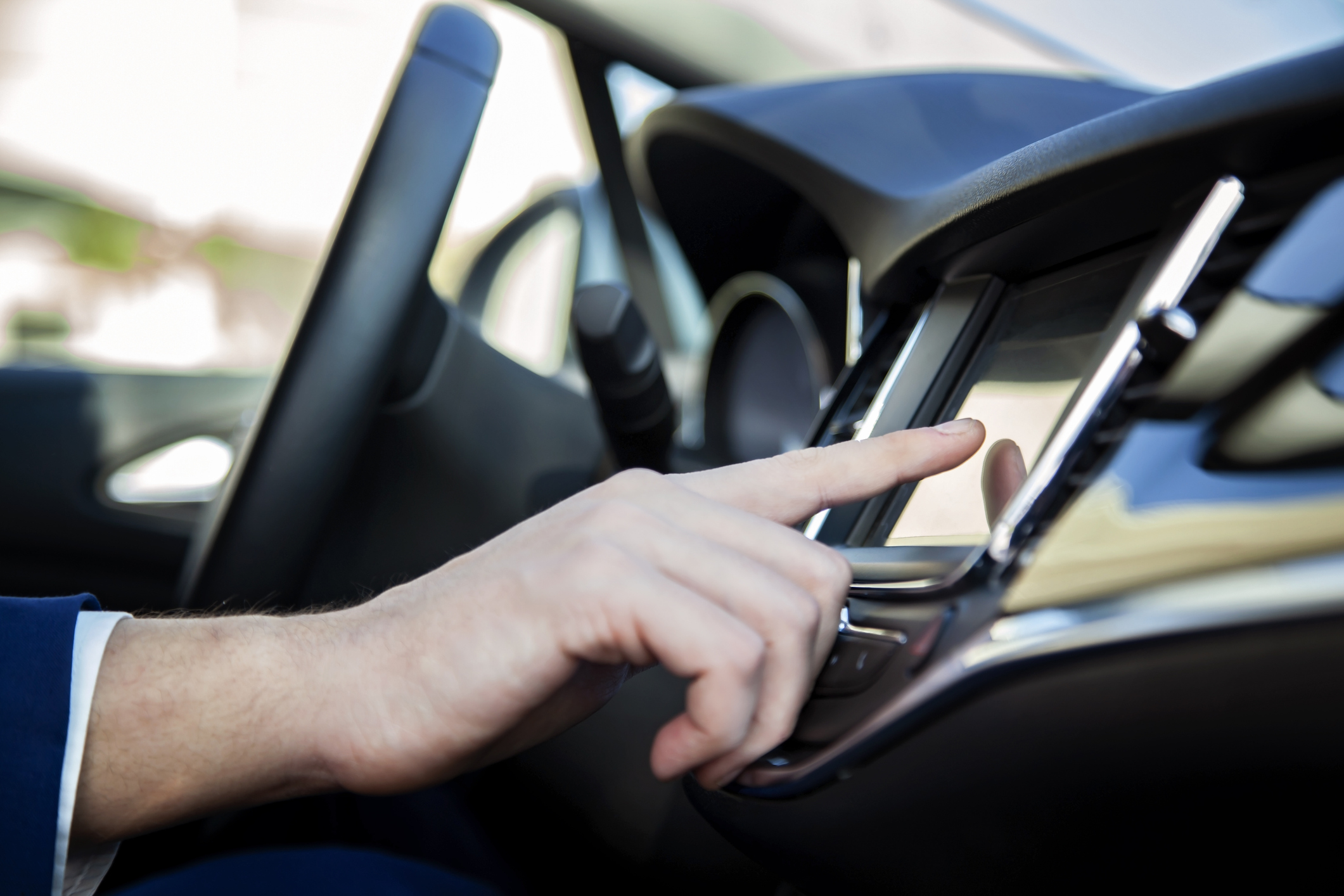
Newer touchscreen infotainment systems are another product of the decluttering design craze. Naturally, touchscreens are nothing new, but today’s larger versions contain even more submenus that control everything from your vehicle’s moonroof to its climate. That’s all well-and-good for freeing up interior space, but some of today’s oversized touchscreens are proving to be overly distracting for drivers who are trying to concentrate on the road.  

Peugeot, Tesla, and Audi have been innovators for advanced touchscreen systems, but on some vehicles, the navigation function goes away when scrolling through the various submenus just to perform a simple task like turning on the A/C. Thankfully, most automakers are keeping steering-wheel-mounted thumb controls for the same functions that can be accessed via touchscreens- at least for now. 

As the 2020s play out some further improvements will hopefully be made so touchscreen infotainment controls are safer and less distracting to use. 

Your Car Collision Repair and Auto Body Solution for 2020 & Beyond

Whether your new car drives itself or it’s older than you are, accidents happen. When your ride’s been dinged up in a fender bender, promptly take it to one of the reliable auto body shop and glass repair shops featured in the nationwide Carwise referral network. Once you do, I-CAR and ASE-certified collision repair professionals will use the latest technologies and services to promptly restore your ride like new again. 

Search your zip code now for a customer-reviewed auto body or glass repair shop nearby: www.carwise.com

Read More

Can Minor Rear-End Collisions Cause Hidden Damage?

Rear-end collisions are the most common type of motor vehicle crashes every year in the U.S., representing roughly one-third of all accidents. (1)  And although over 1,700 motorists die and more than 500,000 are injured in front-to-rear crashes annually (2), most rear-end accidents occur at slower speeds and cause minor structural damage. On the other hand, even when your vehicle gets dinged up just slightly it can cause hidden damage that may place your safety at risk later on.  

What Causes Rear-End Car Collisions?    

According to traffic safety experts, rear-end collisions in the U.S. happen over 2 million times per year. (3)  Furthermore, over 80% of those crashes could be avoided simply if the trailing driver had one extra second of warning time. These are the main causes of rear-end collisions:

  • Speeding
  • Traffic congestion
  • Distracted driving
  • Mechanical failure
  • Aggressive or reckless driving
  • Driving while fatigued
  • Driving under the influence of drugs or alcohol

What You Can’t See Matters  

Although the cosmetic damage to your vehicle may seem negligible, the dirty little secret about rear-end collisions lies beneath the surface. When you’ve been involved in a minor front-to-rear accident, these are some of the hidden problems it could cause:

Car Electrical Damage

Even a minor impact can loosen wires for your battery, brake lights, taillights or starter. In addition to the fact a loose engine wire could leave you stranded, those disconnected brake lights will keep you from alerting drivers behind you that you’re stopping. 

Vehicle Transmission Damage

A rear-end collision not only affects your car’s body, it can also harm mechanical parts. All-wheel-drive (AWD) or rear-wheel drive (RWD) vehicles have transmission components located near the rear that can get damaged even during a low-impact crash. If the transmission isn’t checked out immediately after an accident, your car could start shifting roughly, leaking transmission fluid or experience poor acceleration. 

Vehicles Trunk Damage

A small impact to the back of your car can mess up the trunk’s locking mechanism and seal. Left unaddressed, you could have trouble opening the trunk, water could leak into the storage compartment, or the trunk lid may even pop open while you’re cruising down the highway. 

Car Frame Damage

Most bumpers are only painted plastic that doesn’t protect the metal components directly underneath. Even minor fender benders can slightly bend your car’s frame and lead to future safety problems, like an onboard driver warning system malfunction or weakened frame that doesn’t protect you during a subsequent collision.

Vehicles Alignment Problems 

Hitting a pothole can knock your car out of alignment, so what makes you think sustaining a front-to-rear impact won’t? If your ride starts pulling to one side of the road, vibrates strangely or there’s a shimmy in the steering wheel, your alignment may be off. A misaligned vehicle can cause premature wear and tear to your tires, brakes, suspension and other parts that results in poor handling issues. 

How to Avoid Rear-End Car Crashes

The best ways to avoid rear-end collisions include:

  • Maintain a safe following distance based on weather conditions and speed.
  • Obey all posted speed limits, especially in construction zones.
  • Don’t drive while under the influence of drugs, alcohol or cold remedies. 
  • Never text while driving.
  • Pull over and take a break if you’re feeling tired, or switch drivers. 
  • Get your vehicle inspected by a mechanic several times a year.
  • Buy a vehicle with an accident-avoidance system. 

Your Reliable Solution for Rear-End Car Collisions

When your ride’s been involved in a minor rear-end collision, don’t just pocket the insurance check and gamble on your safety. Instead, put your mind at ease by promptly taking your vehicle to one of the 19,000+ auto body and glass repair shops featured in the nationwide Carwise referral network. Once there, I-CAR and ASE-certified shop managers and technicians will give your car the “once over” to make sure it’s safe to drive.

for a customer-reviewed collision repair shop nearby, please visit: www.carwise.com

References:

  1. SafeBraking.com: NHTSA: 28% of Crashes Are Rear-End Collisions; 9/14/2012
  2. News Release from the National Transportation Safety Board dated 6/18/2015: NTSB Calls for Immediate Action on Collision Avoidance Systems for Vehicles; Cites Slow Progress as Major Safety Issue 
  3. National Safety Commission report: The Road Can Be a Hazardous Place: Common Types of Traffic Accidents; 10/4/2013
Read More

How Are Collision Repair Experts Using Emerging Technologies to Improve Outcomes?

Today’s drivers live in a “brave new world” of technological advancements that are forever changing the way people get around, like AI-assisted GPS, accident-avoidance systems and self-parking cars. On the other hand, auto body shops and insurance companies are now embracing many innovative forms of technology to ensure a more seamless and cost-effective collision-repair process. Within the next few years, the following emerging technologies will have transformed the collision repair industry for the better.   

Car Accident Virtual Reality Training

Auto body technicians and shop managers must stay constantly updated on new vehicle design innovations and repair techniques, and some of that ongoing training is now being done through virtual reality (VR). Companies developing VR training programs also point out that it’s a powerful recruiting tool for attracting young, tech-savvy people to the collision repair industry. 

Advantages of VR training include:

  • More cost-effective than traditional training programs requiring overnight travel
  • Can be done from anywhere, anytime via remote instructors 
  • Hands-on training leads to higher information-retention rates for technicians 
  • More interesting for Millennials than other training methods 

When first introduced, VR training hardware and headset packages cost over $5,000. Today, the price has dropped to around $600. 

Vehicle Connectivity

As 5G networks roll out nationwide it will enhance the diagnostic capabilities of body shops because 5G is faster and more responsive than 4G- allowing messages to be sent and received at lightning speed. Smartphone telematic diagnostic applications are replacing plug-in devices to help auto insurers better understand driver accident-avoidance behaviors. Several insurance companies have already launched vehicle connectivity smartphone apps that continuously monitor driver actions so that those who drive more safely can receive discounts.  

Artificial Intelligence (AI) Car Testing

If you use Alexa to turn on your TV, ask Siri for advice or perform Google searches, all are examples of AI technology. In the collision repair industry, AI is behind the telematic monitoring of drivers by insurance companies. But it’s also now being used by body shops and insurers for applications like photo estimating to improve estimate accuracy and speed up the transfer of repair-related information. 

Electrification For Electric Vehicles

Full-electric vehicles (EVs) are growing in popularity, which is fueling a collision repair industry trend known as “electrification”. That’s because working on EVs takes special safety equipment and precautions that technicians must be trained on. As auto manufacturers continue to improve the appearance, range and performance of EVs to attract new buyers, body shops will also be forced to adapt if they want to remain in business. 

A Cars Blockchain

Newer blockchain technologies are also starting to reshape the collision repair industry, most notably in the parts supply department. A blockchain is essentially an ever-expanding list of permanent data records, or “blocks”, that are linked together using cryptography- a secure form of online communication with built-in privacy protections to block hackers. Blockchain has historically been used for cryptocurrencies like Bitcoin, but today it’s available to body shops so they can order parts from vendors and manufacturers without exposing sensitive information.  

In addition, there are now blockchain pilot programs looking at ways to capture and secure in one place all accident records, including the first notice of loss (FNOL), the estimate, repair order and parts order. That way, the information can only be accessed by members of the blockchain itself, like the repair shop, insurance company and parts suppliers. 

Find Collision Repair Shops Here that Embrace Change  

When your prized vehicle has been involved in a fender bender, it can be intimidating to find the right auto body or glass repair shop. By using the nationwide Carwise referral network, you can rest assured that you’ll be placing your trust in a collision repair shop that’ll get the job done right. That’s because all repair shops listed on Carwise are I-CAR and ASE certified, which means they invest in the training programs, high-tech equipment and emerging technologies necessary to restore your ride like new again promptly and reliably. 

Search your zip code now for a customer-reviewed auto body or glass repair shop nearby: www.carwise.com

Read More

How is Rivet Bonding Being Used to Repair Newer Cars?

In order to comply with recent Corporate Average Fuel Economy (CAFÉ) and CO2-emission standards, automakers have been forced to come up with innovative engineering designs without compromising vehicle safety and performance. Those structural changes include replacing heavier steel components with light-weight alternatives like magnesium, aluminum and carbon fiber. But those lighter materials cannot be heat-welded like steel. As a result, many body shops have been forced to embrace newer repair techniques like rivet bonding.

Introducing Rivet-Adhesive Bonding

Rivet-adhesive bonding, also known as “rivet bonding” or “cold bonding”, is a process that uses structural adhesives and rivets to hold body panels together. Most manufacturers now use at least some rivet bonding during production instead of spot-welding for front hood closures, side and back panels, and headliners. And, if you drive a Chevy Corvette Z06, Ford F-150, Audi 8 or Jaguar XJ, those all have aluminum-based chassis components that require rivet-bonding in-lieu-of welding whenever structural repairs are needed.  

BMW is even requiring rivet bonding to replace their factory spot welds even though their body panels are made of regular steel. Honda has been using high-strength and ultra-high-strength steel formulations for years in some of its Accord parts, but those materials can also be significantly weakened when exposed to high temperatures generated by traditional welding equipment. That has led some repair shops to use cold bonding structural repairs on Honda vehicles including the Accord and their electric models.

Repair Challenges Body Shops Face

Based on the make of vehicle, all automakers have specific original equipment manufacturer (OEM) specifications that body shops are expected to follow when repairing structural components after an accident. And, sometimes those requirements include rivet bonding. If repairs are not done properly, it can not only invalidate a factory warranty, the shop in question may be forced to do the work all over again.

Different metals have unique chemical compositions that can interact with one another, for example an aluminum body panel and steel rivet, and then cause corrosion when exposed to electrolytes like road salt, acid and moisture. As a result, when a technician is doing rivet bonding, they must properly seal the rivet site first. If they don’t, the resulting corrosion can eventually weaken the bond area’s structural integrity and cause rust formation on the vehicle.

Other rivet-bonding challenges that collision repair shops face include:

  • Technicians must be specially trained on rivet-bonding techniques for the three rivet types (blind, self-piercing and solid).
  • Individual car brands may require unique riveting equipment that must be purchased.
  • In certain states, a violation may be imposed on the shop for not following OEM repair procedures, resulting in fines, loss of license, and even court proceedings.

How Are Body Shops Adapting?

Depending on the vehicle manufacturer and type, body shop managers and technicians have-to constantly stay updated on rivet-bonding repair processes and specifications. One way for them to do so is through I-CAR (www.i-car.com), as they provide rivet-bonding education through their website and other training programs. Automakers also post updated repair specifications online so that collision-repair professionals can readily access the information.    

To address the growing need for rivet-adhesive bonding, some shops are offering the repairs only for certain vehicle makes and models, like the newer Corvettes or Audis. That means investing in employee training programs, special tools and equipment. If the shop can’t perform the service on another type of vehicle, they will usually refer the driver to a business that can. Auto insurance companies also keep track of shops that specialize in rivet bonding so they can steer policy holders to the right place for the job.  

Promptly Find Reliable Body Shops in Your Area Here

No matter what type of car you drive, when it’s been involved in a fender-bender you can promptly locate customer-reviewed auto body and glass repair shops nearby by using the nationwide Carwise referral network. Collision repair shops listed on Carwise are I-CAR and ASE certified, which means they have the updated services, necessary equipment and highly trained technicians to restore your ride like new again promptly and reliably.

Search your zip code now for a customer-reviewed auto body or glass repair shop nearby: www.carwise.com

Read More