How to Protect Your Car from Sun Damage

How to Protect Your Car from Sun Damage

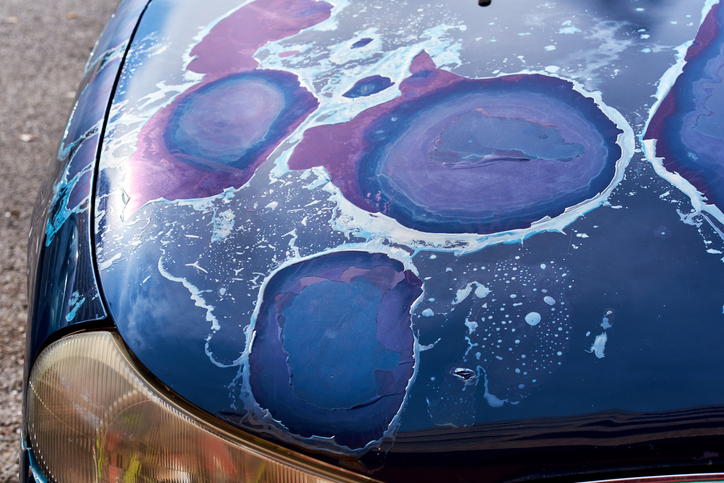
The sun constantly supplies us with warmth, daylight and renewable energy.  But for anyone that has ventured to the beach on a hot July day, you realize just how quickly the sun’s powerful ultraviolet (UV) rays can burn and dehydrate exposed skin.  Not only are our bodies vulnerable to sun damage, your car’s exterior and interior can also experience drying and accelerated aging from the sun’s rays and resulting heat.  If you’re not careful, your vehicle’s once-prized appearance will be marred by fading, cracking, unsightly spots and other permanent reminders of the sun’s strength.  The good news is that there are several proven ways to protect your car from the sun’s harmful rays.  Let’s take a look at some of the more important ones now.

Protecting Your Car’s Interior    

When your car sits outside on an average summer day, its metal shell absorbs the heat and traps hot air inside like an oven.  That heated air can reach 140 degrees or more.  In addition, materials that comprise your car’s interior, like vinyl, plastic and leather, are all susceptible to direct sunlight and will eventually fade, crack and stain due to the sun’s powerful rays.  To help protect your car’s interior, use these tips:

  • Park in the shade. By parking your car out of the direct sunlight, you’ll keep it from overheating and shield your dash and other trim from its powerful rays.  It’s also a good idea to crack your window open slightly, which will help allow heated air to escape to the outside.
  • Deploy sun panels. Car windows act like a magnifying glass which intensifies the sun’s bleaching effects.  Place sun panels inside your windshield, rear and side windows, and their reflective qualities will keep your car’s interior cooler all day long while blocking the sun’s rays from reaching your dash, seats and other exposed areas.
  • Buy seat covers. Depending on the material, seat covers will protect your leather and fabric seats from the sun while also keeping them much cooler to the touch. 
  • Use protectants and conditioners. Numerous commercial products are available that can be used to clean, revitalize and protect interior components from the sun.  If your seats and trim are leather, use a specified conditioner to keep the material moisturized against cracking and fading.
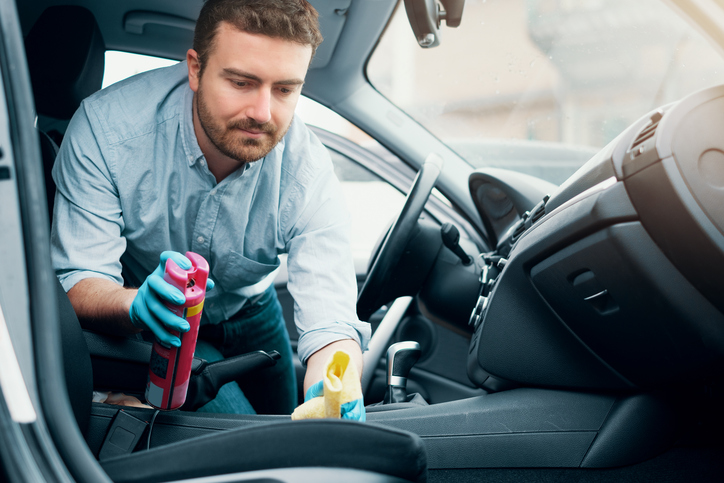
  • Clean out the inside. Dust, dirt particles and food on your dashboard, seats, trim and carpeting can actually get baked into the material, leading to permanent stains.  To prevent that from happening, vacuum out your vehicle frequently, and then wipe down the inside with a clean microfiber cloth and automotive detailing product.

Ways to Protect Your Car’s Exterior

In addition to road dirt and grime, the summer air contains pollen and other air particles floating around.  Bugs and bird droppings also get splattered on your car’s paint.  When exposed to intense heat, all of these can get baked into the finish and cause permanent stains.  The sun’s UV rays can also discolor your car’s once-glossy finish and trim if it isn’t protected properly.  To keep it looking like new, here are some ways to safeguard your vehicle’s exterior from the sun:

  • Wash it often. Wash the outside of your car with a gentle soap and water often, and any time after it’s rained.  This will remove all of the dirt, dust and other paint-damaging materials.  Dry your car immediately after washing with a soft microfiber cloth before the water droplets evaporate and form spots.
  • Wax your car. Once or twice a year after a thorough washing, wax your car with a high-quality product.  Waxing locks in the paint’s oils, and serves as a barrier against the sun’s UV rays.  However, be careful not to apply wax in direct sunlight.  There are also paint protection film products available that work like waxing, while protecting your finish from the elements year-around.  
  • Keep it shaded. Parking your car in the shade will keep your vehicle’s painted finish from being directly targeted by the sun’s punishing rays.  Keep it garaged, under a carport or other shady spot.  If you leave it under a tree, remember to check it for tree sap or bird droppings later and wash them off promptly when found.

Reliable Body Shops Nearby Know Sun Damage   

There are many ways to protect your car’s interior and exterior from the sun’s powerful UV rays.  Experienced collision repair shop technicians understand the sun’s damaging effects.  And when your vehicle has been marred by the sun, better auto body shops know how to repair the damage, inside and out.  So whether you need a fresh paint job, a cracked dash restored, or even a leather seat cover replaced, a local body shop has the reliable, affordable and prompt services you need.  And if you don’t have time to detail your car like you should, collision repair shops also provide high-quality interior and exterior auto detailing services that’ll help protect your car from the sun all year long.  To search your zip code now for a reliable body shop in your area that understands sun damage prevention and repairs, visit: www.carwise.com now.

Read More
5 Safe Driving Tips for Summer Vacations

5 Safe Driving Tips for Summer Vacations

For most Americans Memorial Day represents the de facto start to summer, a time of year chocked full of fun activities including highly-anticipated family vacations.  According to the National Highway Traffic Safety Administration (NHTSA), nearly 90% of us will take to the roads at least once during the summer months for a fun-filled family get-away.  On the downside, the NHTSA points out that more traffic accidents occur in summer than any other season, primarily due to the fact more people are driving.  In addition to congested roads, other summer driving challenges include construction zones, vehicle mechanical failures and nasty weather.  As a result, careful planning to ensure a safer and more enjoyable vacation journey is always important.  To assist your efforts, here are 5 summer vacation safe driving tips to use before hitting the road.

  1. Get Your Vehicle Road-Ready

Prior to embarking on your vacation have a mechanic inspect your vehicle’s brakes, tires, belts, hoses, fluid levels, A/C, transmission and oil.  In the summer heat it’s also important to make sure that your car stays hydrated just like your body.  That means inspecting the radiator, radiator hoses and coolant level.  Right before setting out on your trip also check the following:

  • Tire pressure including the spare
  • Wiper blades
  • Battery strength and cable connections
  • Oil level
  • Look for suspicious fluid leaks underneath the vehicle
  • Headlights, brake lights, turn signals and emergency signals

The last thing you need while transporting your family cross-country is to get stranded alongside the road in the blistering heat.  Instead, make sure that your car is as road-ready as possible.

  1. Plan for Roadside Emergencies

Planning in advance will still never totally eliminate the occasional travel emergency, but you can be ready for anything the road sends your way.  Make sure that your car is stocked with these items:

  • Jumper cables
  • Flashlight
  • Tire tools and a road-ready spare
  • First aid kit
  • Cell phone charger
  • Plenty of water
  • Hazard triangle or road flares

If you are going to be traveling many miles across sparsely-inhabited areas, like a desert, it’s also not a bad idea to pack some non-perishable food items and warm blankets.

  1. Safely Secure Kids and Pets

Any parent who’s gone on a summer car vacation with kids knows that Johnny and Susie oftentimes end up fighting in the back seat.  Insurance industry studies have found that kids and loose pets can be up to 12X more distracting to a driver than a cellphone.  To improve those odds, make sure that your family pets are secure in the vehicle before setting out, and that the kids are comfortably spaced about inside the interior.  Bring along plenty of entertainment items for them like books, games, IPads, movies and music.  And don’t forget to pack lots of healthy snacks and drinks for your family members, including the non-human ones!

  1. Pack Your Car Carefully

When the average family goes on a driving vacation their vehicle is usually stuffed full of personal items, and oftentimes cars get packed in a hurry.  Take time to make sure that the weight is distributed evenly, and that the driver has a clean line-of-sight all around the vehicle.  If you are placing bicycles, kayaks, or other “toys” on the roof rack, know how high those items stick up if you encounter low bridges or tree limbs, along with the weight limit of the rack itself.

  1. Take Regular Driving Breaks

It seems that most men are programmed with the notion that they have to do most of the vacation driving.  Unfortunately, they get fatigued like everyone else, and when that happens the likelihood of an accident goes way up as reaction times and concentration suffer.  On long trips when there’s only one driver in the vehicle, it’s advisable to stop at a rest area and allow them to take a stretch break every 2 to 3 hours.  If other drivers are available, everyone should take turns behind the wheel while others nap or simply relax for a while.  A fresh driver is a safer driver no matter how you slice it!

When You’re Involved in a Summer Accident…     

Even when you use the vacation safe driving tips mentioned above, accidents happen.  When they do, the good news is that a reliable collision repair shop nearby can get your car fixed and promptly back on the road again.  They have the know-how and experience to get the job done right, while restoring your peace-of-mind.  And if after the vacation your car’s interior and exterior could use some expert clean-up, dependable body shops also provide high-quality and affordable auto detailing services that’ll get your car looking like new again, inside and out.  To search your zip code for a better body shop in your area, visit www.carwise.com now.

Read More
How Body Shop Car Interior Repairs Benefit You   

How Body Shop Car Interior Repairs Benefit You   

It’s a fact that the average car interior experiences a lot of wear-and-tear.  Pets, kids, sharp objects, mud, food, spilled beverages, and even the sun’s rays all team up to damage your vehicle’s interior.  Body shop technicians collectively refer to a car’s interior features, including the seats, dashboard, steering wheel, carpeting, headliner, consoles, levers, knobs and visors, as its “upholstery”.  When you combine the aforementioned factors with aging, your car’s upholstery is vulnerable to scratches, tears, cracks, stains, fading and scuffs.  But the good news is there are several restorative techniques available that allow car care professionals to revitalize your vehicle’s upholstery, and keep it looking great for many years to come.  Let’s take a look at a few of those now, along with how those interior repairs benefit you.

Interior Repairs Body Shops Provide

Your car’s interior features a wide-variety of materials and fabrics, and each requires a slightly different type of care.  For example, seat covers can be made from natural fabrics, like leather or linen, or synthetic ones such as vinyl or nylon.  Then there are plastic parts constructed from various polymers located throughout the passenger compartment.  When those show signs of wear, here are some of the more common upholstery restorations that body shops provide:

  • Scratches and Scuffs– These can be found on your steering wheel, dash, door panels, consoles and more. Professionals remove these surface blemishes with special cleaners and buffing processes.
  • Carpet Reconditioning– Located on a vehicle’s floor, door panels or in the trunk, automotive carpeting is designed to be very durable and stain-resistant. But yours can still get worn and dirty.  As a result, body shop professionals use special shampoos and extraction methods to target ground in debris and recondition your carpeting like new.
  • Leather Restorations- For anyone who’s owned a vehicle with leather inside, it looks great but has unique care challenges. Leather is used for seat and steering wheel covers, on dashboards, consoles and door panels.  It can get dirty, scratched, cracked and faded, so detailers use special cleaners, brushes and conditioners to revitalize leather.
  • Seat Covers- Seat coverings are crafted from leather, vinyl, cloth, or a combination of those. When they’re stained, ripped, frayed or suffer a burn hole, technicians use various techniques to clean and repair the seat covers, while putting your mind at-ease.


  • Food, Beverage and Pet Stains- Let’s face it, if you have kids or pets you’ll have stains inside your car that are difficult to remove. Lingering odors sometimes accompany those stains which also need to be addressed.  As a result, the pros use stain-dissolving cleaners, along with deodorizers and extraction techniques to get them out.
  • Plastic and Hard Vinyl Cracks- These can be particularly troublesome for a novice to repair, but body shops use special crack fillers and buffing tricks so you can’t even tell that the area’s been fixed.
  • Headliners- Located above the passenger compartment, this area of your upholstery often gets ignored. But headliners can get dirty, torn or start to sag.  Body shops have the equipment to clean your headliner with special shampoo, or repair it if tears or sagging occur.

Industry insiders recommend having your vehicle professionally detailed inside and out at least once a year to stay ahead of some of the upholstery problems listed above.  And that’s a service that most body shops provide.

How Interior Repairs Benefit You 

Getting your car’s interior professionally cleaned and repaired returns the following benefits to you as its owner:

  • Improves your car’s ride comfort
  • Restores its appearance to “like-new” condition
  • Delivers a high return-on-investment by increasing its resale value
  • Interior repairs cost much less than replacements

On occasion, an upholstery component may be simply too damaged to repair.  When that happens, a collision repair shop can affordably replace that part with a new one, and get you confidently on the road again.

Locate a Body Shop in Seconds  

When your car’s interior starts showing signs of aging, take it to a reliable auto body shop nearby and allow them to clean, repair and restore the affected areas affordably and promptly.  If you have some upholstery that needs to be replaced, body shop technicians have the expertise to get the job done right.  Collision repair shops also offer professional detailing services that help protect your car’s interior year-around from wear-and-tear.  In the end, don’t spend another day driving around in a car with an embarrassing interior.  Instead, let an auto body shop in your neighborhood restore your peace-of-mind with some top-quality upholstery repairs.  To quickly search your zip code now for body shops in your area that specialize in expert interior repairs, visit: www.carwise.com.

Read More
The Many Benefits of Body Shop Plastic Repairs

The Many Benefits of Body Shop Plastic Repairs

Your car features a lot of plastic parts- many of which you may be unaware of.  In fact, durable plastic polymers are now used for bumpers, body and door panels, trim, light covers, windows, equipment housings and more.  Introduced on cars in the late 1960s, plastic parts reduce a vehicle’s weight while improving its fuel efficiency.  In addition, plastics minimize corrosion, allow for more design creativity and are easier to recycle than metals.  When your car is involved in a collision, naturally some of its plastic parts can get damaged and require repairs.  Newer plastic repair innovations now allow body shops to oftentimes fix and reuse the original part rather than replacing it.  Here’s how those plastic repair benefits play out for you.

You the Driver

When your car’s in the shop after an accident, it’s a hassle to be without it.  For example, let’s say that your plastic bumper was cracked in a minor fender bender and needs to be repaired.  In the past, a replacement bumper would have been ordered, a large batch of paint mixed and applied, and the new part installed.  With the high-tech plastic repairs used today, body shop technicians can oftentimes patch the existing bumper and spot blend a little paint; which means faster turnaround times and lower bills.  That’s important when you are paying out-of-pocket for repairs, and/or have to come up with the cash yourself for a rental car.  The many benefits of plastic repairs for you as a driver include:

  • Faster turnaround time
  • Less stress
  • Increased resale value when original equipment stays on the vehicle
  • Overall higher satisfaction with the repair job

In the end, all of these factors add up to a more seamless and worry-free repair experience for the driver.  But in addition to drivers, who else in the equation benefits from plastic repairs?

Body Shops Nearby Know Plastic Repairs 

When your car’s in the body shop, plastic repairs on original parts in-lieu-of replacements benefits you, the shop and your insurance company.  Reputable collision repair shops in your area have the training, equipment and know-how to make those plastic repairs happen, while restoring your car’s appearance like new.  In the end, you should get your vehicle back faster while enjoying a higher level of overall satisfaction with the repair process.  To search your zip code now for reliable body shops in your area that specialize in plastic repairs, visit: www.carwise.com.

Read More
These Auto Body Shop Rust Repairs Save Money

These Auto Body Shop Rust Repairs Save Money

Your older car has developed some rust spots and it’s got you worried.  Not only does it look bad, but as the rust spreads underneath the paint it can cause significant damage to your vehicle’s body panels and frame.  Penetrating holes underneath your car can also allow dangerous exhaust fumes to invade the passenger compartment, placing you and your passengers at risk.  You really like your vehicle, it runs great and is paid off, so you would rather not replace it and start making car payments again.  What should you do?  To keep you driving the car you enjoy, collision repair shops can expertly fix that unsightly rust without draining your bank account.  What follows are some of the money-saving rust repairs that body shop specialists can perform.  But first, let’s examine why your car has rust to begin with.

What Causes a Car to Rust?

It’s an unwelcome sight for any car owner—rust on your vehicle. While no one wants to see rust on their car, it is a problem many owners experience, especially those living near bodies of water or in snowy climates. Such conditions create an ideal environment for rust to take hold. If you’re seeing rust on your car and wondering, when is it necessary to remove it? The answer is likely, sooner rather than later, as it can pose a threat to your cars’ structural integrity and safety if left untreated.

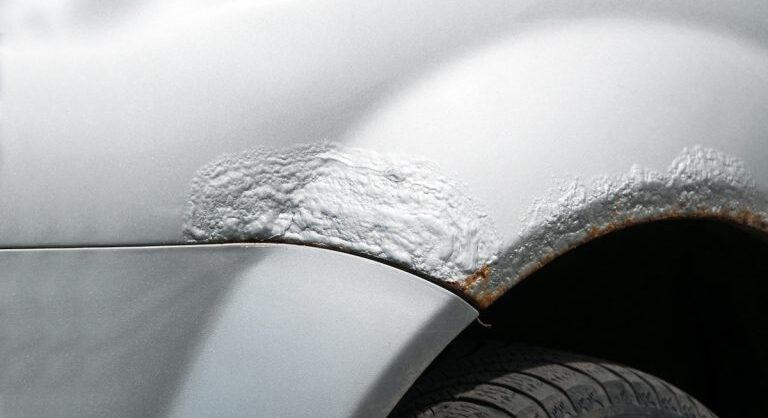
When your car’s paint gets weakened by road salts, chemicals and dirt, the underlying metal eventually gets exposed.  Scratches and dents that go unrepaired, like from a minor fender bender, also promote rust formation, and even on newer vehicles.  When bare metal combines with iron, water and air it corrodes through a chemical reaction known as oxidation- which you see as rust.  Cars are more prone to rust near the ocean or where road salt is routinely used.  Much like an iceberg, a small surface rust area may be an indication of more serious corrosion festering underneath.  Body shops have special equipment to evaluate the extent of the corrosion, and once the problem is diagnosed they will determine what type of rust repair works best.

Small Area Rust Repairs

These are used when the affected area is minor, as the name implies, and the rust hasn’t yet penetrated through the metal.  In other words, there’s no significant damage to your vehicle’s body panels or supporting structures.  Smaller rust patches commonly result from a neglected slight dent or deep scratch in the paint.  The most cost-effective small area repair involves a technician sanding away the corrosion and some of the surrounding paint.  The exposed metal is then carefully primed and repainted to accurately match your car’s original finish.

Large Scale Rust Repairs

When the rust has spread to a larger and/or deeper area, more extensive bodywork is needed.  This type of rust damage commonly occurs near the bottom of your car, and when the metal has corroded through.  In these situations, a section of the body’s metal must be cut out and replaced, and then a bonding material is utilized to fill in around it.  Sometimes the entire body part must be switched out for a new one.  In either case, the repaired area is then sanded, primed and painted to blend seamlessly with the rest of your car’s exterior.

Rust Prevention Tips for Repaired Areas

Some car owners might be tempted to tackle the problem on their own, however, auto body repair shops that perform rust removal can offer auto owners peace of mind and more knowledge about the impact the rust is having on the car. Rust that is not removed can continue to spread, possibly eating into the car’s body and causing rust-outs when the pits from the rust turn into holes. Since rust tends to spread and poses a threat to a car’s structural integrity and safety for the road, it’s a good idea not to delay in removing the rust and making sure it doesn’t spread.

Even if the rust damage is not extensive, it’s better to move quickly and bring the car in at the first sign of rust. While insurance may not cover the cost of rust removal, getting it removed may be a good investment, particularly if your car is newer or you plan to resell it. So, if rust spots pop-up, don’t despair, but work quickly on getting it removed. This can keep your car in good condition on the outside and inside and ensure a longer driving life for your vehicle.

Once the shop is done with your rust repairs, your car will look great.  To protect the freshly-painted area(s), experts recommend washing and waxing your car regularly.  Many commercial drive-through car washes target underneath your car, which removes corrosive materials.   In addition, it’s a good idea to have it professionally detailed at least annually, as the detailing protectants permeate all of your car’s tiny nooks and crannies that trap rust-forming substances.  Reliable auto detailing is another service that most collision repair shops offer to customers.

Body Shops in Your Area do Rust Repairs

No car owner likes to see rust on their “baby”.  Rust can show up on cars of any age when they’ve experienced paint scratches, minor dents, or have been exposed to corrosion-inducing materials.  When rust appears on your vehicle, it’s best to eliminate it promptly with some top-quality auto body shop rust repairs.  Driving around in a rusting car can also place you and your passengers at risk for more serious safety issues.  Restore your peace-of-mind by having it inspected and the rusted area professionally repaired by specialists at a reliable body shop.  Doing so can also save you a lot of money over buying another car.  To search your zip code for a dependable auto body shop nearby that does rust repairs, visit: www.carwise.com now.

Read More
Protecting Your Car’s New Paint After Collision Repairs 

Protecting Your Car’s New Paint After Collision Repairs 

If your car has been at the collision repair shop after an accident, it will likely return to you with newly-repaired surfaces.  Auto body technicians use a meticulous process to ensure that the freshly-painted parts match the rest of your car’s original factory finish.  That involves applying several coats of primer, paint and clear coat, and then the finish is carefully buffed out to give it that like-new glossy appearance.   But when the body work is completed it’s your responsibility to protect your car’s new paint, notably within the first 30 to 90 days.  That’s because the fresh paint needs time to cure and harden.  Not protecting it properly could damage the paint’s finish, leading to noticeable imperfections which the shop will not be liable for.  To keep your car’s finish looking great, use these paint protection tips for at least the first month after the collision repairs are done.

Avoid Commercial Car Washes 

Okay, you’ve had your car out of the shop for a few days and now it’s dirty again.  Your first instinct is the take it through a local car wash to remove the dirt.  Not a good idea, as most commercial car washes use stiff brushes or sponges that can scratch the delicate new finish.  Instead, only wash your car using these recommendations for the first 30 days:

  • Hand-wash your vehicle with cool water and a very mild car wash solution employing a soft cloth or sponge. Avoid using dish soap or laundry detergent.
  • Use only water that’s clean and fresh.
  • Wash your car in the shade and not direct sunlight.
  • Never “dry wipe” your car with a cloth.

In addition to these precautions, avoid waxing or polishing your car for 90 days after a new paint job as that can damage the finish and cause paint discoloration.

No Scraping or Chipping Allowed

Let’s say it’s wintertime when you pick up your car from the body shop and you wake up one morning to find it covered in snow and ice.  Of course you need to scrape off your vehicle’s windows, but that’s as far as it goes.  Don’t use a hard scraper on the new paint job or you’re asking for paint scratches, and that includes chipping ice on the repaired area.  Use a soft brush or your hand instead.  Try pouring warm water on any ice buildup to melt it away.

Chemicals and New Paint are a Bad Mix

If you’re vehicle needs some engine work done right after it’s had body work, be extra careful not to allow automotive solutions or chemicals to come in contact with the finish.  Those include antifreeze, oil, gasoline or transmission fluid.  Even windshield washer solution can harm fresh paint.  If your vehicle is going in for some routine engine maintenance or repair work, point out to the technicians where the repaired areas are, and politely ask them to be extra careful.  Also be cautious when filling up your gas tank at the pump.  When spillage occurs, use a soft wet cloth or dampened sponge (never dry!) to immediately wipe it off.

Steer Clear of Gravel Roads

The next thing to steer clear of when your car has been freshly painted is loose gravel.  Avoid gravel roads as much as possible, along with driving through construction zones.  The new paint’s finish is vulnerable to chips from flying rocks because it hasn’t had enough time to harden into a protective barrier.  Deeper paint chips can even expose your car’s metal to water and promote rust formation.

Reliable Body Shops Share Paint Care Tips

Any collision repair technician worth their salt takes a great deal of pride in their work, and that includes the paint job.  They want you to be pleased with the outcome, and when you pick up your car someone at the body shop should explain how to protect the finish for the first few months after the repairs are completed.  To ensure that your vehicle’s paint looks great for many years to come, carefully follow their instructions.  In addition, you should get your car’s exterior professionally detailed at least once a year, and that’s another service that many body shops offer to their customers.  To search your zip code for a reliable collision repair shop in your area, visit: www.carwise.com now.

Read More
How Body Shops Protect their Workers’ Health and Safety

How Body Shops Protect their Workers’ Health and Safety

There are over 180,000 auto body and glass repair technicians in the U.S., and most find their profession to be highly rewarding.  But due to the nature of their work, collision repair professionals are oftentimes exposed to potentially unhealthy and dangerous workplace conditions.  As customers, we only see the transformative outcomes produced by body shop technicians and not the behind-the-scenes, daily physical hazards they face.  In an effort to safeguard their workers, reputable body shops create safer work environments using numerous health and safety measures.  Most are mandated by the Federal Government’s Occupational Safety and Health Administration (OSHA), while others are just plain common sense.

Although driving a car can be dangerous, it is not as dangerous as it once was compared to the peak of over 54,000 motor vehicle fatalities in the early 70s. Much of this decline is a result of improved automobile designs and federal regulation requiring special design components and safety features such as seat-belts, airbags, and sensing devices.

Cars have become less dangerous for vehicle owners over the years, but what about the safety risks faced by the auto body workers who repair these vehicles?

While workers in many industries face safety hazards, the auto body repair industry has more risks than average. Fortunately, there are agencies like the Occupational Safety and Health Administration (OSHA), a division of the US Department of Labor, who are tasked with ensuring the safety of U.S. auto body workers.

Physical hazards threatening auto body worker safety include repetitive stress, overexertion, and other ergonomic injuries, high-volume noise, oil and grease on walking surfaces, and cuts and lacerations from working with machinery. Workers in auto body shops are potentially exposed to a variety of chemical hazards that include volatile organics from paints, fillers, and solvents.

Auto body shop workers have the right to a safe workplace. The law requires employers to provide their employees with working conditions that are free of known dangers. The OSHA law also prohibits employers from retaliating against employees for exercising their rights under the law if the auto body worker wants to file a complaint, raise a health and safety concern, or report an injury. Agencies like OSHA are responsible for protecting the safety of auto body workers and have implemented numerous standards over the years to protect those workers.

Your car is much safer today than it was a few decades ago, and you can be assured that auto body workers are safer as well.

Here are a few of the more important safety precautions auto body shops use to protect their technicians.

Auto Body Painting Safeguards

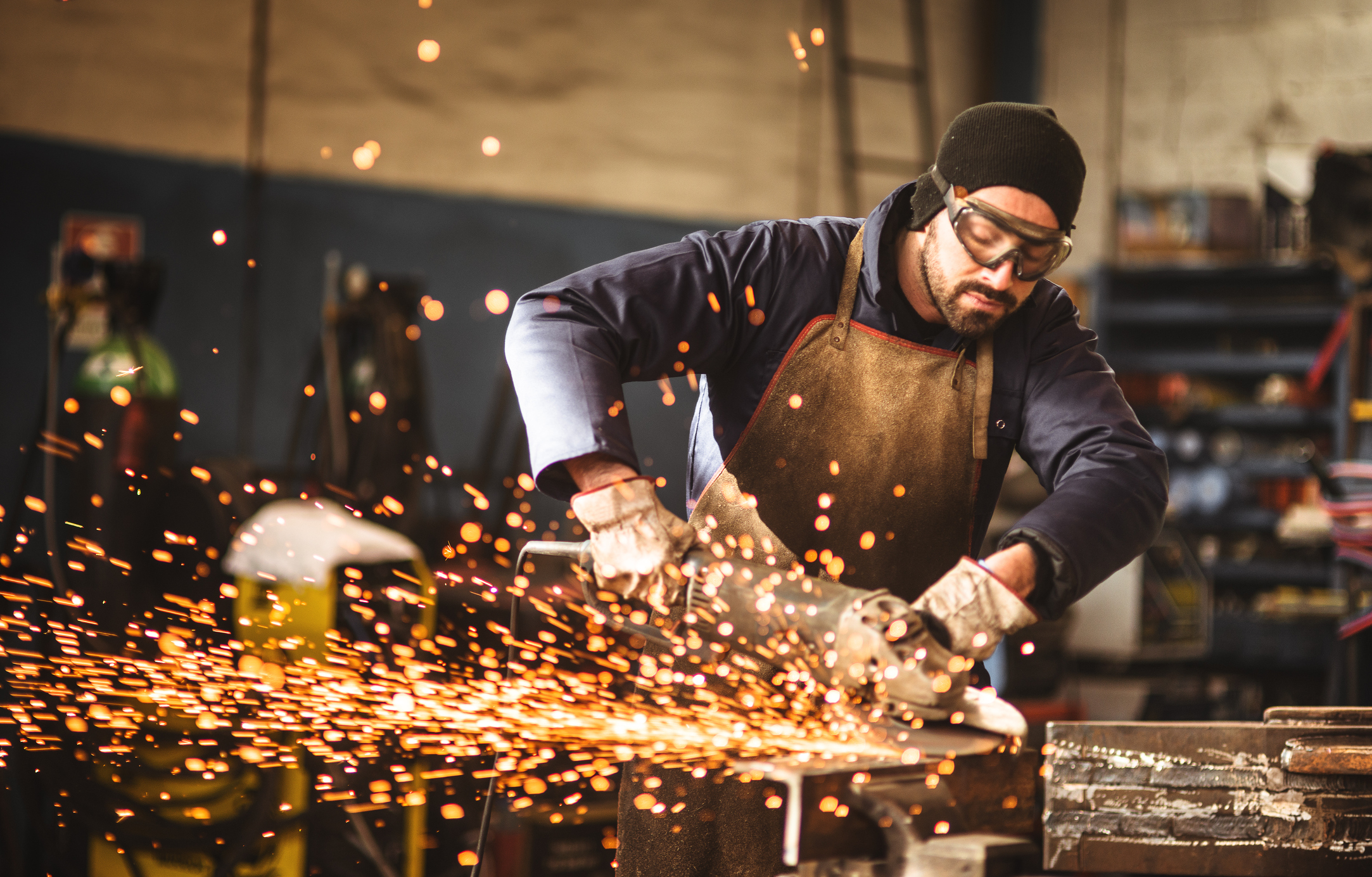
Body shop professionals routinely work with fillers, solvents, paints, primers, and polishes while prepping and painting a car’s exterior.  Repair jobs also require a lot of sanding and metal grinding.  All these processes produce dust, vapors, and fumes that contain harmful chemicals, including volatile organic compounds (VOCs), that can damage a technician’s lungs, skin and eyes.   As a result, the painting and finishing are done in special spray booths that meet strict ventilation standards.  Technicians also wear protective clothing to shield their eyes and skin and use oxygen-supplied respirators so they won’t breathe the airborne chemicals produced during surface preparation and painting.  If a paint spill occurs, technicians are directed to promptly wipe it up to avoid accidents.

Workplace Noise Exposure Precautions

If you’ve ever been around a body shop, you know how loud the mechanical sounds can be.  Now picture a technician who works in that noise level every day.  Grinders, sanders, lifts, sprayers, compressors and other tools of the trade are constantly in use, generating loud noises that put auto body professionals at risk for hearing loss.  To protect their ears technicians are required to don earplugs or earmuffs while out in the shop area.

Slip and Fall Prevention

According to OSHA, roughly 30 percent of all workplace accidents in the U.S. are related to slips and falls.  Within a body shop setting, spilled grease, paint and other liquids on the floor create potential hazards, along with tools that were not properly put away after use.   Technicians know that a tidy work area is a safer one, and are instructed to clean up spills immediately, stow away their tools when not in use, and to also wear shoes with non-slip soles for added traction.

Avoiding Mechanical Injuries

Auto body and glass technicians routinely work with compressors, sprayers, winches, pulling chains, lifts and other types of heavy equipment.  Most contain movable parts like gears, sprockets, and belts which can result in bodily harm if the proper safety precautions are not followed.  When accidents strike it’s easy for a collision repair professional to sustain cuts, crushed hands and feet, broken digits, burns and other injuries from the mechanical tools they’re using.  As a precaution, prudent shops require their technicians to wear protective clothing, shoes, gloves, and headgear to safeguard their bodies from mechanical injuries.

Auto Body Shops Near You Value Safety

Reputable auto body and glass repair shop owners and managers understand the potential workplace risks posed to their technicians and have implemented health and safety precautions to protect them.  They’ve put in place safeguards, whether OSHA-mandated or not, to ensure that their workers enjoy safer, healthier and happier careers while getting your vehicle restored like new again.  Lower on-the-job injury rates also lead to higher shop productivity.   And from a customer’s perspective, a cleaner and tidier shop just simply looks more professional and efficient.  To search your zip code for a reliable collision repair shop in your area that also values a safe and healthy working environment, visit: www.carwise.com now.

Sources

NSC.org
OSHA.org

Read More
Why Are Electronic Safety System Recalibrations So Important?

Why Are Electronic Safety System Recalibrations So Important?

Many newer cars come with mandatory electronically-controlled safety systems like airbags, along with optional collision avoidance features like forward crash, lane departure and blind spot detection alerts.  The combined objective of those high-tech systems is to avoid accidents, save lives or, at a minimum, reduce impact severity.  But even with these innovations wrecks still occur that require auto body repairs.  And when a car with any of these newer safety features is involved in even a minor fender bender every driver alert system’s sensor alignment and overall performance must be tested and recalibrated before the collision repairs are completed.  The same holds true for the vehicle’s airbag system, whether it deployed or not.

Experienced technicians realize that failing to conduct a thorough recalibration on these ultra-sensitive electronic systems could jeopardize the safety of occupants later on.  To ensure that doesn’t happen, there are several recalibration steps involved using special diagnostic equipment once your vehicle arrives at the shop.  As a driver you also need to be educated on what should be done when your vehicle is undergoing repairs.  With that in mind here are some important points about electronic recalibrations that could someday save your life, or that of another.

Electronic System Recalibrations Require These Steps 

Electronic safety systems operate when a signal is sent from a sensor or camera to an onboard computer.  Like most electrical systems in your car, the airbag deployment and collision avoidance ones have dash warning lights to alert you when communication is interrupted.  But sometimes after an accident these lights don’t come on when they should.  And even when a system is not disconnected during repairs that doesn’t necessarily mean it will perform optimally.  Additionally, merely reading diagnostic test codes won’t always reveal that there’s a problem.  As a result, your car’s sensitive electronic safety systems need to be tested and recalibrated using these 3 vital steps:

  • Scanning the vehicle-specific codes for error messages through the OBD port
  • Clearing those diagnostic codes
  • Recalibrating or “resetting” the sensors according to the manufacturer’s specifications to ensure they are not misaligned or out of focus

A simple OBD port scan cannot determine if the system’s sensors, which typically use laser, radar or camera technology, are aimed correctly.  Special diagnostic and calibration equipment is needed in most cases, and not all body shops have that.  To assist in system recalibrations there exist outside specialty companies that will come to the shop, or sometimes the car is taken to a certified local dealership to get the reprogramming done.  When recalibrating your electronic systems, trained technicians use online websites like I-CAR, ALLDATA or OEM to access the correct reprogramming specifications set forth by the vehicle’s manufacturer.

Routine Collision Repairs Can Disrupt Electronic Signals

In addition to damage from the accident itself, there are several routinely-done collision repairs that can disrupt your vehicle’s sensitive onboard electronic systems including:

  • Windshield replacements
  • Disconnecting the battery wires and/or electrical rewiring
  • Bumper repairs and replacements
  • Grill assembly repairs and replacements
  • Painting plastic bumpers and other body panels

Most safety sensors are covertly located on the front or rear of your car.  If a bumper or grill assembly is not correctly reinstalled during repairs it can cause a sensor misalignment or even signal disruption interference.  Any freshly-painted surfaces that cover sensors, for example a plastic bumper, must have a specified maximum paint thickness, measured in “mils”, over those sensors to ensure they work properly.

Finding the Right Body Shop is Always Important

When your vehicle is involved in an accident and it has airbags or some of the newer accident avoidance technology, it’s important to ask the body shop manager about conducting scans and recalibrations on those electronic systems.  On the flipside, better collision repair shops usually follow these recalibration procedures anytime a car comes in with those safety features.  If they don’t the shop could be liable if one or more of those warning systems fails later on.  As a driver, it’s important for the continued safety of you and your passengers to take the lead on ensuring that the proper scans and recalibrations are done.  To locate an auto body shop in your area that will do the electronic recalibrations right, search your zip code now at: www.carwise.com.

Read More
What Should I Do Right After an Accident?

What Should I Do Right After an Accident?

Bam!  Your car was just involved in a minor collision with another vehicle, and you can feel your adrenaline kicking in.  You’re a little shaken up but not seriously hurt, and as the initial shock wears off your mind begins to clear.  Now that you’ve been involved in an accident, what should you do next?  It’s important to stay calm and focused, and to never leave the scene prematurely or admit fault, even if you did cause the wreck.  Obviously, if someone in either vehicle sustained serious injuries you need to call 911 immediately.  If that’s not the case, then follow these important steps right after an accident occurs.

Clear the Vehicles and Call the Police

The safety of everyone at the scene is of the utmost importance.  If the damaged vehicles are drivable, move them out of traffic to the side of the road.  Shift them into park, turn the engines off and the hazard lights on.  If you have any safety items in your car like flares, cones or warning triangles, set those up around the vehicles.  Double check all people involved for injuries, and if someone is complaining of serious back or neck pain they need to stop moving around until qualified medical personnel arrives.  Call the police and ask for a unit to come out even if the accident is minor.  Police reports are very important in the insurance claim process when determining who’s at fault. Many state laws require that the driver of any vehicle involved in an accident resulting in injury, death, property damage in excess of $1500, or the towing of any vehicle, must file an official accident report with the state within 72 hours after the accident.

After the car accident, the other driver involved might not want to call the police and may want to settle things between just the two of you. Ignore their request and call the police, even if it’s just a minor car accident, because:

1) In most states, you are required to call the police by law after a car accident.
2) An official police report is one of the most credible documents the insurers will use to determine fault.
3) Officers are trained at detecting staged a car accident and can help protect you from fraud.
4) Emotions can run high after a car accident, and a police presence can be there to act as an impartial referee can make sure that things don’t get too heated.

Police officers are trained to handle various situations that might happen after a car accident. Even though you may not think are physically injured, you may be in shock, and your emotions may make it hard to think clearly. A police officer can assess the situation and determine if medical assistance is required.

Exchange Information at the Scene

Oftentimes due to the initial post-collision shock drivers forget to obtain the crucial information they should.  Involved parties should exchange this information:

  • The names and contact information for all drivers and passengers
  • Vehicle descriptions including the make, model, year and color
  • Driver’s license and license plate numbers
  • Insurance company names and policy numbers
  • Accident scene location or address
  • The names and contact information for any eyewitnesses
  • The police officer’s name and badge number

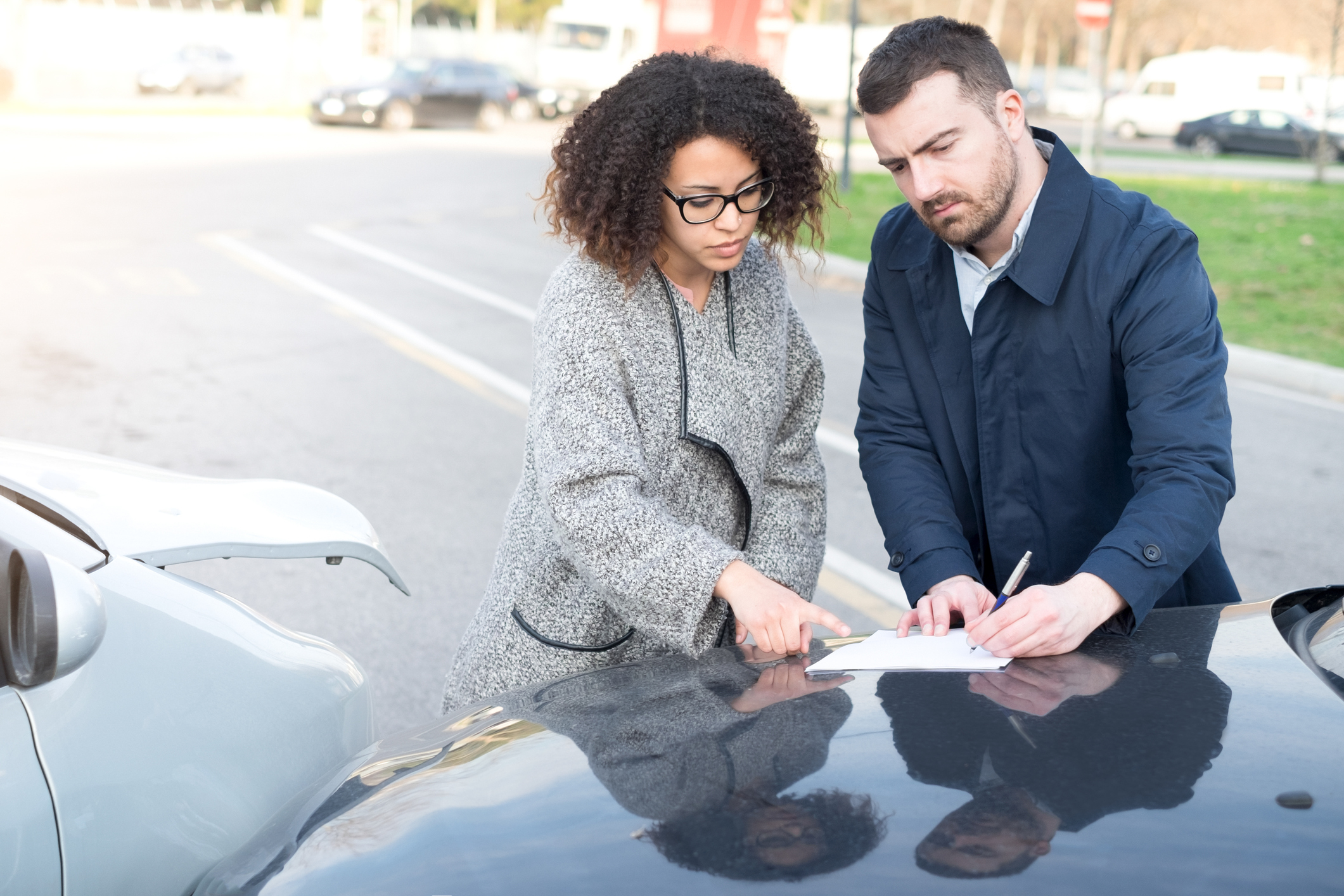
Remain respectful and courteous at all times, and do not admit fault.  Take pictures of the vehicles involved including the damage, and the scene itself whenever it’s safe to do so.  Only sign a document if it’s for the police or your insurance company.

Things may be chaotic after a car accident, and it can be difficult to remember things later. Take written notes as soon as possible after the car accident, and be as specific as possible. Use your cell phone to take pictures and document the car accident. The more pictures, the better. If there are any witnesses, get their name and contact information. Ask for a brief summary of what they saw and take notes.

Notify Your Insurance Company

Before leaving the scene of the accident you should call your insurance agent or other representative and explain what happened.  Be as truthful as possible, because not doing so could result in some serious problems later including claim denial.  Is your car safe to drive?  If not, let them know.  The insurance company will direct you on the next action to take, including towing.  They may even inquire as to whether you have a preferred body shop, and will tell you immediately if they are in their approved network.

You will then be instructed to either drive the car home, or have it towed to an insurance claims center or collision repair shop nearby.  If a police citation was issued at the scene, the recipient will probably be deemed “at-fault” during the insurance review process.  Within a couple of days, a claims adjuster will be in touch with you to explain your repair options moving forward.  If you are found to be at-fault for the accident, you’ll have to pay your policy’s deductible when picking up the vehicle from the body shop.   Some other long-term things to consider:

  • If you seek follow-up medical care, keep accurate records.
  • Don’t agree to close out an insurance claim too soon, especially if the other driver was at-fault and you were injured.
  • Hire an attorney as a last resort if the other party was at-fault and their insurance company is non-responsive.

In the end, following these guidelines right after an accident occurs will help the entire process go more smoothly.

What to Do if You are Hit By an Uninsured Driver

If you are involved in a car accident, you should first make sure everyone is okay and, if possible, pull off the road or get to a safe place. Then, call 911 to let the police know your exact location. If the accident is minor and there are no injuries, you can check for car damages and check to see that all parties involved are insured drivers while you wait for law enforcement to arrive.

If you are hit by an uninsured driver, there are several things you should do while at the scene of the accident. Request to see the other driver’s identification or ask for their name. Use your mobile phone to take photos of the vehicles, vehicle damage, and the other driver’s license plate. Most people cannot remember all the details of the car accident after it happens, so carefully write down what happened while it is still fresh in your mind.

If the uninsured driver doesn’t want to give their identification or name to you, or you feel unsafe or uncomfortable gathering information in the presence of the uninsured driver, wait for law enforcement to arrive.

UNINSURED DRIVER STATISTICS

In the United States, approximately 1 in 7 drivers (PDF) are uninsured without even basic coverage, according to a 2011 study by the Insurance Research Council.

Uninsured drivers cost the car insurance industry and insured drivers billions of dollars each year. The Insurance Research Council estimates that almost 14% of all U.S. drivers are uninsured at any given time.

WHO IS RESPONSIBLE FOR DAMAGES WITH AN UNINSURED DRIVER?

At the scene of the accident, tell law enforcement what happened, and if there are any witnesses, have the police take down their testimonies as well. Let the police issue citations or determine who is at fault, and then ask for a copy of the police report.

If you are hit by an uninsured motorist, and it was determined that it was not your fault, your auto insurance should cover the damages as long as you have the extra under-insured or uninsured motorist coverage on your policy. If you don’t have the extra coverage on your policy, you may have to sue the uninsured driver to collect damages, and you will probably have to pay your auto insurance deductible out of pocket. If you’ve been hit by an uninsured driver and need your car damage repaired, your auto insurance company may also attempt to recover damages from the other driver. You may have to appear in court, as a witness and the victim, to testify about the accident.

Get Your Car to a Reliable Body Shop 

When an accident strikes, it’s stressful.  Locating a reliable collision repair shop to do the work can also be a challenge.  Your insurance company will provide input on which body shops are approved in their network.  From that list, you can then decide where you want to take it.  Most all collision repair shops work directly with insurance providers to ensure a more seamless and stress-free process for you.  They will update you on the status of your vehicle, and notify you when the repairs are done.  Taking the initial steps outlined in this article will go a long way in ensuring that you’ve done your part to get the process started.  To search your zip code for a list of auto body shops near you, visit www.carwise.com now.

WHAT YOU WILL NEED FOR YOUR WINTER CAR KIT

Just as you may have a tornado or severe storm kit in your basement, it’s a good idea to keep an emergency kit in your car in case of extreme conditions.  In the winter months especially, there are many items that could prove to be very useful in an unfortunate weather-related situation or accident that causes you to be exposed to extreme temperatures.

Start your kit with some basic essentials, such as non-perishable food items (i.e. canned goods or snacks), and bottled water.   Pack enough for all the people typically in your car.

Next, a few handy tools to add to your kit include:

  • A windshield ice scraper
  • A multi-purpose utility tool, such as a pocket knife
  • An LED flashlight with spare batteries
  • And a bag of cat litter

Yes, you read that right.  Cat litter is a great, lightweight alternative to salt or sand that can be used to free your car from snow banks or icy patches.

A classic first-aid kit may be in your car already, but it’s worth a second look to ensure it still has a full supply.  Lastly, tucking a warm blanket in your trunk is also a good idea in case your car won’t start, or you have to wait for assistance in cold temperatures.

Take a look at which of these items you already have in your car, and consider adding the ones you don’t.  You will be happy you did if you ever come across a situation when you need them.  Leave a comment below with any items you would add to our list!

WHAT YOU WILL NEED FOR YOUR WINTER CAR KIT

Just as you may have a tornado or severe storm kit in your basement, it’s a good idea to keep an emergency kit in your car in case of extreme conditions.  In the winter months especially, there are many items that could prove to be very useful in an unfortunate weather-related situation or accident that causes you to be exposed to extreme temperatures.

Start your kit with some basic essentials, such as non-perishable food items (i.e. canned goods or snacks), and bottled water.   Pack enough for all the people typically in your car.

Next, a few handy tools to add to your kit include:

  • A windshield ice scraper
  • A multi-purpose utility tool, such as a pocket knife
  • An LED flashlight with spare batteries
  • And a bag of cat litter

Yes, you read that right.  Cat litter is a great, lightweight alternative to salt or sand that can be used to free your car from snow banks or icy patches.

A classic first-aid kit may be in your car already, but it’s worth a second look to ensure it still has a full supply.  Lastly, tucking a warm blanket in your trunk is also a good idea in case your car won’t start, or you have to wait for assistance in cold temperatures.

Take a look at which of these items you already have in your car, and consider adding the ones you don’t.  You will be happy you did if you ever come across a situation when you need them.  Leave a comment below with any items you would add to our list!

Sources:
USSA.com
NAIC.org
OSBAR.org 

Esurance.com

Carsdirect.com

Read More
5 Everyday Things that Damage Your Car’s Paint

5 Everyday Things that Damage Your Car’s Paint

When your car first rolled off the assembly line its paint job was immaculate, with a glossy finish comprised of several layers of primer and paint.  If you’ve been in an accident recently that required collision repairs, when you picked it up from the body shop your vehicle’s paint also looked like new.  But unfortunately there are a number of things that cars are exposed to on a daily basis that dull, fade and otherwise damage your once-pristine paint job.  Some are obvious, but others might surprise you and oftentimes strike unexpectedly.  With that in mind, here are 5 everyday things that can damage your car’s paint, along with advice from auto body shop pros on how best to protect your vehicle’s prized finish.

Splattered Bugs

Splattered flying bugs and car fronts just seem to go together, especially during the summer.  Those dead bugs might appear harmless, but they actually can do serious damage to your vehicle’s paint due to their bodies’ acidity.  Not removed immediately, bug body imprints can actually become etched permanently into the top layers.  Experts advise washing them off right away using a bug and tar remover, soft wash cloth and old-fashioned elbow grease.

Bird Droppings

Most of us like watching our feathered friends, but how many of us have had bird droppings bombard our cars?  In addition to being unsightly, bird droppings contain traces of acidic berries and seeds, along with grainy textures that can stain, dull and scratch your paint.  Professional auto detailers recommend promptly using a soft microfiber cloth wetted with spray wash to gently wipe away the droppings while employing a lifting motion to prevent grit-induced scratching.

Coffee and Soda

Have you ever placed a cup of coffee or soda on your car’s roof while in a hurry, and then watched in horror as it tipped over spilling the contents onto your paint’s surface?  Both beverages contain acid that can damage your car’s finish, and colorings that stain when dried.  Those in the know say wipe the spilled liquid off immediately and completely with a soft cloth and then wash the area with soapy water right after.

Sunlight

The sun’s UV rays cause our skin to age prematurely, and have the same effect on vehicle paint finishes.  Dulling and fading can occur if your car spends many hours a day exposed to direct sunlight.  Auto body paint professionals advise that you keep your car garaged, parked in a shady area, or that you use a car cover when possible to prevent sunlight-related damage.

Tree Sap

Have you ever parked your car under a tree only to later notice annoying tree sap splotches on its roof, hood or trunk?  Tree sap contains chemicals that can interact with your car’s painted surface making it not only difficult to clean off, but it also can damage the paint permanently.  Experts say that the best way to remove tree sap is to immediately wipe it off using a soft cloth wetted with an indicated polish or rubbing compound.  Then wash the area several times with soap and water until all traces of the sap are gone.

If Your Car’s Paint Gets Damaged Help is Nearby

Your car’s paint is also vulnerable to other everyday things like rocks, eggs, tar, air pollution, gasoline and human skin.  To safeguard your car’s finish from dulling or fading you should wash it frequently and also wax it at least annually with a high-quality, carnauba-based paste.  Auto body shop professionals know about paint-damaging factors and how to prevent them from ruining your vehicle’s finish.  Most collision repair shops also offer expert painting and detailing services that help your car’s finish look like new all year long.  When you need some reliable paint care tips or auto body painting done, contact a reputable collision repair shop nearby.  To search your zip code for a list of auto body shops near you, visit: www.carwise.com now.

Read More
1 14 15 16 17 18 21