Carwise offers tips on how seniors can drive safely

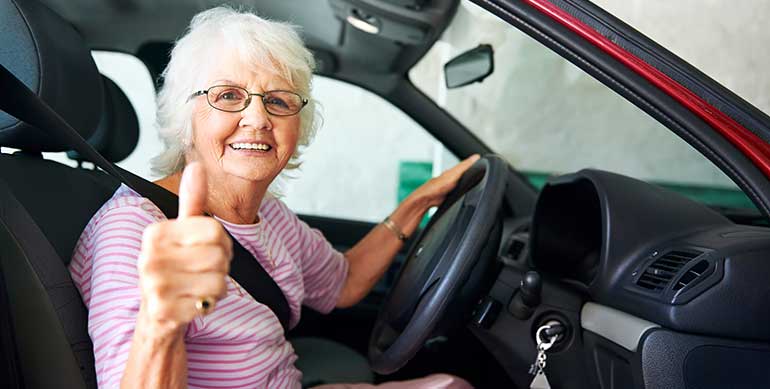
Finding a Safe and Reliable Used Car for an Elderly Driver

Your elderly mother’s 10-year-old car has seen better days, and it’s going to take some costly repairs to keep it running. Mom’s reflexes aren’t what they used to be, and she has trouble checking her blind spots due to some chronic neck pain. As a result, you think replacing her vehicle with a safer and more reliable one might be wise. Where should you start? Helping an elderly driver find a safe and reliable car will go more smoothly when you use these tips from the pros.  

What Can She Afford?

First, you’ll need to sit down with mom to determine what she can afford. Newer vehicles have more safety features, but also come with heftier payments and insurance premiums. Unless mom has a large retirement nest egg, it’s probably best to find her a reliable used car with low mileage that’s under five years old.    

Safety Features

Many seniors have health issues that make driving more dangerous, like poor eyesight, slow reaction times, neck pain and trouble gripping the wheel because of arthritic hands. Vehicle safety advancements have come a long way in the past five years, so look for a car with some of these options:  

  • Back up camera. This helps when the driver’s range-of-movement is limited.
  • Automatic braking. The car will stop itself when it’s approaching an object too quickly.
  • Lane change warning. An audible warning sounds when the car drifts into another lane.
  • Brake locking system. The vehicle will brake automatically if the driver’s foot accidently comes off the pedal, like at a stop light.
  • All-around airbags. Newer cars come with front, side, knee and even rollover airbags to protect the occupants.
  • Field-of-vision. Can mom see easily all around the car when sitting behind the wheel? This makes a big difference when backing out of parking spaces or merging onto the highway. Does she feel comfortable while sitting in the driver’s seat, including distance from the steering wheel and seat height? Can she easily adjust the mirrors?
  • Collision protection. To find out how well a car withstands an impact, the National Highway Traffic Safety Administration (NHTSA; www.nhtsa.gov) maintains a crash test database for most vehicles.

Some vehicles have too many bells and whistles that could distract elderly drivers, like movie

screens and fancy navigation systems. Those are probably options your mom should avoid.

Reliability

Whether it’s looking at a car from a private seller, dealer or online, it’s natural to have some reservations about its reliability. To help you decide if it’s wise choice, use these steps:

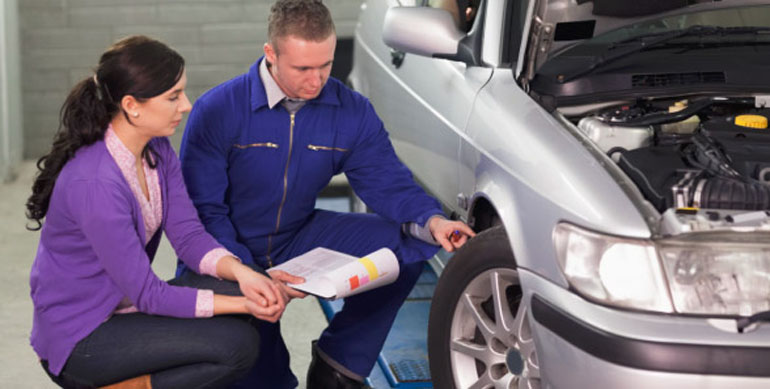
  • Do an inspection. Walk around the car and check the tires, body for signs of collision repairs, and underneath for suspicious fluid stains on the pavement. Pop the hood and inspect the engine for signs of leaks and excessive wear-and-tear. If your initial inspection goes well, pay your mechanic to give it a “once-over” just to be sure.
  • Pull up the VHR. Many sellers provide free Carfax or AutoCheck vehicle history reports (VHR), but if they don’t you can purchase one for a small fee. The VHR will reveal if the car was involved in any serious accidents, if the title contains any salvage records, number of past owners, and even maintenance records if it was taken to the dealership.
  • Consult online sources. Consumer Reports and J.D. Power provide reliability data and average annual operating costs based on a vehicle’s make, model and year. You can also read online consumer reviews to learn what drivers of a specific car, or the mechanics that work on them, have to say.
  • Take it for a test drive. With you in the passenger seat, have mom take the car out for a test drive. Choose a route that offers a little bit of everything, like hills, curves, rough pavement and even a wide-open stretch of highway. Turn off the radio and listen for any strange sounds. Does it shift, ride and handle smoothly?  

Promptly Find a Good Body Shop Nearby Using Carwise  

No matter how safe and reliable an elderly driver’s car is, accidents still happen. When their car needs some collision repairs, use the nationwide Carwise referral network to help them promptly find an auto body shop nearby. I-CAR and ASE-certified technicians there will have the training, equipment and experience to restore their vehicle like-new again promptly and reliably. You can also conveniently track your vehicle’s repair status by downloading the Carwise app to a mobile device.

Search your zip code now for a customer-reviewed auto body or glass repair shop nearby: www.carwise.com.

Read More

The Different Types of Windshield Glass Damage

You’re driving down the road one day behind a big gravel truck, and it hits a bump. Bam! A flying rock just hit your windshield, leaving a two-inch crack in its wake. You feel your stomach tighten up as your mind starts racing. Can it be repaired, or will the entire windshield have to be replaced? Windshield glass damage comes in various forms, and fortunately auto glass repair shops are now able to fix most in-lieu-of a total replacement. What follows are the different types of damage they see.   

Cracks

Auto glass technicians treat cracks frequently, and a crack will first appear as a line in your windshield. Some cracks look like small, straight lines with starting and ending points, or they can be longer with several branches protruding from the main line. There are also subcategories of windshield cracks, including:

  • Stress crack. These oftentimes form without anything even hitting the windshield because of large temperature fluctuations. For example, a windshield that’s exposed to the sun’s intense summertime rays, or covered in ice during extreme cold, can get a stress crack.
  • Edge crack. An edge crack starts within 2” of the windshield’s edge, or extends out to it. These usually form quickly and are between 10” and 12” in length.
  • Floater crack. A floater crack starts in the middle of the windshield more than 2” from the glass’ edge. These cracks can be of varying lengths, including longer ones that extend across most of your windshield. Extreme temperatures can cause a floater crack to get worse.
  • Crack chip. These smaller cracks have an impact point that’s less than a quarter in diameter.  

In general, cracks that are less than 3” in length can usually be repaired.

Chips

Also called “dings” by drivers, a chip is usually formed by a flying rock and its appearance means that a small piece of glass is missing. For that reason, a chip is also referred to as a “stone break” or “pit” by professionals. If the chip doesn’t have any longer cracks extending from it, is less than an inch in diameter, and didn’t penetrate all the way through the glass, it can usually be filled by a technician.

Bulls-Eye

Another type of windshield damage that results from an object’s impact is called a “bulls-eye”

because the resulting circular pattern looks like a dart board. Bulls-eyes are like chips in that a piece of glass was removed upon impact, but they’re usually much larger and non- repairable. There are also partial bulls-eye cracks, or “half-moons”, that are similar in appearance but not completely symmetrical.

Stars

Windshields can also sustain damage known as “stars”. Those are typically small chips with multiple cracks radiating out from the center that resemble a fireworks explosion. Smaller star patterns can usually be repaired, but after the affected area is filled in it will always be slightly visible. For that reason, when you’re ready to sell it could lower your vehicle’s value.

Combination

As the name implies, combination damage refers to a diagnosis where the glass is suffering from two or more of the aforementioned-types. Repairs in these instances are also more complicated, and oftentimes a total windshield replacement is recommended.

Should You Repair or Replace?

A trained auto glass specialist will inspect your windshield’s damage and then let you know if it can be fixed safely versus a total replacement. If repairs are possible, the technician will first clean all dust and debris from your windshield, and do some drilling to prepare the area. Once a smooth surface has been created, they’ll inject a clear resin material into the opening, allow it to cure, and then polish it up like new.  

Your auto insurance policy may include coverage for windshield damage repairs or replacements, so check with your agent if you’re not sure. And, most auto glass repair shops offer mobile on-site services for your convenience!

Find Good Auto Body and Glass Repair Shops Nearby

Finding a good auto body or glass repair shop nearby can be challenging, and that’s why we started the nationwide Carwise referral network. All repair shops listed through Carwise employ ASE and I-CAR certified technicians with the training, experience and equipment to restore your vehicle like-new again promptly and reliably. Most shops work directly with insurance companies, so you don’t have to, and warranty their outcomes to put your mind at ease.

Search your zip code now for a customer-reviewed auto body or glass repair shop nearby: www.carwise.com.

Read More
Be prepared when driving in the rain.

10 Reasons Why Spring Driving Conditions are Dangerous

March’s arrival can only mean that the much-anticipated sights and sounds of spring are just around the corner. But springtime also ushers in seasonal driving challenges like wet pavement, motorcyclists, and foraging animals who’ve emerged from their winter shelters. Staying safer on the roads during the spring starts with a driver’s ability to identify the potential threats they’re up against. To help make your springtime commutes safer ones, here are 10 of the more common driving hazards to watch out for.

Active Animals

Many animals in colder climates dramatically reduce their activity, or even hibernate, during winter. When spring arrives, those animals start moving around again while mating and foraging for food. Animals crossing the road in front of your car can happen without warning, and many species, including deer, are more active at dusk and dawn when it’s harder to see.

Allergy Medications

Millions of spring drivers suffer from seasonal allergies that cause runny noses, itchy eyes and scratchy throats. To treat those symptoms, many rely on OTC allergy medications that induce drowsiness which then places them at risk behind the wheel. Before combining any allergy medication with driving, read the label or consult your pharmacist.

Bicyclists

Warmer weather attracts bicyclists, and that means sharing the road with them as a driver. When approaching or passing bicyclists who are using the shoulder, make sure to allow them plenty of room.

Driving too Fast

For some reason when the temperatures start to rise road speeds tend to also increase. Be extra careful to watch your speed, especially in school zones or other areas where pedestrians or bicyclists are present. When driving on wet pavement it’s always wise to slow down.  

Hailstorms

Spring hailstorms are common, and even small hailstones can shatter windshields when you’re traveling fast. Ice fragments left over from hailstorms can also quickly create hazardous driving conditions. Before hitting the road, always check your local weather report for hail warnings.

Rain

Heavy rainfall and spring are synonymous terms in many regions, and that means wet

pavement with slippery oil residue that can induce hydroplaning. According to the Federal Highway Administration (www.fhwa.dot.gov), nearly half of all weather-related accidents occur while it’s raining. To stay safer when driving in rain, make sure your tires have adequate tread, turn on your headlights, and reduce your speed.

Motorcyclists

Warmer weather also brings out motorcyclists that drivers need to watch out for. Always give motorcyclists a wide berth when you pass, and stay back from motorcycles at least one car length per 10 mph while operating your vehicle.   

Potholes

In areas that get a lot of snow, snowplow and road salt use combine to create potholes. Driving over deeper ones can cause serious damage to your tires, steering and suspension. Standing water can also shield potholes from drivers. As a result, slow down when approaching large puddles on the road, and avoid potholes and chunks of broken pavement whenever possible.

Underinflated Tires

Many drivers don’t check the air pressure in their tires like they should, especially during winter months when it’s cold. Hitting potholes can also cause your tires to lose air, and that’s why it’s important to check your tire pressure weekly. Underinflated tires can cause vehicle handling problems and speed up tire tread wear.   

Worn Wiper Blades  

Removing wintertime ice and snow from your windshield can quickly wear out wiper blades, especially if they’re cheaper ones. It’s always smart to replace worn wiper blades in the spring with a fresh set. With all the rain that spring brings, you’ll want to make certain that your wipers are up to the challenge!  

Promptly Find Reliable Spring Accident Collision Repairs Here   

Even when staying informed about spring driving hazards, accidents happen. When you’re involved in one, promptly take your vehicle to an auto body or glass repair shop featured in the nationwide Carwise referral network. ASE and I-CAR certified technicians there will have the training, equipment and know-how to restore your vehicle like-new again promptly and reliably. Most collision repair shops in the Carwise network deal directly with insurance companies, so you don’t have to, and warranty their work to put your mind at ease.

Search your zip code now for a customer-reviewed auto body or glass repair shop nearby: www.carwise.com.

Read More

5 Driving Navigation Apps that Help You Avoid Travel Delays

When you were a kid your parents probably used folding road maps to navigate on long car trips. In addition to being cumbersome to use, those maps couldn’t alert drivers about closed roads or impending traffic backups. Being late and getting lost was common, and many drivers dreamed of a day when travel delays would be easier to avoid. Fortunately, that time has now come, as there are several driving navigation apps available that simplify getting around. Here are 5 of the better ones.  

Apple Maps

Every iPhone now comes with Apple Maps built into it, which makes it the default system when tapping on map links inside other opened apps. The nice thing about Apple Maps is that it works flawlessly in the screen’s background, and that it can continue providing you with updates even on your Lock screen.

Although older versions of Maps did sometimes lead drivers astray, the newer iOS 10 has a complete redesign with Hooked apps right into Maps which can further be integrated with Siri for voice-aided travel assistance. And, with or without Siri’s reassuring voice, you can even book a reservation or request a ride directly through the Maps app.

Google Maps

Because Google’s the largest and most-detailed search engine in the world, Google Maps is also one of the best apps for showing various routes to the same destination, complete with an ETA for each. Google Maps affords those traveling by car, foot, bicycle, or public transit voice-guided, turn-by-turn navigation instructions, including the locations of nearby businesses and attractions. As of 2019, all these GPS-enhanced Google Maps features are now easily accessible by travelers in hundreds of countries worldwide.  

MAPS.ME

Available in the App Store, MAPS.ME was developed by My.com and is completely free of charge. So far MAPS.ME has been very positively embraced by users because it features highly reliable and detailed maps complete with turn-by-turn navigation instructions. It also shows the locations for points of interest, like restaurants and historic sites, which can be bookmarked and shared later with others via social media or text message.

And finally, MAPS.ME also allows you to book hotel reservations through Booking.com, which makes this navigation app the perfect traveling companion!  

Sygic

Boasting over 50 million users, Sygic is an offline GPS navigation app with several unique user-

friendly tools. To get started, a traveler needs to install and run the Sygic app on their mobile device. After doing so, they’ll be asked to download maps specific to their location, including detailed versions provided by TomTom for many parts of the world. Some of the interesting Sygic features available to drivers, hikers, and other travelers include:

  • 2D and 3D maps of Australia, Africa, India, North and South America, Russia, New Zealand, the Middle East, and other global destinations
  • Alternative travels paths when one’s current path is congested
  • Live status reports on police activity, car accidents, and more
  • Real-time updates on the shortest routes to a specific destination
  • A locator for gas stations offering special promotions and discounts
  • It stills works when a user’s mobile data or WiFi connection has stopped working

Waze

Waze is a powerful, community-based GPS navigation smart app that allows users to share traffic updates for roads they’re traveling on with other drivers, along with informative details about local attractions and businesses. It’s very effective at helping drivers avoid congested or closed roads, while providing the shortest alternative routes available. Status updates that Waze shares include impending travel delays like accidents, speed traps and construction zones. To use Waze, you’ll simply need to activate the data connection and GPS on your mobile device.

Find Nearby Auto Body Shops Using the Carwise App

Although these navigation apps help drivers arrive more safely at their destinations, accidents can still happen. When you’re involved in one, the Carwise app can help you locate a customer-reviewed auto body or glass repair shop nearby in minutes by simply searching your zip code. All the shops featured in the nationwide Carwise network employ I-CAR and ASE-certified technicians with the training, equipment and experience to restore your vehicle like new again promptly and reliably.  

Search your zip code now for a customer-reviewed auto body or glass repair shop nearby: www.carwise.com.

Read More

Why ASE and I-CAR Certifications Matter

Your car was just involved in an accident requiring auto body and engine repairs. Being unfamiliar with repair shops in your area, you searched online for options. The search results reveal that there are only a few shops that feature both “I-CAR” and “ASE” Certifications on their websites. Does that really matter? When it comes to your safety, a low-quality repair job using inferior parts could put you, and others, in a potentially life-threatening situation. Here’s why choosing an I-CAR and ASE-certified shop can make a world of difference.

Earning an I-CAR Certification

Started in 1979, the Inter-Industry Conference on Auto Collision Repairs, or “I-CAR”, is a global nonprofit training and certification entity dedicated to improving the quality, safety and efficiency of auto body and glass repairs. With today’s highly sophisticated vehicles, repair technicians need to stay constantly updated on every aspect of the repair job, including new technologies, equipment and methods. I-CAR not only provides that essential training for technicians, but also for insurance providers, shop estimators, shop managers, and even their front office staff.

Once a shop’s certified through I-CAR, it’s an ongoing process. To continue displaying the I-CAR shield of excellence, employees there must pass annual training courses on numerous topics related to the newest repair techniques. Because I-CAR is mostly funded through student tuition, their courses and services on an industry-wide scale remain unbiased. They also manage an open collision repair communication forum for anyone who’s interested. The training programs I-CAR offers to those in the collision repair industry fall within these categories:  

  • Hands-On Skills Development
  • Industry Training Alliance
  • Introduction to Collision Repair Services
  • Professional Development Program (PDP)
  • Repairability Technical Support
  • Vehicle and Technology Specific Training
  • Welding Training and Certification

As you can see, when you take your vehicle to a repair shop that proudly displays the I-CAR logo in its waiting area and on its website, you can rest assured that they have the expertise to keep your ride looking and performing optimally for many years to come!  

How Technicians Become ASE-Certified

Up until the early 1970s, drivers were oftentimes caught up in a nail-biting guessing game when it came time to find a reliable technician to work on their vehicle’s mechanical parts. In 1972 the independent, non-profit National Institute for Automotive Service Excellence (ASE) was formed to eliminate much of that frustrating, and sometimes costly, guesswork. ASE exists to promote excellence for vehicle repair, service and parts distribution that ultimately protects consumers, shop owners and technicians.

To become ASE-certified, a technician must first have two years of on-the-job training, or one year of on-the-job training plus a two-year degree in automotive repair. Then, and only then, can they apply to take an ASE Certification test. But passing those tests is not easy, as one-third of the participants fail on their first attempt. Those challenging exams are written during annual workshops attended by seasoned automotive industry professionals and executives with relevant expertise as:

  • Actively-employed technicians
  • Automobile manufacturers
  • Aftermarket manufacturers
  • Educators

None of the test developers work directly for ASE, which helps ensure that the exam material is non-biased while also reflecting changes in auto repair technology, methods and needs. ASE’s more than 40 exams are categorized based on these repair sub-specialties:

  • Collision-related repairs
  • Automobiles
  • Medium/heavy trucks
  • Truck equipment
  • School buses  

At present, there are roughly 300,000 professionals employed in the auto repair industry that are ASE-certified. For shop owners, knowing that a technician has earned their ASE Certification allows them to better gauge their expertise and knowledge before hiring them. For drivers, it gives them peace-of-mind knowing that the care of their vehicle is being entrusted to a pro who proudly wears the blue ASE patch on their sleeve!

Promptly Find Certified Auto Body and Glass Repairs Here

As has been pointed out, ASE and I-CAR Certifications really do make a difference when searching for an auto body or glass repair shop to restore your vehicle. At Carwise, we’ve simplified that search process by quickly linking consumers with over 19,000 I-CAR and ASE-certified collision and auto glass repair shops nationwide. By conveniently visiting our website, or downloading the Carwise app, you’ll be quickly connected to dependable shops in your area.

Search your zip code now for a customer-reviewed auto body or glass repair shop nearby: www.carwise.com.

Read More

5 Safe Driving Tips for Older Drivers  

Don’t look now, but the person behind the wheel of that shiny new sports car next to you might be somebody’s grandparent, or even great grandparent. Millions of Baby Boomers are reaching retirement age every year, resulting in more senior drivers using our roadways. In fact, a 2013 joint study(1) by the University of Florida and AAA estimated that by 2020 the U.S. will have over 40 million licensed drivers aged 65-and-over. On the flip side, senior drivers present unique safety challenges brought on by the aging process itself. If you’re an older driver, or know one, here are some reliable ways to stay safer on the roads.  

Challenges Older Drivers Face

Many older drivers have medical conditions that can affect their senses and reaction times, including these:

  • Cognitive impairment caused by a stroke or dementia
  • Movement-related problems due to arthritis, hip and joint replacements
  • Vision problems from cataracts, age-related macular degeneration and glaucoma

According to the AAA/University of Florida study, older persons also face a higher risk of being injured, or even killed, in auto accidents because their fragile bodies are more susceptible to injury. Certain prescription and OTC medications can also impair drivers, so it’s important for a senior to consult with their doctor before hitting the road. Because of these physical limitations many older drivers choose to limit their driving hours, or avoid driving after dark altogether.

Driving Tips for Seniors

Here are 5 ways that seniors can help improve their odds of not being involved in an accident:

Get Regular Hearing and Vision Tests

Hearing and vision loss tend to occur as we age, so for seniors it’s wise to have a doctor test those key senses every year. Impaired hearing could cause an older driver to pull out in front of a train or emergency vehicle, while compromised vision can interfere with their ability to see oncoming vehicles, pedestrians and traffic signs. An audiologist may recommend hearing aids if a hearing deficiency is found, while an eye doctor might suggest limiting driving to daylight hours, or prescribe corrective lenses, when a senior’s vision is not what it used to be.

Stay Physically Fit

Regular exercise helps improve strength and flexibility, both of which come in handy while driving. Staying physically fit makes it easier for a senior to turn the steering wheel, look over their shoulder, and to carry out other movements while driving and parking. Walking, water aerobics, Yoga and Tai Chi are healthy low-impact exercises for older people to engage in, with the added benefit they could help avoid accidents later.

Know Your Limitations

Seniors should listen to their bodies when it comes to driving limitations. For example, if their hands hurt while gripping the wheel due to arthritis, using a steering wheel cover will make holding and turning it more comfortable. And, a vehicle with a larger and easier-to-read dashboard display might be safer for someone with a visual impairment. Most newer cars now come with safety advancements like lane change and blind spot sensors that alert older drivers when dangers are present.

Consider Driver and Road Conditions

When there’s snow, ice or poor visibility, it’s probably best for seniors to stay off the road. Bad night vision means avoid driving after dark. Driving when one is tired or upset is never good, and when it comes to “conditions”, drivers of all ages should never get behind the wheel while under the influence of mind-altering substances like alcohol and some medications.

Keep Your Driving Skills Sharp

Just because someone has held a driver’s license for 50 years doesn’t mean they’re still capable. It’s not a bad idea for drivers over 65 to take a driving refresher course periodically to keep their skills sharp, and doing so could also possibly earn them a car insurance discount. If you’re the family member of a senior who’s driving has got you worried it might be time for them to turn over their car keys and start using public transportation or a ride-sharing service instead.

Nearby Collision Repairs for Drivers of All Ages    

Even when using these safe driving tips, drivers of all ages can still be involved in accidents. When one happens to you, take your vehicle to a collision repair shop nearby featured in the nationwide Carwise referral network. Once there, ASE and I-CAR certified technicians will restore your vehicle like-new again promptly and reliably. Most work directly with insurance companies, so you don’t have to, and warranty their repairs to put your mind at ease.

Search your zip code now for a customer-reviewed auto body or glass repair shop nearby: www.carwise.com.
Reference:

Read More

How Can I Protect My Car from Road Salt Damage?

If you drive in an area where snow and ice are common, then you’re also familiar with the road salt that DOT crews put down to help ensure safer commutes. Road salt is the raw material from which our table salt comes, and its bluish gray color is due to the various impurities it contains. When spread on roads, salt melts ice and snow particles by raising their water temperature above the freezing point. And although road salt does keep drivers safer, its chemicals can be quite harmful to your car’s surfaces when they’re exposed to it.   

Road Salt Targets These Vehicle Areas

There are numerous nooks and crannies found around your vehicle where road salt particles can hide from view, and later inflict damage when you least expect it. Once in place, those tiny pulverized particles begin to dissolve, releasing sodium and chloride through a process that’s accelerated by warmer temperatures and moisture. Here are some of the many ways that road salt’s chemicals can harm your car:  

The undercarriage

This is the underside of your vehicle that you rarely see. Salt imbedded within metal undercarriage structures, like the exhaust system, axles, and coil springs, can rapidly speed up the corrosive process that causes rust. A rusted undercarriage can be very expensive to repair, and if you live in a state that requires annual safety inspections, excessive rust can cause your vehicle to fail.

Your paint

Salt targets your beautiful paint job by weakening its protective coatings, which then allows moisture to invade and start corroding the metal that lies beneath. The longer the salt is left on your paint’s surface, the greater the likelihood that rust can form. Paint chips and cracks are inviting areas for salt’s chemicals to infiltrate paint layers.   

Wheels

Your wheels aren’t painted like your car body is, which leaves them highly susceptible to rust formation that’s facilitated by road salt, warmer temps, and moisture.  

The interior

Salt-filled snow and ice sticks to the soles of your shoes and then gets ground into cloth floor mat and upholstery material found inside your car’s cabin. Abrasive salt particles speed up wear-and-tear to the upholstery, while creating unsightly stains that are very difficult to remove.  

Preventing Road Salt Damage

If you drive in a cold weather state, the key to protecting your vehicle from salt lies in being proactive long before the first snowfall arrives. To protect its exterior all winter long, car care professionals recommend these steps:

  • Wash your car, including the undercarriage, every 2 weeks during the winter months, or immediately after a snowfall. However, experts advise not washing it until temperatures rise above freezing.
  • Wax your car with a high-quality product every 3 months during the year, and apply a ceramic coating for added paint protection. A good ceramic coat should last for several years.
  • Promptly touch up paint chips larger than a pinpoint to help stop corrosion.
  • Avoid driving through mud puddles or standing water where salt has accumulated.
  • Try to keep your distance when following snow plows, salt trucks and semis, as they can splatter large amounts of salt-filled water all over your vehicle.    

Use these steps to protect your car’s interior from salt:

  • Vacuum out your car frequently during winter months, especially after you’ve tracked in a lot of salt.
  • Apply professional detailing products to your vehicle’s upholstery to create a protective barrier against moisture, dirt and salt.

Quickly Locate Road Salt Damage Experts Nearby   

Protecting your car from road salt damage can be hard, and once unsightly rust begins to appear on your vehicle, it lowers its curb appeal and resale value. Don’t allow damaging rust to ruin your ride. Instead, keep it protected all year long by taking it to a nearby auto body shop featured in the nationwide Carwise referral network. Rust prevention experts there have the professional detailing products, services, and advice you need to keep your car protected.  

Search your zip code now for a customer-reviewed auto body or glass repair shop nearby: www.carwise.com.

Read More

How Can I Find an Honest Auto Body Shop?

We’ve all heard stories from other drivers about collision repairs that didn’t quite meet their expectations, making them a little leery about using that shop again. And when you’re involved in an accident, finding an honest and reliable auto body repair shop for your car will help alleviate your concerns well after the work is through. To help you find a shop that’s more likely to meet your expectations, use these tips from the pros.

Do They Provide Written Estimates?  

It’s always wise to get written repair estimates from several shops, and to find out if they will honor their original estimate, and for how long. All other factors being equal, shops that don’t provide written estimates may be ones to avoid. When getting a written estimate, ask about any potential costs that may not show up on the original invoice, as repair needs can change once the technicians start “breaking down” your car’s exterior. If you have any doubts about the estimate, don’t be afraid to ask the shop manager how they arrived at their figures.

Are They Certified?

Better body shops and their technicians are usually certified by professional collision repair organizations like the National Institute for Automotive Service Excellence (ASE) and I-Car. That just means they have met I-Car and ASE quality and testing standards, which are re-evaluated every few years. So as a consumer, look for shops that proudly carry the ASE and I-Car certification labels.

Will They Patiently Answer Questions?

Collision repair shop “lingo” can be confusing, so find a business with technicians that will take the time to patiently respond to any questions you might have. Some shop managers or owners will physically bring you into the repair bay and point out what they’ve found, along with repairs that need to be done to correct the problem. When a shop doesn’t take the time to address your concerns, or let you see your vehicle once the repairs are underway, that tends to leave doubts in your mind.

Do They Admit Their Limitations?

Many shops don’t have the repair equipment or facilities to perform certain jobs, like fixing

aluminum body panels or frame straightening. Look for a shop that’s not afraid to refer you to another one down-the-street if they feel it’s outside their expertise. Other shops specialize in auto glass repairs, for example, and maintain reciprocal relationships with their competitors to ensure the highest-quality outcomes for all. That’s just smart business, and when it comes to your vehicle, find a shop that’s not afraid to admit their limitations.

What Do Their Past Customers Say?  

One of the best ways to determine the quality of a shop’s work is to read their customer reviews and customer satisfaction (or not!) feedback. That information is readily available through online sites like the Better Business Bureau (BBB), American Automobile Association (AAA), Angie’s List, Yelp!, or Google Reviews. Word-of-mouth is another reliable way to gauge a collision repair shop’s reputation, good or bad. In the end, don’t rely on just one or two reviews, but instead consult multiple sources.

Does the Shop Warranty Their Work?

Another aspect to consider is if the body shop warranties their work, in writing, and for how long. Better shops usually back their repair outcomes with a written warranty for a specified amount of time or miles after the work is completed. And, as a driver, nothing says peace-of-mind quite like having a warranty when you drive away with your newly-restored car!  

Promptly Find an Honest Body Shop by Using Carwise   

Finding an honest collision repair shop when your vehicle’s future weighs in the balance can be frustrating. At Carwise, we’ve simplified the process with our online auto body and glass repair business locator features. By conveniently using our website or downloadable Smartphone app, finding an honest and reliable body shop is easier than ever before. All the shops in the nationwide Carwise referral network are I-Car and ASE-certified, and most warranty their work to put your mind at ease.

Search your zip code now for a customer-reviewed auto body or glass repair shop nearby: www.carwise.com.
Read More
Driving Habit Tips

3 Futuristic Car Safety Features that May Be Here Soon

Self-driving cars, cars that “talk” to one another, and vehicles with augmented reality displays have long been the fantasies of popcorn-munching Sci-Fi moviegoers. But are those futuristic safety technologies merely the creations of Hollywood minds, or ones that will soon be as commonplace as airbags and seatbelts? In-actuality, there are several revolutionary car safety advancements that are much closer than you might think. Here are 3 that could be appearing soon at a dealership near you.

Augmented Reality Dashboards

We’re all familiar with Terminator movies, in which hi-tech robots look at a person or object and then quickly access information about who or what they are. Augmented Reality (AR) will function in much the same way for drivers, as critical information about what they’re viewing pops up on the windshield right before their eyes. In other words, AR will supply additional information to enhance what a driver’s senses normally take in.  

For example, if you are approaching another vehicle too fast, a red box will appear on the AR display with arrows showing you how to safely maneuver around it, avoiding a collision. When coupled with an AR GPS system, the safest lane would also be highlighted on your windshield to guide you out of harm’s way. In addition, engineers are looking at ways for cars to notify drivers when to turn without having to take their eyes off the road.

Some manufacturers, like Toyota, are also looking into AR for vehicle passengers. This would allow them to use a touch screen to zoom in on objects outside the vehicle, select and identify those objects, and then acquire car-to-object distances. And finally, auto makers like BMW are researching AR for automotive technicians, which allows them to wear special AR glasses to locate defective parts, and then access a display with instructions on how to replace them.

Communicating Cars

You’re quickly approaching a busy intersection as another vehicle runs the red light and enters your path. You didn’t see them, but your car did, as it warns you of the impending collision while automatically applying the brakes. Welcome to vehicle-to-vehicle communication, or “V2V” for short. Studies by the National Highway Traffic Safety Administration (NHTSA; www.nhtsa.gov) identify human error as the number one cause of traffic accidents. (1)

To overcome those human mistakes, V2V works when a vehicle transmits a wireless signal about its location, direction and speed. That information is then received by surrounding vehicles, which use it to calculate safe driving distances. Engineers are also working on V2V applications that would allow a car to take evasive measures should another vehicle enter its path. And, researchers are now testing vehicle-to-infrastructure capabilities, or “V2I”.

V2I picks up signals from stationary objects like road signs or traffic lights, and then notifies its driver to be alert. V2I could also be used to obtain road condition information from traffic management systems, and then relay to drivers the best possible route to take for smoother journeys.

Self-Driving Cars

Many drivers spend countless hours commuting back and forth to work. Wouldn’t it be great if your car would drive for you, allowing you to sit back and relax? Welcome to self-driving vehicles, a concept that may be available soon if Google engineers have their way. In fact, Google has already been testing this technology In several states during the past few years.

Some of Google’s cars “learn” the details of a given road by driving on it several times first with a human operator. After that learning process, the cars then drive themselves based on the data they’ve acquired. They also “remember” pedestrian crossings, and to stop when approaching them. In addition to recording images of the road, Google cars use built-in computerized maps to “see” road signs and traffic lights well before humans can, and to choose alternate routes.

To do so, they rely on lasers, cameras and radar to identify and process information about their surroundings much more quickly than drivers can. If self-driving cars become mainstream, they could end up driving in packs on busy roads using a system called “platooning”; essentially performing as one cohesive unit. Some researchers believe that platooning would lead to fewer traffic jams, accidents, and shorter commutes for all.

Innovative Collision Repairs Only a “Click” Away

Although these futuristic safety features show great promise in reducing human error-related collisions, until then accidents are still going to occur. When one happens to you, take your vehicle to a collision repair shop nearby featured in the nationwide Carwise referral network. There highly trained technicians using the latest collision repair innovations and equipment will restore your vehicle promptly and reliably.

Search your zip code now for a customer-reviewed auto body or glass repair shop nearby: www.carwise.com.

Read More

Why Is My Car’s Paint Peeling?

You take much pride in your car’s appearance, and wash, wax and detail it faithfully. In fact, you even picked up some touch-up paint, and have been applying it to rock chips and scratches when they appear. But recently you’ve noticed some small areas on the front bumper and hood where the paint is starting to peel, and you’re concerned. Even when keeping a car’s painted surfaces detailed, certain factors can commonly cause paint peeling, or “delamination”. Left unchecked, delamination will ultimately decrease your vehicle’s curb appeal and resale value.

Your Car’s Finish Has Many Layers

Today’s vehicles have glossy finishes created by many layers of coatings, including:

  • Primer. The primer serves as a base layer for the paint, assists with paint adhesion, and provides a reliable surface for additional coats; all while protecting the underlying metal.
  • Base coat. Several layers of automotive paint are meticulously applied at the factory to give the base coat its unique coloration and look.  
  • Clear coat. This final layer provides a hard shell that protects the paint over the years from oxidation (causes rust), minor chips and scratches, and other environmental forces; while preserving the appearance of the original factory paint job.  

What Causes Paint Delamination?  

Delamination occurs when one or more of the aforementioned-layers stop binding to the surface below it. For example, the primer stops adhering to the bare metal. Eventually, this lack of required adhesion can cause small circles of paint flaking, and later for even larger areas of paint to start peeling off. Once that happens, you’ve got a problem. The two main culprits that initiate this paint-peeling cascade are:

  • An improperly prepared paint surface

This typically occurs during a DIY paint application, or when the original factory paint job wasn’t done correctly. If you own a vehicle manufactured in the late 1980s to mid-1990s, Chrysler, Ford and General Motors (GM) all experienced production-related issues that caused their vehicles to prematurely experience paint delamination. Improperly prepared body panel surfaces can compromise adhesion, starting with the primer layer.

  • A compromised paint seal  

The second major cause of paint peeling is when the clear coat, base coat, and primer seal all get compromised by a deep rock chip, ding, or scratch. Once that occurs, moisture, road salt, and other contaminants begin working their way through the coatings, starting the delamination process. Even a small chip in the clear coat can facilitate serious paint peeling when the area is exposed to additional external forces like high-pressure washing or direct sunlight.  

In addition to noticeable peeling on your paint’s surface, rust can also start forming on the underlying metal, and eventually weaken its structural integrity. And, the presence of paint peeling and rust most definitely lower your vehicle’s curb appeal and resale value!  

Can Peeling Paint Areas be Repaired?

No matter how careful you are, paint peeling is possible on any vehicle- notably if it’s older and/or spends a lot of time in direct sunlight. When you first start noticing delamination, there are some things to consider when it comes to repairing it. To make the best repair decision, consider the following:     

  • Is the peeled area deep? A compromised clear coat layer is one thing, but when the paint beneath starts peeling badly, that’s a more serious problem. Once that happens, you’ll need to promptly have the affected area repainted.
  • How widespread is the peeling? If the peeling is confined to just a small, coin-sized area, it can easily be spot repainted. But if there are several delamination areas located around the vehicle, your best bet is to have the whole body redone so that it matches.  
  • Is the entire body at-risk for peeling? Again, keep in mind that your car may have received a faulty factory paint job which will be apparent over the whole body after a while. Was it made in the early 1980s to mid-1990s by one of the “Big 3” U.S. automakers? Has it been repainted by a DIYer that may not have done the job correctly? If either scenario is true, you may want to have the entire body repainted by a pro before it gets worse.

Paint Restoring Experts are Only a Click Away

When your car’s exterior is experiencing unsightly paint peeling issues, take it to a nearby auto body shop featured within the nationwide Carwise network. Whether it’s just a small touch-up that’s needed or a complete repainting job, technicians there have the right facilities, application methods, and expertise to promptly, affordable, and reliably restore your vehicle’s finish back to its original factory condition.

Search your zip code now for a customer-reviewed auto body or glass repair shop nearby: www.carwise.com

Read More