How Can Drivers Avoid Rear-End Collisions?

How Can Drivers Avoid Rear-End Collisions?

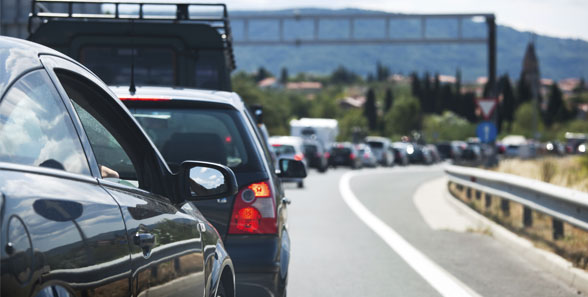
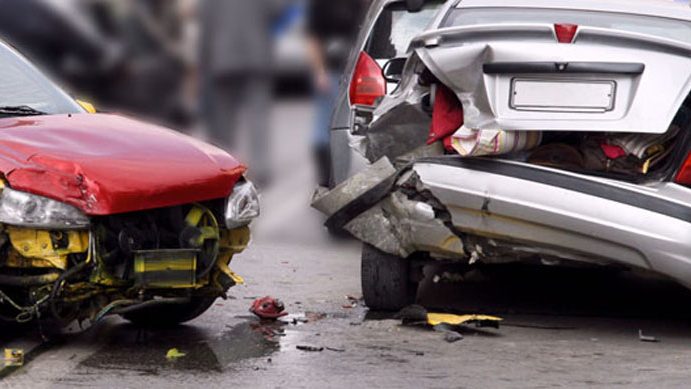
If you drive, at some point you’ll probably be involved in a rear-end collision. According to a recent study from the National Transportation Safety Board (NTSB) (1), nearly half of all two-vehicle crashes in the U.S. every year are of the rear-end variety. And, those accidents cause thousands of injuries, hundreds of deaths, and billions of dollars annually in collision-related losses. Sadly, most rear-end motor vehicle accidents are avoidable if drivers would simply use the following safe driving tips.   

Keep Your Distance

Whether you’re driving on a city street, highway, rural road, or through a work zone, the first step in preventing a rear-end collision is keeping a safe distance between you and the car in front of you. That will give you enough time to react and brake your vehicle safely if the other driver suddenly stops or swerves.  

While driving in normal road conditions, use this “3-second rule”:

  1. Pick out a stationary object near the road, like a tree, sign or overpass.
  • As soon as the rear end of the vehicle you’re following passes that object, start counting: one thousand one, one thousand two, one thousand three.
  • If you pass the object before you finish “one thousand three”, you’re following too close.   

Driving in more dangerous situations means adjusting your following distance to at least 4 seconds. Here are times when that becomes necessary: 

  • Slippery roads. Rain, ice, snow or even fallen leaves can cause slick pavement.
  • Poor visibility. In addition to falling precipitation, you could also have trouble seeing because of fog, flying dust or the sun’s glare. 
  • Following a large vehicle. If you’re behind a big semi with an oversized load, hang back further to stay out of their blind spots and to give yourself room to see.
  • Behind a motorcycle. A motorcycle can stop much faster than you can, so allow plenty of room when you’re behind one.
  • Following vehicles that stop frequently. School buses, garbage trucks and postal vehicles stop frequently. Some also stop at all railroad crossings, so always give yourself a following cushion of 4 or more seconds.

 Expect the Unexpected

Stay alert for unexpected road hazards, like debris, stalled cars or large potholes so that you will have time to evade them without slamming on your brakes or veering suddenly into another lane. Other ways to prepare for the unexpected include:

  • Stay out of other drivers’ blind spots, as they may not see you when switching lanes.
  • Check your mirrors frequently while driving, notably before turning, while merging or changing lanes.
  • When you come to a stop at a traffic signal, leave enough space between your car and the vehicle in front of you just in case you need to pull to the side of the road or change lanes quickly- like when an emergency vehicle is approaching from behind.

Drive Predictably

Don’t leave other drivers guessing when you’re turning, stopping or changing lanes. Instead, drive more “predictably” by:

  • Not slamming on your brakes, but rather slowing down gradually when approaching a stop sign, red light, or preparing to turn.
  • Making sure that your brake lights and headlights are in good working order.
  • Activating your turn signal well before your intended turn to alert the driver behind you.
  • Not squeezing in front of another driver when changing lanes, but instead always give them ample notice by signaling.

Other Driving Tips

Here are some additional ways to help prevent rear-end collisions:

  • Follow the posted speed limits, especially in school and work zones.
  • Buy a vehicle with rear-end crash avoidance safety technologies.
  • Avoid distracted driving, like texting or talking on your phone.  
  • Never drive while under the influence of alcohol or drugs, as those slow down your reaction time.

Getting Your Car Repaired After It’s Been Rear-Ended

Even when using these rear-end crash prevention tips, accidents happen. When your ride’s been rear-ended, promptly take it to one of the auto body or glass repair shops featured in the nationwide Carwise referral network. All shops listed through Carwise are I-CAR and ASE-certified, and have the technicians, equipment and services to restore your ride like new again promptly and reliably.

Search your zip code now for a customer-reviewed auto body or glass repair shop nearby: www.carwise.com

Reference:

  1. Special investigation report from the National Traffic Safety Board; 2015: The Use of Forward Collision Avoidance Systems to Prevent and Mitigate Rear-End Crashes.
Read More
What Should I Do Right After a Hit-and-Run Accident?

What Should I Do Right After a Hit-and-Run Accident?

While stopped at a traffic light one day your car gets rear-ended by another vehicle. After the initial shock wears off, you get out to inspect the damage and check on the other driver. Much to your surprise, they take off and speed away from the accident scene. Looking down at your car’s crumpled bumper, a queasy feeling forms in the pit of your stomach. Who’s going to pay for the repairs? Being victimized by a hit-and-run driver is a helpless feeling, but knowing what to do immediately afterwards will help make the entire process go more smoothly.

Why Hit-and-Run Drivers Flee  

A hit-and-run accident is when a driver hits a pedestrian, another motorist or bicyclist and then leaves the scene without presenting identification or offering their assistance. Hit-and-run drivers usually flee the accident scene for these reasons:

  • Under the influence of alcohol and/or drugs
  • Not having a valid driver’s license, or driving on a suspended license
  • The vehicle is transporting illegal goods, including drugs
  • They don’t have auto insurance
  • The vehicle is stolen, or they used it without permission
  • The driver has an outstanding arrest warrant
  • They’re driving an employer-owned vehicle and want to hide the fact it was involved in a crash

No matter the reason, a driver who flees the scene of an accident in any state faces harsh consequences if caught.

Fleeing Drivers Face Stiff Penalties

Leaving an accident scene prematurely, regardless of who’s at fault, may result in one or more of these penalties:

  • Criminal charges
  • Fines
  • Jail time
  • Driver’s license revocation

In addition to these actions, the victim(s) can also sue the negligent driver for damages. Several states now consider it hit-and-run when you merely clip an unoccupied car in a parking lot and don’t leave a note. And in some states, it’s even illegal to hit an animal without stopping and reporting it. So, when your initial reaction is to leave the scene of an accident prematurely, don’t!

Take these Steps After an Accident  

Always try to remain calm and collected right after you’re involved in a collision, even when

the other driver decides to take off. First, check to make sure that you and your passenger(s)

are okay. If not, call 911 for immediate medical assistance.

If possible, also request that a police officer be dispatched so they can investigate the scene and issue an accident report. Whether or not a hit-and-run driver is involved, always remember to take these steps after an accident:

  • Try to make out the make, model and license plate number of the other vehicle.
  • Do not attempt to follow them, but instead remain at the scene until help arrives.
  • If you or anyone else remaining at the scene are seriously injured, promptly call 911 to seek medical attention.
  • Look for any witnesses who can provide more details to the police.
  • Contact the local police department to report the incident, including what you know about the other driver, vehicle and any potential witnesses.
  • Call your insurance company and report the accident. They will walk you through how to get your injuries treated and car repaired.

Will My Insurance Cover the Damages?

Unfortunately, many hit-and-run drivers are never caught. However, your car repairs should be paid for if you have collision coverage in your policy, although you may have to pay a deductible. Another option starts with the fact that in most states a driver that flees the accident scene is classified as an “uninsured” motorist. As a result, if you have uninsured motorist (UM) coverage your repair costs, minus the deductible, should be picked up by your insurer. To better protect yourself beforehand, include both collision and UM coverage in your policy.

Your Collision Repair Solution for Hit-and-Run Drivers

Having your car damaged by a hit-and-run driver is stressful, but promptly locating a good collision repair shop featured in the nationwide Carwise referral network will help put your mind at ease. All auto body and glass repair shops listed through Carwise are I-CAR and ASE-certified, which means they have the technicians, equipment and services necessary to get your ride looking and performing like new again.

Search your zip code now for a customer-reviewed auto body or glass repair shop nearby: www.carwise.com.

Read More
How Can I Drive Safely on Flooded Roads?

How Can I Drive Safely on Flooded Roads?

Many areas of the U.S., especially in the Midwest, have received torrential amounts of rainfall this year that has led to widespread flooding. As a result, water-covered roadways have entrapped many careless drivers who disregarded local flood warnings, causing countless injuries and even some fatalities. Because many people in flood-impacted areas still need to work and reach their homes, driving through floodwaters is sometimes unavoidable. If this describes you, use these safety tips for driving on flooded roads from the experts.   

Why are Flood Waters Dangerous?   

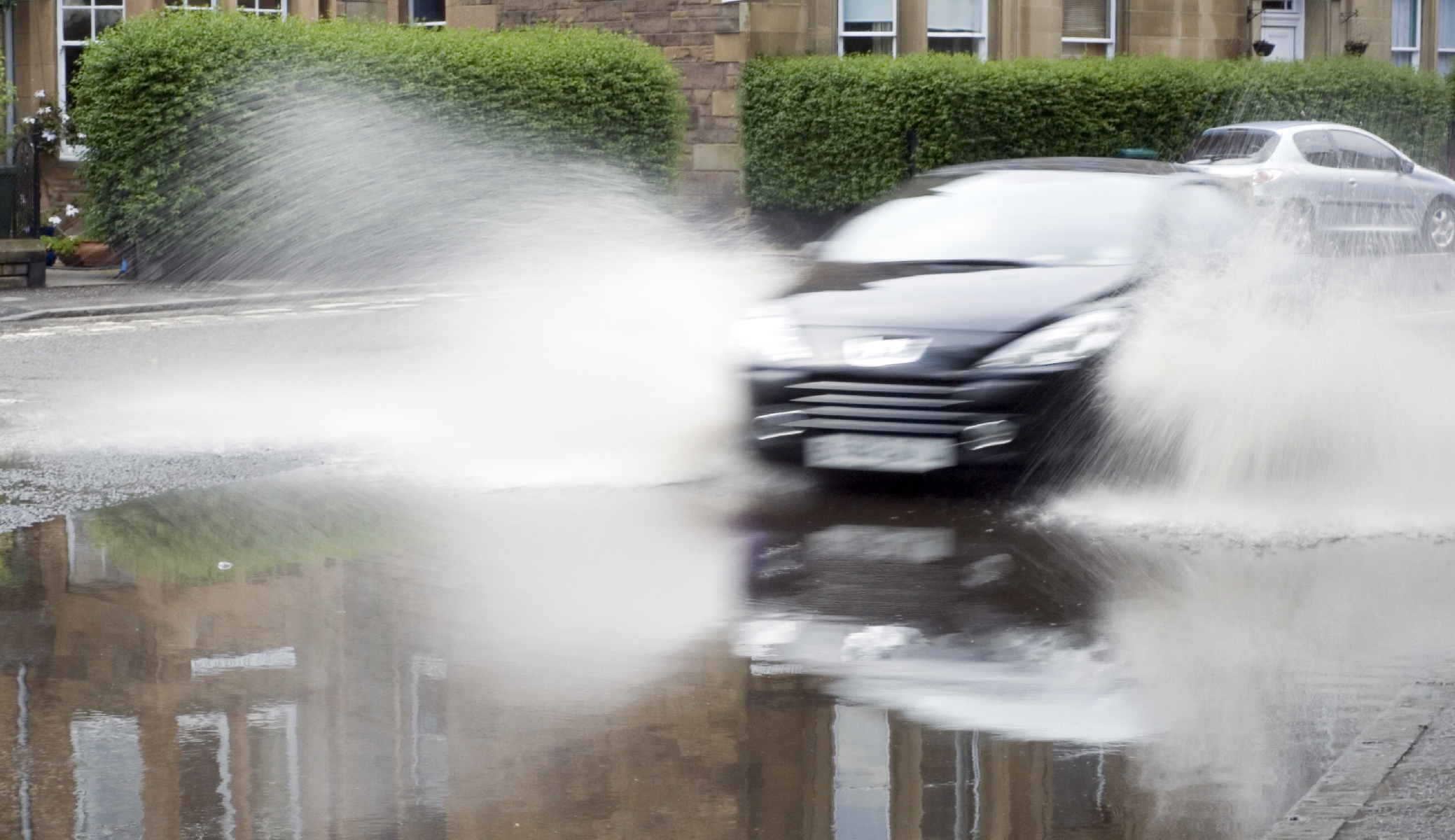
According to FEMA (www.fema.gov), most flood-related deaths happen when people try to drive through rising waters rather than around them. Rushing water crossing a roadway can generate a tremendous amount of force, while even standing water poses a threat to larger vehicles and their occupants. Based on pavement water levels, here are some potential driving hazards floodwaters create: 

  • Six inches. This will cause a vehicle’s tires to lose traction and slide out of control.
  • Twelve inches. Most passenger cars will start floating in a foot of water. Once that happens, you can’t steer or brake. Moving floodwaters can then quickly carry you downstream or into an obstacle. 
  • Two feet. These floodwaters are risky for even the largest vehicles, like pickup trucks and SUVs, as they produce enough force to wash them away. 
  • Over two feet. In addition to the risk for getting swept away, if you attempt to navigate two feet or more of water your vehicle may experience what’s called “hydrolocking”. Hydrolock occurs when water enters your motor’s combustion chamber and prevents it from running. Once the engine stalls out, you’ll be hopelessly stranded. 

Even minimal amounts of standing water on the pavement can induce dangerous hydroplaning, causing you to hit a passing vehicle or stationary object. 

Staying Safe on Flooded Roads 

Now that you’ve seen the potential dangers of driving on flooded roads, here are some safety tips:

Obey Barricades 

There’s an old saying for those who live and drive in flood zones: “Turn around, don’t drown.” In other words, if there’s a DOT barricade set up, don’t ignore it. Instead, turn around and take an alternate route.

Avoid Standing Water 

As was mentioned earlier, even small amounts of standing water can cause hazardous road conditions. Avoid driving through standing water unless you know how deep it is, and what lies beneath. And, that also includes parking lots. 

If You Have No Other Choice 

There may be situations, for example, if you’re a first responder, where you have no choice but to pass through floodwaters. If no other alternate route is available, take these precautions: 

  • Try to estimate the depth of the water. For example, observe passing cars and how far up the water comes on their wheels. 
  • Drive slowly and methodically through the water.
  • Be aware of any downed power lines that have contacted the water because electric current can easily pass through water and into your metal-encased vehicle. 
  • Watch for large items, like logs, that are moving downstream, as those can trap or crush your vehicle and its occupants. 
  • Stay off your phone unless it’s an emergency. Floods are no time for distracted driving!
  • Once you emerge from water that’s at least at tire-rim level, dry your brake pads off at a low speed by gently braking while on a clear patch of road. 
  • If your vehicle stalls out in deeper water, try restarting it. Keep in mind that by doing so before the engine is dried out it could seriously damage it. 
  • If your vehicle won’t restart while you’re trapped in water, immediately abandon it and seek higher ground, like a nearby tree. Roll down the window or open the door to escape the vehicle, and call 911 or flag down a passing vehicle for help. 

Promptly Find Flood-Related Auto Body Repairs Here 

Not only are flood waters dangerous, they can also damage your vehicle’s interior and exterior. When you need some flood-related repairs, promptly locate a good auto body or glass repair shop through the nationwide Carwise referral network. Collision repair shops listed on Carwise have the I-CAR and ASE-certified technicians, services and know-how to restore your ride like new again promptly and reliably. 

Search your zip code now for a customer-reviewed auto body or glass repair shop nearby: www.carwise.com.

Read More
How Can I Entertain My Kids on Summer Road Trips?

How Can I Entertain My Kids on Summer Road Trips?

If your family is like most, sometime this summer you’ll be embarking on a long road trip with several energetic children in tow. And, since most kids don’t like to be confined for hours, you’ll probably hear constant refrains of: “Are we almost there yet?” coming from the back seat. As a parent, keeping your kids entertained in the car, while also ensuring your safety and sanity, takes some resourcefulness. Fortunately, it is possible when you use these creative summer road trip entertainment ideas from your friends at Carwise.

Minimize “Screen-Time”

Although your first instinct will be to load a movie on Susie’s tablet, or put a new Gameboy in Johnny’s hands, it’ll be more memorable for you all to minimize the “screen-time” and stow away the electronic devices. After all, you probably didn’t have any of those high-tech gizmos when you were a kid, and you turned out just fine. Because summer road trips are a rite-of-passage for most families, find some other ways to keep your kids entertained. Who knows? They might even pass them down to their kids.

With that said, here are some fun ways to keep everyone’s attention focused on something other than that endless traffic jam you seem to be stuck in:

License Plate Lingo

This game is simple, good for a few laughs and lets participants use their imaginations. License Plate Lingo is played by taking turns coming up with a meaning for letters on certain car license plates. For example, “OBE” might stand for “onion-biting elephant”, or “ostriches buy eggs”. You can even make it a contest with a “prize” for the person who comes up with the most creative acronym.

The Celebrity Game

The Celebrity Game starts by having one family member think of the first and last names of a real celebrity, famous historical figure or movie character. After sharing it with the group, the next player must then come up with a different personality whose first name begins with the first letter of the previous character’s last name. So, if player one chooses “Abraham Lincoln”, player two could go with “LeBron James”, and so forth.

The Quiet Game

A favorite of parents everywhere, The Quiet Game challenges competitors to be the quietest for the longest. Whoever speaks is out, and the other participants continue in silence until there’s a winner.

Animal Spotting

Hold a contest to see who can spot the most different types of animals during the trip. Any creature that walks or flies is fair game, like deer, livestock and birds. Pick someone to write down each player’s findings, and then award a prize to the one who’s compiled the largest list when arriving at your destination.

I-Spy

Around for generations, this game is still a favorite with road travelers today. To get started, one participant secretly picks an object inside the car and uses a verbal clue like “I spy something green”, or “I spy something that’s shiny and red”. The first person who correctly guesses what the object is gets to choose the next item of interest.

Books

As a great substitute for electronic gadgets, books on topics that interest your kids will keep their minds engaged for hours. As a side benefit, reading a book might even make them want to nap! Before hitting the road, hit the local library first and have the kids pick out some books that they’ll eagerly anticipate reading in the car.

Pipe Cleaners

Hand the kids a bag of colorful pipe cleaners and watch their creativity go. They’ll stay occupied for hours crafting animals, flowers, letters, unusual shapes and even fake glasses to wear when you stop for a bite to eat.

Reliable Summer Road Trip Accident Repairs Start Here

It’s not uncommon when taking a summer road trip for your ride’s paint job to get a little dinged up, or your windshield tainted. When you need some repairs, promptly locate a better auto body or glass repair shop by using the nationwide Carwise referral network. All shops on Carwise feature I-CAR and ASE-certified technicians with the tools, training and experience to restore your ride like new again promptly and reliably. Most shops speak directly with insurance companies, so you don’t have to, and warranty their work to put your mind at ease.

Search your zip code now for a customer-reviewed auto body or glass repair shop nearby: www.carwise.com.

Read More
What Collision Repair Challenges Do Hybrid Vehicles Present?

What Collision Repair Challenges Do Hybrid Vehicles Present?

Your Toyota Prius was just involved in an accident and has been taken to the local auto body shop for some collision repairs. Given that it’s a hybrid, you’re wondering if the shop’s employees will have to take any special precautions while repairing the damage. Because of their electrical systems, restoring a damaged hybrid vehicle does present unique challenges. What follows are some of the precautionary steps that body shops take to protect their employees and your vehicle.

What’s a “Hybrid” Vehicle?

First introduced in the U.S. 20 years ago, hybrid vehicles (HVs) use both a conventional gas or diesel engine and an electric motor. This helps an HV consume less fuel, and emit less CO2, compared to an automobile that’s only powered by a fossil-fueled engine.

There are two types of hybrids, “conventional” or “plug-in”:

  • Conventional Hybrids. Offered by virtually all automobile manufacturers, these HVs use a gasoline engine to keep a modestly sized battery charged while driving. Available in various makes and models, conventional hybrids cannot be plugged in to recharge their batteries, and therefore only drive sporadically solely on electric power.
  • Plug-In Hybrids. Available through some auto makers, a plug-in hybrid has a large battery that can be recharged by plugging the vehicle into a standard wall outlet or recharging station. Once charged, the car runs purely on electricity without burning any fossil fuel. However, a plug-in HV can still run without ever being plugged in and will continue operating in normal hybrid mode (using the gas engine + electric motor) for as long as there’s gas in the tank.

I-CAR HV Repair Recommendations  

To protect insurance adjusters, auto body shop estimators, technicians and your vehicle, the Inter-Industry Conference on Auto Collision Repair (I-CAR) has established safety protocols (1) for working on both types of HVs. Here are some of their recommendations:

Before Repairs Begin

  • The vehicle cannot be towed or moved on its road wheels to prevent possible HV system damage and to reduce the potential shock hazard.
  • All HV system components must be initially located and inspected for signs of damage.
  • All service requirements for the various systems must first be fully understood, for example the engine cooling system.
  • Damaged body panel(s) must be checked behind for any HV system wires, connectors, modules or batteries that might have also sustained damage.
  • The proper air conditioning system service equipment and oils must be used to exclude the system from getting contaminated.  

Wearing Protective Gloves

  • Although an HV’s electrical system is designed with several built-in safety interlocks and circuit monitoring systems that initiate a shutdown if compromises are detected, protective electrical lineman’s gloves (Class 0) are highly recommended.
  • Those gloves will protect technicians when working on or near high-voltage vehicle components like the battery, system main relay, service plug receptacle and fuse, any orange-colored cables, inverter assembly, electric drive motors, PHEV charge port, etc.   

During the Teardown and Reassembly Phases

  • The HV’s electrical propulsion system must be disabled before touching or prying on any other system components.
  • If there’s anybody or engine damage in the vicinity of the HV system, the HV system must be totally disabled before proceeding.
  • Confirming that the HV system is shut down should be done by using a high-quality digital volt-ohm meter.
  • Technicians should never put their fingers in, or directly on, any connectors or HV system parts.
  • All disconnected connectors must be kept free of dirt, fluid or contamination.
  • If the HV system seems intact with no compromises and appears to be safe to power up, the technician must first scan the vehicle to identify any HV system issues. Those will show up as an HV system error message or if MIL or DTCs are present.  

Find a Local Body Shop in Seconds Through Carwise  

No matter what kind of vehicle you drive, when it’s been involved in a collision you can find a good body shop in seconds through the nationwide Carwise referral network. Shops featured in the Carwise network have the I-CAR and ASE-certified technicians, equipment and services to restore your ride like new again promptly and reliably. Most speak directly to insurance companies, so you don’t have to, and warranty their work to put your mind at ease.

Search your zip code now for a customer-reviewed auto body or glass repair shop nearby: www.carwise.com.

Read More
Which 2019 Vehicles are the Safest to Drive?

Which 2019 Vehicles are the Safest to Drive?

If you’re currently shopping for a brand-new vehicle, in addition to appearance, fuel efficiency, performance and price, safety probably ranks high on your priority list. Crash protection, especially when you’re transporting children, is certainly important. But even with all the new safety features available on 2019 models, finding the safest vehicle for your family can be challenging. Thanks to the ongoing research efforts of the Insurance Institute for Highway Safety (IIHS), finding a safer vehicle is now easier than ever before.  

What is the IIHS?  

The IIHS (www.iihs.org) was founded in 1959 as an independent, non-profit organization  dedicated to reducing losses related to motor vehicle crashes including injuries, property damage and deaths. To support those efforts, the IIHS started the Highway Loss Data Institute (HLDI), and both organizations are now wholly supported through funding supplied by members of the auto insurance industry.

After initially focusing on crash prevention, the IIHS then expanded its scope to reducing crash-related losses and improving vehicle safety by using a modern, scientific approach to:

  • Study human factors that cause accidents
  • Explore new crash avoidance technologies and crashworthiness improvements
  • Find ways to make the physical driving environment safer

Thanks in part to IIHS’ continuing efforts, the number of traffic-related fatalities in the U.S. has dropped since 1979.

How Does the IIHS Test Vehicles?    

Three years after its state-of-the-art Vehicle Research Center (VRC) opened in 1992, the IIHS/HLDI began publishing their annual Top Safety Pick ratings. Yearly, the IIHS conducts numerous safety tests on 130 to 160 of the best-selling vehicles in the U.S. Each of those vehicle models are then put through 80 to 100 rigorous crash tests at the VRC. Based on those test results, the IIHS/HLDI then assigns an overall vehicle safety rating that’s determined by how a given vehicle performs within each crash category.

For example, a “good” rating for “front overlap protection” lowers an occupant’s odds of being killed in a crash by 40% compared to a “poor” rating. A “good” rating in the “side-crash protection” category reduces the fatality risk by roughly 70%. When finished, only the safest vehicles are awarded a “Top Safety Pick” or “Top Safety Pick Plus” rating.

2019 “Top Safety” Award Criteria

Criteria used by the IIHS/HLDI to determine the safest vehicles for model year 2019 were:

Top Safety Pick

  • Headlight rating of “acceptable” or “good”
  • “Acceptable” or “good” rating in the passenger-side small overlap front crash test
  • “Good” ratings in the driver-side small overlap front, passenger-side small overlap front, moderate overlap front, side, roof strength and head restraint crash tests
  • “Advanced”, “superior”, or “advanced superior” rating for front crash prevention

Top Safety Pick Plus

  • Headlight rating of “good”
  • “Good” ratings in the driver-side small overlap front, passenger-side small overlap front, moderate overlap front, side, roof strength and head restraint crash tests
  • “Advanced”, “superior”, or “advanced superior” rating for front crash prevention

According to the IIHS, heavier vehicles generally still afford more crash protection than do smaller, lighter vehicles. In other words, a smaller car that qualifies for a “Top Safety” award may not necessarily protect its occupants better than a large pickup or SUV that didn’t make their list.

Safest Vehicles for 2019

Based on receiving an overall Top Safety Plus designation, here are the safest vehicles to drive for the 2019 model year (1):

  • Small Cars: Honda Insight, Hyundai Elantra, Kia Forte, Kia Niro Hybrid
  • Midsize Cars: Hyundai Sonata, Kia Optima, Subaru Legacy, Subaru Outback, Toyota Camry, BMW 3 Series, Lexus ES 350, Mercedes-Benz C-Class
  • Large Cars: Kia Stinger, Toyota Avalon, Audi A6, BMW 5 Series, Genesis G70, G80 and G90, Lincoln Continental, Mercedes-Benz E-Class
  • Small SUVs: Hyundai Kona, Mazda CX-5, Subaru Forester, Volvo XC40
  • Midsized SUVs: Hyundai Santa Fe, Kia Sorento, Subaru Ascent, Acura RDX, BMW X3 and X5, Mercedes-Benz GLC and GLE Class

Note: No large SUVs, minivans or pickups received a Top Safety Plus rating.

Locate a Nearby Collision Repair Shop in Seconds  

Even the safest vehicles can still be involved in accidents. When your ride needs some collision repairs, take it to an auto body or glass repair shop featured in the nationwide Carwise referral network. ICAR and ASE-certified technicians there have the training, equipment and experience to restore your vehicle like new again promptly and reliably. Most shops in the Carwise network warranty their outcomes to put your mind at ease, and speak directly with insurance companies so you don’t have to.

Search your zip code now for a customer-reviewed auto body or glass repair shop nearby: www.carwise.com.

Read More
What Do Women Really Want in an Auto Body Shop?

What Do Women Really Want in an Auto Body Shop?

If you’re a woman who’s reading this right now, have you ever felt neglected or disrespected when taking your car to a local body shop? If you own a collision repair business, are your employees treating customers of all genders the same? Based on information from collision repair industry insiders, women are becoming increasingly more influential when it comes to making collision repair decisions within a household. As a result, many auto body shops are addressing the needs of women with updated amenities and marketing strategies.  

Treating Women as Equals

According to a recent article from Auto Body Review (1), although men are involved in more car accidents than women, women are now oftentimes the ones bringing the family vehicle in for repairs. Quoted in the article is Nancy Friedman, President of Telephone Doctor Customer Service, who consults with body shops on how to improve their customer service. What Friedman has found over the years is that women want to be treated with the same level of customer service and professionalism that men are.

Furthermore, Friedman relates that women desire to be clearly heard while having their questions answered promptly and respectfully. Here are some additional observations about what women want from a collision repair shop based on Friedman’s research:

  • Make eye contact and smile
  • Don’t rush or ignore them
  • Shake their hand the same way you would a man’s without breaking it
  • Put a hook in the women’s bathroom so they can hang up their bags  

And although all these might seem trivial when you’re a shop owner, it’s the little things that add up in the end.   

A Welcoming Shop Setting

Another recent article from Body Shop Business (2) also looked at what makes a woman feel more comfortable while at a body shop. The article’s author made it clear that because over half the customers who walk into the average shop are women, meeting their expectations is essential for success. Here are some of the key areas they identified around the shop that can be difference-makers for women:   

Parking and Entrance

A woman’s brain tends to notice organization and neatness. As a result, when a shop’s parking area and front office are clearly marked, it makes them feel more comfortable and welcomed once they’ve arrived.  

Kid-Friendly Waiting Area

Mothers who bring small children with them to a shop don’t want dust from the service bays floating around on their kids’ snacks while filling out paperwork. Women prefer waiting areas that are clean and inviting and usually equate a lack of office cleanliness with the quality of repairs that would be done on their vehicle. If mom has a small child in tow, nothing is more frustrating than trying to do paperwork with junior acting up. Women like shops with kid-friendly areas featuring toys, a play table and maybe even some coloring books and crayons.

Shop Décor

Again, this ties into a woman’s comfort zone. Old calendars with crumpled pictures of antique cars hanging on the wall probably won’t impress, but some nice artwork, fresh paint and thriving green houseplants will.

Explaining Estimates

Most people are confused about how repair estimates and insurance companies work, so they rely on the explanation provided by the shop manager to put their minds at ease. Women want someone at the shop to patiently and respectfully describe the repair process, how long it might take, and what their out-of-pocket costs will be.

Bathroom

Nothing turns a woman off quite like a dirty, smelly bathroom. On the other hand, sparkling toilets and sinks, a diaper changing table, bright vanity lighting and clean walls go a long way in keeping her happy. Adding some air freshener, scented hand soap and toilet seat covers are game-changers when it comes to earning a woman’s trust and repeat business.   

Body Shops Nearby that Treat All Customers Equally

Whether you’re a man or woman, car accidents happen. When you need some high-quality collision repairs, trust in one of the customer-reviewed auto body or glass repair shops featured in the nationwide Carwise referral network. Not only will you be treated with respect, but ICAR and ASE-certified technicians there will have the experience, equipment and training to restore your ride like new again, promptly and reliably.

Search your zip code now for a customer-reviewed auto body or glass repair shop nearby: www.carwise.com.

Read More
How Can I Get My Car Ready for Summer Road Trips?

How Can I Get My Car Ready for Summer Road Trips?

Many drivers don’t maintain their vehicles properly during the winter and early spring because it’s cold. But summer’s hot temperatures and dusty conditions can be hard on cars, and notably during those much-anticipated vacation road trips. And, you certainly don’t want to get stranded on the steamy roadside with your overheated kids in tow. The key to getting your vehicle ready for summertime driving is preventing mechanical breakdowns in advance. Before heading out on your exciting road trip, use these summer driving car maintenance tips from the pros.

Summer Road Conditions are Hard on Engines

Here are some of the ways that summer’s hot, dry weather and congested road conditions can wreak havoc upon your vehicle’s mechanical components:

  • Accelerates tire, hose and drive belt aging
  • Strains your cooling system and A/C to the limit  
  • Stop-and-go driving is hard on the engine, transmission and brakes
  • Dust and dirt can clog your engine’s filters and reduce performance  

Do These Before Hitting the Road

Fortunately, there are several preventative measures you can take to help ensure a more seamless summertime travel experience, starting with these:  

Check the Tires

If you put winter tires on your car, make sure to swap them out for a good all-season tire with enough tread to get you safely through those summer rainstorms. Every 10-degree F rise in air temperature increases tire pressure by one PSI. Improperly inflated tires can overheat on long trips and cause blowouts. Check your tire pressure at least weekly and rotate your tires every 5,000 miles.   

Test the A/C  

Since you probably don’t use the A/C much during the winter or spring, run it for a little while to make sure it blows out cold air. Are there any strange noises or odors? If you notice anything unusual, the system may need to be cleaned or recharged, or it could have a leak. To give you peace-of-mind, have it inspected by a pro.

Look Under the Hood

Most drivers don’t check under the hood when it’s chilly outside. Now that it’s warmer, pop the hood when the engine’s cold and look over the:

  • Battery. Is there corrosion around the posts? If so, clean it off with an old toothbrush and baking soda. Check it again a few weeks later. If the corrosion is back, it could be signaling a more serious issue. If so, you may want to replace the battery.
  • Oil. Check your oil level and top it off with the specified summer grade found in your owner’s manual. If it hasn’t been replaced for 3500 miles (conventional oil) or 5000 miles (synthetic), get an oil change. Remember that oil filters can also clog up faster during dusty summertime conditions.
  • Coolant. Check your coolant’s level and appearance in the overflow reservoir. It should be clear and not cloudy, and if you need to top it off use a 50/50 mixture that’s specified for your vehicle’s make and model. If your coolant hasn’t been changed for over 5 years or 100,000 miles, a flush-and-fill is probably a good idea.
  • Brakes. These should be inspected by a mechanic at recommended intervals found in your owner’s manual, or sooner if you notice unusual grabbing, vibrating, noises or longer stopping distances.
  • Belts, clamps and hoses. Visually inspection your engine’s drive belts, clamps and hoses. If anything looks worn or frayed, take it to a mechanic and have them checked out.

Lights

Inspect all lights and replace burned out bulbs. Also, periodically clean dirt and splattered bugs from the lenses using a soft rag and glass cleaner.

Windshield Wipers

If your old blades are leaving streaks behind when it rains, it’s time for a new pair. Do so before it gets hot, and remember to also top off your wiper fluid.

Your Summertime Cure for Road Trip Damage

Even when keeping your vehicle well maintained, car accidents happen. Flying rock chips, the sun’s UV rays, hailstorms and construction zones can also take a toll on your car’s paint job. When you need some summer repairs, promptly take you vehicle to a nationwide auto body shop featured in the Carwise referral network. I-CAR and ASE-certified technicians there have the experience, equipment and know-how to restore your ride like new again promptly and reliably.

Search your zip code now for a customer-reviewed auto body or glass repair shop nearby: www.carwise.com.   

Read More
When are the Most Dangerous Days and Times to Drive?

When are the Most Dangerous Days and Times to Drive?

If you’re like most drivers, you can just sense when it’s more dangerous to be on the road. July 4th, Memorial Day weekend, New Year’s Eve and those stressful work commutes during nasty weather probably come to mind. But have you ever wondered statistically when the most dangerous weekly driving times and days are? Thanks to 2016 data from the National Highway Traffic Safety Administration (NHTSA; www.nhtsa.gov) that was subsequently analyzed by the online legal directory Avvo (www.avvo.com), you don’t have to guess anymore.

How Avvo Compiled Their Crash Data

Every year, the NHTSA collects reams of data about traffic accidents and resulting fatalities for all 50 U.S. states and the District of Columbia. That information is then organized into tables listed on their Fatality Analysis Reporting System (FARS) website. Back in 2017, Avvo, which is a nationwide legal directory that helps potential clients find attorneys, decided to analyze FARS data from 2016 to determine the most likely times and days of the week for motor vehicle crash-related deaths. What follows are the fascinating trends their study (1) revealed.

Most Dangerous Daily Drive Times

Based on Avvo’s findings, the most dangerous time of day to drive is between 4 pm and 6:59 pm. In 2016, 6,201 people died in motor vehicle accidents during those time zone-adjusted hours, out of a total of over 37,000 fatalities. For starters, 4 pm to 7 pm is a peak time for work commuters heading home. Avvo also discovered that the second deadliest time for road travelers is 7 pm to 9:59 pm. But what surprised the Avvo researchers was the comparatively low number of fatalities (3,345) during the morning commute hours of 7 am to 9:59 am.

Why the large disparity between morning and evening rush hour fatalities? According to traffic safety experts, the main reasons are probably these:

  • People are in more of a hurry to get home than go to work
  • Frustration after a long work day
  • Distracted driving while responding to accumulated text or voicemail messages
  • Impaired driving due to alcohol and/or drugs

Obviously, commuters living in large metropolitan areas are at a higher risk, especially when tied up in traffic congestion. On the positive side, the researchers also found that Tuesdays between 1 am and 3:59 am are the safest times to be behind-the-wheel.

Worst Days of the Week for Traffic Fatalities

Unless you’ve been living under a rock, you know that driving gets a little crazier on the weekends, and especially late at night. As you would expect, the Avvo study determined that the overall worst days of the week for traffic fatalities in 2016 were Saturdays, with nearly 7,000 deaths, followed by Fridays with 5,826 fatalities. Saturday night from 10 pm until Sunday morning at 3:59 am was statistically the most dangerous weekend period of all. Once again, Tuesday stood out as the safest day for travelers.

In general, the researchers concluded that:

  • There are typically more vehicles on the roads from Friday evening through Sunday, especially during the summer.
  • Drivers tend to be more careless and reckless on weekends.
  • Alcohol and drug use are higher during those times.

Additional Findings and Driving Safety Tips

Out of a total of 34,748 reported traffic accidents and 37,748 fatalities in 2016, alcohol was a contributing factor in 10,497 deaths. Not wearing a seatbelt led to 10,428 fatalities, and speeding was involved in 10,111 deaths. Keep in mind that a single fatality may have been attributed to multiple causes. Distracted driving was a factor in 3,450 road fatalities, with another 400,000+ injured because drivers weren’t watching the road.

Based on the evidence, experts recommend using these safe driving precautions:

  • Always drive defensively
  • Limit driving distractions inside your vehicle
  • Obey all traffic laws and posted signs
  • Always wear a seatbelt, even in the back seat
  • Avoid operating a vehicle when impaired by alcohol and/or drugs
  • If you plan on using alcohol or drugs, have a designated driver

Promptly Find Client-Reviewed Collision Repair Shops Here

Unfortunately, car accidents happen when you least expect them to. When you’re involved in one, promptly locate a client-reviewed collision repair shop by using the nationwide Carwise referral network. Auto body shops featured through Carwise have the I-CAR and ASE-certified technicians, equipment and services to restore your ride like new again promptly and reliably. Most speak directly with insurance companies, so you don’t have to, and warranty their work for your peace-of-mind.

Search your zip code now for a customer-reviewed auto body or glass repair shop nearby: www.carwise.com.

Read More
Buying a New Car vs. Leasing: Which Should I Choose?

Buying a New Car vs. Leasing: Which Should I Choose?

After having your old vehicle paid off for several years now, it’s time to get a new one. You’ve read a lot online about buying a new car versus leasing but still can’t make up your mind. Deciding which option makes the most sense can be confusing, and there are positives and negatives associated with each. In the end, choosing between buying a car or leasing boils down to what works best based on your lifestyle, transportation needs, and budget. To help make your decision a more rewarding one, here’s some input from the pros.

How Does Leasing Work?

Leasing is a type of auto financing where you’re not actually paying for the entire car. Instead, you’re only paying for the depreciation that occurs over the lease’s term, which is usually 2 to 4 years, plus fees and interest. Leasing usually requires an upfront down payment when signing a contract, and then you’ll pay the balance of the vehicle’s price in monthly increments until the term is over. The salesperson might throw out phrases like “capitalized cost”, “residual value” and “money factor”, so familiarize yourself with those before signing on the dotted line.

What if I Buy a Car?

When you buy a car, you are paying the entire negotiated price using your trade-in value, cash, financing, or a combination of all three. A typical transaction involves a down payment, trade-in of your existing vehicle, and taking out an auto loan with set monthly payments for up to 6 or even 7 years. When financing a car, the lender holds onto the title until you pay off the entire financed amount. At that point, you take over ownership of the vehicle’s title clear and free.

Pros and Cons of Leasing

Those desiring a newer vehicle for business, entertaining clients or simply because they like to drive one tend to lease because it’s easier to upgrade every 2 to 3 years. Overall, the pros of leasing a new car include:  

  • No or little down payment required
  • Lower monthly payments
  • You can drive a more expensive car for less money.
  • No trade-in or selling negotiations after the lease are over   
  • Fewer sales tax paid

The cons of leasing are:

  • You don’t own the vehicle when the lease ends, although you’ll have the option to buy.
  • Mileage per year is capped, usually at 12,000 miles, although you can pay for more.
  • Lease contracts can be confusing.
  • You may have to pay excess wear-and-tear fees that can be hidden in the contract.
  • If your financial situation changes, it can be costly to terminate a lease early.
  • You cannot customize or modify the car.
  • You’ll pay more over the long haul for a leased vehicle than one you purchase and keep for several years.  

Pros and Cons of Buying

Buying a car works best for drivers who plan on keeping their vehicle for several years after it’s been paid off, for example, to pass it down to a college-bound family member. These are the pros of buying a car:

  • No excess mileage charges
  • Provides trade-in or resale value later
  • More flexibility, as you can sell or trade-in the car whenever you want.
  • You can modify or customize your car as you please.
  • You’ll save money over the long haul once it’s paid off.

Cons associated with buying a new car include:

  • Higher monthly payments
  • A larger down payment is required.
  • Once the warranty has expired you are responsible for all repair costs.
  • The hassle of trade-in or selling negotiations
  • More cash tied up in a car that will depreciate-in-value over the years

In the end, deciding between buying and leasing comes down to the importance of personal tastes and priorities versus pure dollars and cents.

How Can I Find a Good Local Auto Body Shop?

Whether you choose to lease a new vehicle or buy one, accidents happen. When you’re involved in one, you can promptly locate a good local auto body shop by using the nationwide Carwise referral network. Collision and glass repair shops featured on Carwise’s website have the I-CAR and ASE-certified technicians, equipment and services you need to repair your ride promptly and reliably. Most work directly with insurance companies, so you don’t have to, and warranty their outcomes for many miles of care-free driving.

Search your zip code now for a customer-reviewed auto body or glass repair shop nearby: www.carwise.com.

Read More
1 9 10 11 12 13 21