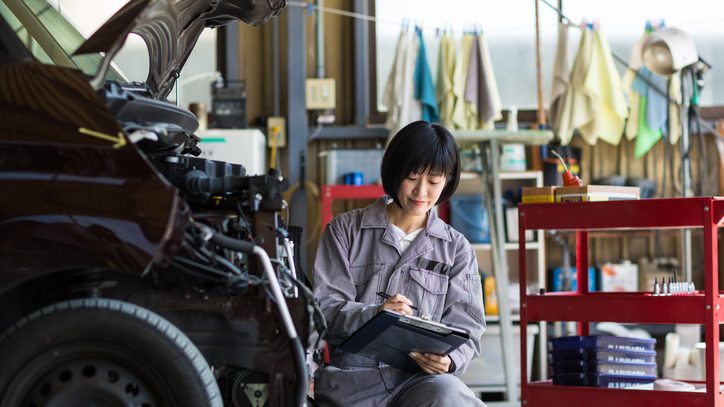
What Are 3 Automotive Technology Trends for 2020 & Beyond?

It’s always fun to stop by the local dealership, auto body shop or car show to check out some of the new high-tech gadgets on the latest models. By now most drivers have heard about self-driving cars, multi-function tailgates, and crash-avoidance systems. But there are always bolder innovations appearing on the automotive scene that keep curious drivers hungry for more. Ready or not, here are 3 hot automotive technology trends for 2020 and beyond that are coming to a showroom near you. 

Gullwing Doors  

If you ever watched the Back to the Future movies, you’re familiar with gullwing doors. Also known as “falcon wings”, they are hinged at the roof rather than on the side. The first passenger vehicle with gullwing doors was the 1939 Bugatti Type 64, although its famous French creator preferred the term portes papillon, or “butterfly wing”.   

By the mid-1950s the Mercedes-Benz 300SL had gullwing doors, followed by the Bricklin SV-1 in the ‘70s, DeLorean DMC-12 during the 1980s, and a handful of other high-end models. After that, the concept remained relatively dormant until Elon Musk’s Tesla crew reintroduced falcon-wing doors in 2015 on their Model X crossovers. 

That same year a tiny automaker from Liechtenstein called Quant came out with ultra-lightweight carbon fiber gullwing doors on its Quant F concept car. In general, gullwing doors can be problematic if you park in low-ceilinged garages or too close to other vehicles. But get used to the idea, because additional gull-wing auto introductions are already in the works.

Electronic Gear Selectors 

The first patent for a push-button transmission was issued in 1909, and by the 1950s nearly every major automaker had offered electronic gear shifters on select models. Flash-forward to 2020 as automakers are trying to eliminate center console clutter to accommodate smartphones and other high-tech mobile devices. 

As a result, console cupholders are staying but gearshift levers are not. And that’s where electronic gear selectors come in. Several auto manufacturers have been easing push-button transmissions into the market since the late 2010s, including Honda, Acura, and Fiat Chrysler. If your automatic transmission vehicle is equipped with an electronic gear selector, to go from park to forward or reverse you simply touch the display screen and wait for a response.

Unfortunately, there have been a few “glitches” with push-button shifters. For starters, it’s sometimes hard to tell when the car has finished shifting. Not only does that cause delays, but it can also be downright annoying. Secondly, there have been reports of accidents after drivers exited their vehicles with the engine still running after they thought the car was placed in “park, but it wasn’t.

Touchscreen Infotainment Systems

Newer touchscreen infotainment systems are another product of the decluttering design craze. Naturally, touchscreens are nothing new, but today’s larger versions contain even more submenus that control everything from your vehicle’s moonroof to its climate. That’s all well-and-good for freeing up interior space, but some of today’s oversized touchscreens are proving to be overly distracting for drivers who are trying to concentrate on the road.  

Peugeot, Tesla, and Audi have been innovators for advanced touchscreen systems, but on some vehicles, the navigation function goes away when scrolling through the various submenus just to perform a simple task like turning on the A/C. Thankfully, most automakers are keeping steering-wheel-mounted thumb controls for the same functions that can be accessed via touchscreens- at least for now. 

As the 2020s play out some further improvements will hopefully be made so touchscreen infotainment controls are safer and less distracting to use. 

Your Car Collision Repair and Auto Body Solution for 2020 & Beyond

Whether your new car drives itself or it’s older than you are, accidents happen. When your ride’s been dinged up in a fender bender, promptly take it to one of the reliable auto body shop and glass repair shops featured in the nationwide Carwise referral network. Once you do, I-CAR and ASE-certified collision repair professionals will use the latest technologies and services to promptly restore your ride like new again. 

Search your zip code now for a customer-reviewed auto body or glass repair shop nearby: www.carwise.com

Read More

What Should I Do if My Car Catches on Fire?

While driving down the highway one day you pass another vehicle on the roadside that’s totally engulfed in flames and heavy smoke. Thankfully, first responders are on the scene and it looks like the vehicle’s occupants got out safely. Accidental car fires are usually caused by fuel leaks, faulty electrical wiring or design defects- although there are other causes. Sometimes, vehicle fires are set intentionally to hide crimes. Have you ever thought about what you would do if your car caught on fire while you were in it? Auto safety experts strongly advise taking these steps. 

Car Fire Statistics 

According to a report from the U.S. Fire Administration (USFA) (1), roughly one-in-eight fires responded to each year by fire departments across the country are vehicle-related. That’s approximately 240,000 fires annually. Here are some other USFA statistics about highway car fires:

  • Over 80% of car fires occur in passenger vehicles.
  • Roughly 60% of all fatal vehicle fires result from collisions.
  • Unintentional actions due to mechanical failure are the leading cause of highway fires.
  • Electrical wire insulation and flammable liquids in the engine compartment are the most common items that initially ignite.
  • Over 60% of all vehicle fires and nearly 40% of fatal highway fires start in the running gear (wheels, suspension, powertrain, steering), engine or wheel area of the vehicle. 

Is Your Vehicle a Fire Risk?

Although thousands of vehicle fires are caused by collisions, there are several potential warning signs that also turn your car into a fire risk even when it’s not involved in a crash, like: 

  • Fuses that blow constantly
  • Cracked or loose wiring, or wiring with exposed metal
  • Broken or loose hoses
  • Very loud sounds coming from the exhaust system
  • Rapid fluctuations in the oil level, fuel level or engine temperature
  • Oil or other fluid leaks under the vehicle 

Many car fires start in the engine area, but they can also break out under the vehicle, in your dashboard, near wheels and brakes, or even inside the car (like from a dropped cigarette).  

What to Do During a Vehicle Fire

If you smell smoke or see flames coming from your vehicle while you’re driving it, try to remain calm and then follow these additional safety Dos and Don’ts:

  • If you’re moving in traffic, do use your turn signal and immediately pull off to the nearest safe area and then come to a stop, whether it’s a median, parking lot or shoulder. 
  • Once you’ve come to a complete stop, do turn off the ignition.
  • Starting with yourself, do get everyone out of the vehicle and far away from the flames and toxic fumes. Don’t allow curious bystanders to approach your burning vehicle. 
  • Once everyone is at least 100 feet from your car, do promptly call 911 and wait for the fire department to arrive. 
  • Don’t try to put out the fire yourself, even if you have an onboard fire extinguisher. 
  • Don’t open the hood, trunk or doors unless it’s a life-threatening situation, as that may increase the fire’s air supply and cause it to accelerate. 
  • Don’t let passengers try to retrieve personal items from the burning vehicle. 

Car fires can burn very intensely because of the lighter plastics and fiberglass materials that many newer vehicles are made of. Batteries can also be especially dangerous, and electric or hybrid vehicles can be even more challenging for fire fighters who are extinguishing the blaze.   

These Body Shops Do Expert Fire & Collision Repairs 

When your car’s been damaged by a fire, it may be repairable. Even minor fender benders can jar electrical wiring loose that could start a fire later. For all these reasons, it’s good to know that you can promptly locate a nearby auto body or glass repair shop through the nationwide Carwise referral network. Bring your car in and let the I-CAR and ASE-certified professionals have-a-look to ensure your safety and peace of mind.  

Search your zip code now for a customer-reviewed auto body or glass repair shop nearby: www.carwise.com

Reference:

  1. U.S. Fire Administration Report: Highway Vehicle Fires (2014-2016); July 2018
Read More

What Would Cause My Car to Start Vibrating?

You’ve had your car for several years now, and it just started vibrating whenever you drive it. There’s a little shimmy in the steering wheel, and your vehicle also seems to be riding more roughly. Now those annoying vibrations have got you worried that you’re going to get stranded along the roadside unless you can figure out what’s wrong. Whenever a vehicle starts shaking it’s not a good sign. In fact, there are several possible mechanical reasons why your car is vibrating, including these: 

Worn Car Motor Mounts

Motor mounts, or engine mounts, hold your vehicle’s engine to the chassis. Most motor mounts are made from a combination of rubber and metal, either of which can wear out over time. When that happens, there’s no longer a firm grip between the chassis and engine, and the rubber cushion stops absorbing vibrations like it should. As a driver, you’ll then start noticing vibrations. 

Bent Axle On Your Vehicle

Power from your engine travels through the driveshaft to the axle and wheels so you can cruise down the highway. If your axle gets bent for some reason, like hitting a pothole, it can cause noticeable shaking. 

Car Engine Trouble

Vehicle shuddering or jerking during acceleration, staccato shaking when you’ve reached a certain speed, or a car that starts up fine but then shakes later are all signs of possible engine trouble. Those problems could be from bad spark plugs, a clogged fuel or air filter, or worse. 

Vehicles Power Steering Leaks

If your car vibrates only when you’re turning, it’s probably related to the power steering system. Check the hoses for leaks and the fluid reservoir to make sure it’s topped off. 

Old Steering Components 

Have you ever noticed the firm and responsive steering of a brand new car? The steering components in your vehicle can wear out over time just like any other part. There are also a lot of moving parts in between your steering wheel and the 4 wheels that it controls, and when any of those components get worn out, you’ll start to feel steering wheel vibrations or excess play in the wheel. 

Bad Car Tires

Because they are the only part of your vehicle that makes contact with the pavement, one of the most common causes of unusual road vibrations are bald or worn-out tires. Old tires, tires with uneven tread wear or underinflated tires can also cause vibrating. And, the last thing you need is a blowout on the highway. 

Car Brake Issues

Do you notice the vibrations when you apply the brakes, or do they get worse when doing so? If that’s the case, you may be driving around with one or more warped brake rotors. A rotor can get bent out of shape from long-term use, which then keeps the brake pads from gripping properly. Not only could it place you at risk, but you’ll also feel vibrations when pressing the pedal. 

Car Has Unbalanced Wheels

Small wheel weights are used to keep your wheels balanced while they spin. If your wheel gets knocked out of balance it can start shaking. Hitting a pothole or speed bump too fast can also bend or otherwise damage your wheels. 

Were You in A Car Accident?

Being involved in even a minor fender bender can cause many of the vibration issues listed above by inflicting damage to your axle, suspension, power steering, wheels, motor mounts, tires or engine. When your car’s been in any type of accident it’s wise to have it promptly inspected at a nearby collision repair shop.  

Find Local Auto Body Repair Shops in Seconds 

Trying to find a reputable auto body or glass repair shop after a fender bender can be frustrating and stressful. At Carwise we’ve simplified the process by compiling profiles on over 19,000 nationwide collision repair shops and then placing that information right at your fingertips. Within seconds, you can find a list of local shops with I-CAR and ASE-certified professionals who are highly trained to use the latest technologies while restoring vehicles like new again.  

Search your zip code now for a customer-reviewed auto body or glass repair shop nearby: www.carwise.com

Read More

Can Minor Rear-End Collisions Cause Hidden Damage?

Rear-end collisions are the most common type of motor vehicle crashes every year in the U.S., representing roughly one-third of all accidents. (1)  And although over 1,700 motorists die and more than 500,000 are injured in front-to-rear crashes annually (2), most rear-end accidents occur at slower speeds and cause minor structural damage. On the other hand, even when your vehicle gets dinged up just slightly it can cause hidden damage that may place your safety at risk later on.  

What Causes Rear-End Car Collisions?    

According to traffic safety experts, rear-end collisions in the U.S. happen over 2 million times per year. (3)  Furthermore, over 80% of those crashes could be avoided simply if the trailing driver had one extra second of warning time. These are the main causes of rear-end collisions:

  • Speeding
  • Traffic congestion
  • Distracted driving
  • Mechanical failure
  • Aggressive or reckless driving
  • Driving while fatigued
  • Driving under the influence of drugs or alcohol

What You Can’t See Matters  

Although the cosmetic damage to your vehicle may seem negligible, the dirty little secret about rear-end collisions lies beneath the surface. When you’ve been involved in a minor front-to-rear accident, these are some of the hidden problems it could cause:

Car Electrical Damage

Even a minor impact can loosen wires for your battery, brake lights, taillights or starter. In addition to the fact a loose engine wire could leave you stranded, those disconnected brake lights will keep you from alerting drivers behind you that you’re stopping. 

Vehicle Transmission Damage

A rear-end collision not only affects your car’s body, it can also harm mechanical parts. All-wheel-drive (AWD) or rear-wheel drive (RWD) vehicles have transmission components located near the rear that can get damaged even during a low-impact crash. If the transmission isn’t checked out immediately after an accident, your car could start shifting roughly, leaking transmission fluid or experience poor acceleration. 

Vehicles Trunk Damage

A small impact to the back of your car can mess up the trunk’s locking mechanism and seal. Left unaddressed, you could have trouble opening the trunk, water could leak into the storage compartment, or the trunk lid may even pop open while you’re cruising down the highway. 

Car Frame Damage

Most bumpers are only painted plastic that doesn’t protect the metal components directly underneath. Even minor fender benders can slightly bend your car’s frame and lead to future safety problems, like an onboard driver warning system malfunction or weakened frame that doesn’t protect you during a subsequent collision.

Vehicles Alignment Problems 

Hitting a pothole can knock your car out of alignment, so what makes you think sustaining a front-to-rear impact won’t? If your ride starts pulling to one side of the road, vibrates strangely or there’s a shimmy in the steering wheel, your alignment may be off. A misaligned vehicle can cause premature wear and tear to your tires, brakes, suspension and other parts that results in poor handling issues. 

How to Avoid Rear-End Car Crashes

The best ways to avoid rear-end collisions include:

  • Maintain a safe following distance based on weather conditions and speed.
  • Obey all posted speed limits, especially in construction zones.
  • Don’t drive while under the influence of drugs, alcohol or cold remedies. 
  • Never text while driving.
  • Pull over and take a break if you’re feeling tired, or switch drivers. 
  • Get your vehicle inspected by a mechanic several times a year.
  • Buy a vehicle with an accident-avoidance system. 

Your Reliable Solution for Rear-End Car Collisions

When your ride’s been involved in a minor rear-end collision, don’t just pocket the insurance check and gamble on your safety. Instead, put your mind at ease by promptly taking your vehicle to one of the 19,000+ auto body and glass repair shops featured in the nationwide Carwise referral network. Once there, I-CAR and ASE-certified shop managers and technicians will give your car the “once over” to make sure it’s safe to drive.

for a customer-reviewed collision repair shop nearby, please visit: www.carwise.com

References:

  1. SafeBraking.com: NHTSA: 28% of Crashes Are Rear-End Collisions; 9/14/2012
  2. News Release from the National Transportation Safety Board dated 6/18/2015: NTSB Calls for Immediate Action on Collision Avoidance Systems for Vehicles; Cites Slow Progress as Major Safety Issue 
  3. National Safety Commission report: The Road Can Be a Hazardous Place: Common Types of Traffic Accidents; 10/4/2013
Read More

How Can I Safely Transport My Dog in the Car?

Over 40 million American households have a dog, and many drivers like to take their 4-legged friends along when traveling on vacation, to the store or local park. Unfortunately, most pet owners don’t take the necessary safety precautions when transporting their dogs, which sometimes leads to distracted driving accidents. Many of those crashes are avoidable, and some are even fatal. To keep you and your loveable pet safer when riding around in the car, use these safe driving tips from the experts.  

Distracted Driving Includes Pets  

Petting your puppy while operating a vehicle constitutes distracted driving, as does letting them sit on your lap. Although the National Highway Traffic Safety Administration (NHTSA) doesn’t compile specific pet-related distracted-driving crash statistics, they’ve been lumped in with these general distraction-affected accident figures from 2017:

  • Over 3,000 people were killed in motor vehicle crashes involving distracted drivers.
  • Nine percent of all traffic accident fatalities involve distracted drivers.
  • Six percent of all drivers involved in fatal accidents were reported as being distracted at the time of the accident.
  • Nearly 600 non-vehicle occupants (bicyclists, pedestrians, etc.) were killed by distracted drivers. 

Bad Driving Behaviors Dog Owners Use In Their Car 

According to dog owner surveys, many drivers openly admit that they practice these unsafe driving behaviors while transporting their pets around: 

  • Not using proper pet safety restraints (84%)
  • Getting distracted by their pet (60%)
  • Petting their dog while driving (52%)
  • Allowing their dog to sit on their lap (17%)
  • Giving their pet a treat while driving (13%)

Considering that millions of drivers own a dog, these statistics are quite concerning. 

How To Transport Your Dog Safely From Vehicle Stuffed Roads

So that your trip will be safer for all parties involved, including bicyclists, fellow motorists, and pedestrians, always use these tips when transporting your dog: 

Use Car Restraints

Before hitting the road, make sure that your pet has a safe, secure and comfortable place to ride in. Here are some ways to ‘use restraint’ while the vehicle is moving: 

  • Dog barrier. These resemble gates, are adjustable and available to fit most vehicle models. Even when using a dog barrier your pet can still see you for reassurance. 
  • Crate or carrier. Depending on the animal’s size, find a well-ventilated carrier or crate that gives them plenty of room to sit, stand, lie down or turn around in. Then secure the crate itself so it doesn’t move around, especially in you get rear-ended. 
  • Harness. These attach to your car’s seatbelts and are essentially safety restraints for dogs. Just like small children in car seats, make sure to harness your dog in the back seat for added safety and security. 

Heads Belong Inside Vehicles 

You wouldn’t allow a small child to ride with their head out the window, so why let your dog do it? That’s just asking for trouble if their loveable face smacks into a solid object at high speed. Thousands of dogs are also injured or killed every year when falling out of pickup truck beds, so don’t let your furry friend ride back there either.  

Pack a Travel Kit For Your Car

Never leave your pet unattended in the car for more than a few minutes, and on longer road trips always pack them a travel kit that includes:

  • Bowl, leash and bottled water
  • Their medications
  • Vaccination records (When crossing state lines) 
  • Food and doggie treats
  • Grooming supplies 

When Driving, Address ‘Travel Anxiety’ 

Signs of pet travel anxiety include loud barking, excessive panting and nervous pacing. If not addressed, travel anxiety can morph into full-blown panic, so talk to your vet about safe ways to manage travel anxiety. 

Customer-Reviewed Collision Repairs Are Only a Click Away

When your ride gets dinged up in an accident, promptly locate a local auto body or glass repair shop featured in the nationwide Carwise referral network. All shops listed on Carwise are I-CAR and ASE-certified, which means they have the well-trained technicians, high-tech equipment and innovative services necessary to restore your vehicle like new again promptly and reliably. Most speak directly with insurance adjusters, so you don’t have to, and warranty their repair outcomes to restore your peace of mind.

Search your zip code now for a customer-reviewed auto body or glass repair shop nearby: www.carwise.com

Read More

How Are Collision Repair Experts Using Emerging Technologies to Improve Outcomes?

Today’s drivers live in a “brave new world” of technological advancements that are forever changing the way people get around, like AI-assisted GPS, accident-avoidance systems and self-parking cars. On the other hand, auto body shops and insurance companies are now embracing many innovative forms of technology to ensure a more seamless and cost-effective collision-repair process. Within the next few years, the following emerging technologies will have transformed the collision repair industry for the better.   

Car Accident Virtual Reality Training

Auto body technicians and shop managers must stay constantly updated on new vehicle design innovations and repair techniques, and some of that ongoing training is now being done through virtual reality (VR). Companies developing VR training programs also point out that it’s a powerful recruiting tool for attracting young, tech-savvy people to the collision repair industry. 

Advantages of VR training include:

  • More cost-effective than traditional training programs requiring overnight travel
  • Can be done from anywhere, anytime via remote instructors 
  • Hands-on training leads to higher information-retention rates for technicians 
  • More interesting for Millennials than other training methods 

When first introduced, VR training hardware and headset packages cost over $5,000. Today, the price has dropped to around $600. 

Vehicle Connectivity

As 5G networks roll out nationwide it will enhance the diagnostic capabilities of body shops because 5G is faster and more responsive than 4G- allowing messages to be sent and received at lightning speed. Smartphone telematic diagnostic applications are replacing plug-in devices to help auto insurers better understand driver accident-avoidance behaviors. Several insurance companies have already launched vehicle connectivity smartphone apps that continuously monitor driver actions so that those who drive more safely can receive discounts.  

Artificial Intelligence (AI) Car Testing

If you use Alexa to turn on your TV, ask Siri for advice or perform Google searches, all are examples of AI technology. In the collision repair industry, AI is behind the telematic monitoring of drivers by insurance companies. But it’s also now being used by body shops and insurers for applications like photo estimating to improve estimate accuracy and speed up the transfer of repair-related information. 

Electrification For Electric Vehicles

Full-electric vehicles (EVs) are growing in popularity, which is fueling a collision repair industry trend known as “electrification”. That’s because working on EVs takes special safety equipment and precautions that technicians must be trained on. As auto manufacturers continue to improve the appearance, range and performance of EVs to attract new buyers, body shops will also be forced to adapt if they want to remain in business. 

A Cars Blockchain

Newer blockchain technologies are also starting to reshape the collision repair industry, most notably in the parts supply department. A blockchain is essentially an ever-expanding list of permanent data records, or “blocks”, that are linked together using cryptography- a secure form of online communication with built-in privacy protections to block hackers. Blockchain has historically been used for cryptocurrencies like Bitcoin, but today it’s available to body shops so they can order parts from vendors and manufacturers without exposing sensitive information.  

In addition, there are now blockchain pilot programs looking at ways to capture and secure in one place all accident records, including the first notice of loss (FNOL), the estimate, repair order and parts order. That way, the information can only be accessed by members of the blockchain itself, like the repair shop, insurance company and parts suppliers. 

Find Collision Repair Shops Here that Embrace Change  

When your prized vehicle has been involved in a fender bender, it can be intimidating to find the right auto body or glass repair shop. By using the nationwide Carwise referral network, you can rest assured that you’ll be placing your trust in a collision repair shop that’ll get the job done right. That’s because all repair shops listed on Carwise are I-CAR and ASE certified, which means they invest in the training programs, high-tech equipment and emerging technologies necessary to restore your ride like new again promptly and reliably. 

Search your zip code now for a customer-reviewed auto body or glass repair shop nearby: www.carwise.com

Read More

How Can Subzero Temperatures Damage My Car?

Roughly two-thirds of all Americans live in cold weather states where below-zero temperatures are possible during winter. Areas of the U.S. like the Upper Midwest and Northeast are notorious for subzero temperatures and teeth-rattling windchills. Not only are those frigid conditions hard on drivers, they can also have a devasting effect on a vehicle’s performance and appearance. Fortunately, it is possible to protect your ride by better understanding how subzero temperatures affect it in the first place. 

Bitter Cold Targets these Car Areas      

Your car’s engine, electrical system and fluids can all stop performing optimally once the mercury dips below zero degrees Fahrenheit. In a nutshell, these are some vehicle areas that are vulnerable to bitter cold: 

Your Car Tires

For every 10 degrees the temperature drops, your tires lose 1 PSI of pressure. If you don’t check them regularly, your tires can get underinflated and cause poor handling issues- not to mention that the tread will wear out faster.  

The Vehicles Battery

Your battery’s electrical output can diminish by up to 50% once temps drop below zero. The older your battery, the greater the odds that it won’t turn over one bitterly cold morning when you’re already in a hurry. To ensure cold weather starts, keep all connections clean, tight and corrosion free. If your battery is over 3 years old, it’s probably time to replace it. 

Oil For Your Car

The colder it is, the thicker your oil becomes. As temperatures near -20 F, engine oil can get so thick that the oil pump struggles just to circulate it. Drivers in subzero climates should switch to a low-viscosity oil in the late fall based on manufacturer recommendations found in the owner’s manual. 

Your Cars Fuel Line

Gasoline itself will not freeze until temperatures reach -100 degrees F. However, any moisture trapped in your fuel tank can ice up and clog your fuel line when it’s 32 degrees or colder. One of the simplest ways to prevent that from occurring is keeping your gas tank at least half full all winter long. And, on frigid days your gas mileage will drop because the engine is running less efficiently.

The Cars Exhaust System

When taking repeated short trips in extremely cold weather, your car’s engine typically doesn’t have enough time to warm up sufficiently and burn off water vapor. As a result, engine sludge can accumulate, pass through the exhaust system and cause it to prematurely rust.  

The Vehicles Engine Block

If your antifreeze is old, it may not protect the engine’s components from freezing like it should. This can cause cracking to the engine block, resulting in very costly damage. Always make sure that your engine has plenty of antifreeze/coolant in it by checking the overflow reservoir, and that it still offers protection down to -40 degrees F. 

Your Cars Windshield

Never pour hot water on your windshield to melt ice because the glass could crack. Blasting hot air from your defroster on a frozen windshield can also crack it, so de-ice yours instead with a commercially available deicer that’s specifically designed for auto glass. Ordinary rubbing alcohol is another safe deicing option. Subzero temperatures can also cause rubber windshield wiper blades to get brittle, crack and tear. 

LCD Display Screens For your Vehicle

If your vehicle has a liquid crystal display (LCD) screen, it may get a little sluggish when your ride’s been sitting outside in extreme cold for a while. That’s because the molecules inside the liquid crystals slow down significantly when exposed to subzero temps. Unfortunately, other than installing an engine-block heater there’s not much you can do to speed up the screen until your engine warms up.   

These Car Repair Shops Have the Cure for Winter Car Accidents 

If your ride’s been dinged up due to a wintertime accident, promptly take it to one of the 19,000+ auto body and glass repair shops featured in the nationwide Carwise referral network. All collision repair shops listed on Carwise are I-CAR and ASE certified, which means they have the highly trained technicians, driver-trusted services and high-tech equipment to repair your vehicle promptly and reliably. Most speak directly with insurance companies, so you don’t have to, and warranty their repair outcomes to put your mind at ease.


Search your zip code now for a customer-reviewed auto body or glass repair shop nearby: www.carwise.com

Read More

How Can New Year’s Driving Resolutions Help Save Lives?

Many Americans like to set personal goals every year when January rolls around. Those New Year’s resolutions typically include things like exercising more, losing weight and eliminating unhealthy habits. But it’s also important for all drivers who use the roadways to make some driving resolutions so they and fellow motorists will stay safer throughout the year. If you’re thinking about some personal goals for 2020, here are several safe driving resolutions to consider that may ultimately save lives. 

Most Driving Accidents Are Preventable 

According to the consumer safety website safer-america.com, over 140 million people travel on American roadways every day. It’s also a fact that most traffic accidents are preventable. To help motorists stay informed, Safer America has compiled crash data from the past 5 years from reliable sources like the Centers for Disease Control and Prevention (CDC), National Highway Traffic Safety Administration (NHTSA), and the Federal Motor Carrier Safety Administration (FMCSA).

According to those statistics, here are some of the more common causes of motor vehicle accidents every year:

  • Speeding
  • Distracted driving
  • Drowsy driving
  • Drug and alcohol-impaired driving
  • Failure to yield the right-of-way
  • Driving on wet pavement 

Based on historical trends, it’s a safe bet that far too many people were needlessly killed on U.S. roadways once again during 2019. 

Safe Driving Goals for 2020

No matter what you do, traffic accidents can still happen. However, you can lower the odds that you will become a statistic by implementing these safe driving resolutions:

Don’t Drink and Drive 

In today’s world of ride-sharing and public transportation services, why do people still feel the urge to get behind the wheel after downing too many adult beverages? That goes for operating a vehicle while under the influence of drugs, including some prescription medications and over-the-counter cold remedies.  

Stay Off Your Cell Phone While Driving

Is responding to that text message worth crashing head-on into an oncoming semi-truck? Studies have determined that texting while driving is just as dangerous as drunk driving. Don’t talk or text on your phone unless you have a hands-free device. Not only does it place you and your passengers at serious risk, most states now enforce strict distracted-driving laws. 

Keep Your Vehicle Maintained For Safe Driving

Worn out car parts and tires can also cause accidents, including ones while vehicles are stranded on the roadside. To prevent that from happening to you, get your ride checked out by a mechanic at least every 6 months so they can replace old components with new ones. 

Drive Courteously

Share the road courteously with motorists, bicyclists and pedestrians. That includes yielding the right of way to others and obeying posted speed limits in construction and school zones. Don’t tailgate, swerve in and out of traffic, or otherwise drive aggressively. Speeding is a contributing factor in up to one-third of all fatal crashes, and traffic safety experts also warn that proper turn signal usage could prevent up to 2 million accidents per year. 

Adjust for Weather Conditions When driving

If the roads are wet or icy, slow down and stay even further back from the vehicle in front of you. Always use your headlights from a half hour before sundown to half hour after sunrise, and anytime precipitation is falling. 

Buckle Up Before Driving

So many lives could be saved every year if vehicle occupants were simply wearing their seatbelts. Buckle up before hitting the road, while also making sure that your children are secured with age-appropriate safety restraints. All children under 12 should ride in the back seat and those under 8 should also be in a car seat. 

Your Accident-Repair Source for 2020 and Beyond 

If you’re involved in a car accident this year, promptly find the expert repairs you need by connecting with an auto body or glass repair shop featured in the nationwide Carwise referral network. All collision repair shops listed on Carwise are I-CAR and ASE certified, which means they have the advanced services, innovative equipment and highly trained technicians to restore your ride like new again promptly and reliably. 

Search your zip code now for a customer-reviewed auto body or glass repair shop nearby: www.carwise.com

Read More

How Can I Protect My Car from Road Salt?

Millions of Americans drive in areas that get snow and ice during the winter, resulting in hazardous road conditions that can cause vehicles to skid out of control. To help keep motorists safe, road crews usually spread sand, road salt, or a combination thereof on the roadways. And although road salt helps keep motorists safer by improving traction, it can do serious harm to your car if you’re not careful. Thankfully, there are several ways to protect your car from road salt damage, starting with these.

How Does Road Salt Work?

Road salt, or rock salt, contains sodium chloride that lowers the freezing point of water. Because water normally freezes at 32 degrees Fahrenheit, when snow or ice are exposed to road salt, they need even colder temperatures to stay frozen. The more salt that’s placed on the roads, the harder it is for ice to form. Road crews can even pre-treat the pavement with a water and salt mixture called “brine” to make the salt more effective. But on some bitterly cold days temperatures drop so low that road salt doesn’t work at all.

Road Salt Targets These Areas

Even though road salt helps keep you safer, it’s not safe for your car. That’s because the chemical reaction that takes place can corrode exposed metal that it comes-in-contact-with. If the corrosion continues unimpeded, it eventually causes rust formation that not only looks bad, it can also lower your vehicle’s resale value.   

Road salt typically targets these areas of your car:

  • Body panels
  • Exhaust system and muffler
  • Coil springs
  • Subframe

Your undercarriage takes the brunt of the salt invasion as sodium chloride-filled slush gets splashed underneath your vehicle while driving. Once corrosion starts eating away at your axle or brake lines, it can place you at risk for a future accident. And, unless you check under your vehicle you won’t even know that it’s rusting until it’s too late! 

How to Prevent Salt Damage

When rock salt gets run over, it’s pulverized into tiny particles that get lodged in hidden crevices and creases found in your car’s metal parts, like seams where body panels come together. Here are several reliable ways to protect your vehicle from salt damage:

  • Early in the fall, give your car a good washing and waxing. For added protection, apply a wax sealant over the new wax. There are even high-tech ceramic coatings available that provide a longer-lasting protective barrier.
  • Before winter weather arrives, get your car inspected by a mechanic to make sure any rusted out components are replaced.
  • Repair any noticeable chips, deep scratches or rust spots before the first snowfall.
  • Stay back several car lengths when following snowplows that are putting down road salt so that your vehicle doesn’t get pelted.
  • Wash your car regularly all winter long. Run your car every few weeks through a car wash that also thoroughly cleans the undercarriage, and make sure to do so right after a large snowfall has hit your area.
  • According to the National Highway Traffic Safety Administration (NHTSA), vehicles that are exposed for 8 years or more to road salt are at higher risk to develop corrosion. If you own an older vehicle give it some extra TLC in the winter.
  • Once spring arrives, detail your car thoroughly inside and out, as road salt can also damage interior components like carpeting, floor mats and exposed metal. 

Find Local Rust Damage Repair Experts in Seconds

When you first notice rust damage on your ride, promptly take it to one of the auto body or glass repair shops featured in the nationwide Carwise referral network. Collision repair shops listed on Carwise are all I-CAR and ASE certified, which means they have the necessary services, high-tech equipment and experienced technicians to restore your vehicle like new again promptly and reliably. Many Carwise shops also offer professional detailing services to protect your car’s interior and exterior from road salt damage all year long.

Search your zip code now for a customer-reviewed auto body or glass repair shop nearby: www.carwise.com

Read More

How is Rivet Bonding Being Used to Repair Newer Cars?

In order to comply with recent Corporate Average Fuel Economy (CAFÉ) and CO2-emission standards, automakers have been forced to come up with innovative engineering designs without compromising vehicle safety and performance. Those structural changes include replacing heavier steel components with light-weight alternatives like magnesium, aluminum and carbon fiber. But those lighter materials cannot be heat-welded like steel. As a result, many body shops have been forced to embrace newer repair techniques like rivet bonding.

Introducing Rivet-Adhesive Bonding

Rivet-adhesive bonding, also known as “rivet bonding” or “cold bonding”, is a process that uses structural adhesives and rivets to hold body panels together. Most manufacturers now use at least some rivet bonding during production instead of spot-welding for front hood closures, side and back panels, and headliners. And, if you drive a Chevy Corvette Z06, Ford F-150, Audi 8 or Jaguar XJ, those all have aluminum-based chassis components that require rivet-bonding in-lieu-of welding whenever structural repairs are needed.  

BMW is even requiring rivet bonding to replace their factory spot welds even though their body panels are made of regular steel. Honda has been using high-strength and ultra-high-strength steel formulations for years in some of its Accord parts, but those materials can also be significantly weakened when exposed to high temperatures generated by traditional welding equipment. That has led some repair shops to use cold bonding structural repairs on Honda vehicles including the Accord and their electric models.

Repair Challenges Body Shops Face

Based on the make of vehicle, all automakers have specific original equipment manufacturer (OEM) specifications that body shops are expected to follow when repairing structural components after an accident. And, sometimes those requirements include rivet bonding. If repairs are not done properly, it can not only invalidate a factory warranty, the shop in question may be forced to do the work all over again.

Different metals have unique chemical compositions that can interact with one another, for example an aluminum body panel and steel rivet, and then cause corrosion when exposed to electrolytes like road salt, acid and moisture. As a result, when a technician is doing rivet bonding, they must properly seal the rivet site first. If they don’t, the resulting corrosion can eventually weaken the bond area’s structural integrity and cause rust formation on the vehicle.

Other rivet-bonding challenges that collision repair shops face include:

  • Technicians must be specially trained on rivet-bonding techniques for the three rivet types (blind, self-piercing and solid).
  • Individual car brands may require unique riveting equipment that must be purchased.
  • In certain states, a violation may be imposed on the shop for not following OEM repair procedures, resulting in fines, loss of license, and even court proceedings.

How Are Body Shops Adapting?

Depending on the vehicle manufacturer and type, body shop managers and technicians have-to constantly stay updated on rivet-bonding repair processes and specifications. One way for them to do so is through I-CAR (www.i-car.com), as they provide rivet-bonding education through their website and other training programs. Automakers also post updated repair specifications online so that collision-repair professionals can readily access the information.    

To address the growing need for rivet-adhesive bonding, some shops are offering the repairs only for certain vehicle makes and models, like the newer Corvettes or Audis. That means investing in employee training programs, special tools and equipment. If the shop can’t perform the service on another type of vehicle, they will usually refer the driver to a business that can. Auto insurance companies also keep track of shops that specialize in rivet bonding so they can steer policy holders to the right place for the job.  

Promptly Find Reliable Body Shops in Your Area Here

No matter what type of car you drive, when it’s been involved in a fender-bender you can promptly locate customer-reviewed auto body and glass repair shops nearby by using the nationwide Carwise referral network. Collision repair shops listed on Carwise are I-CAR and ASE certified, which means they have the updated services, necessary equipment and highly trained technicians to restore your ride like new again promptly and reliably.

Search your zip code now for a customer-reviewed auto body or glass repair shop nearby: www.carwise.com

Read More